
Fly Derwent develops flying ferry
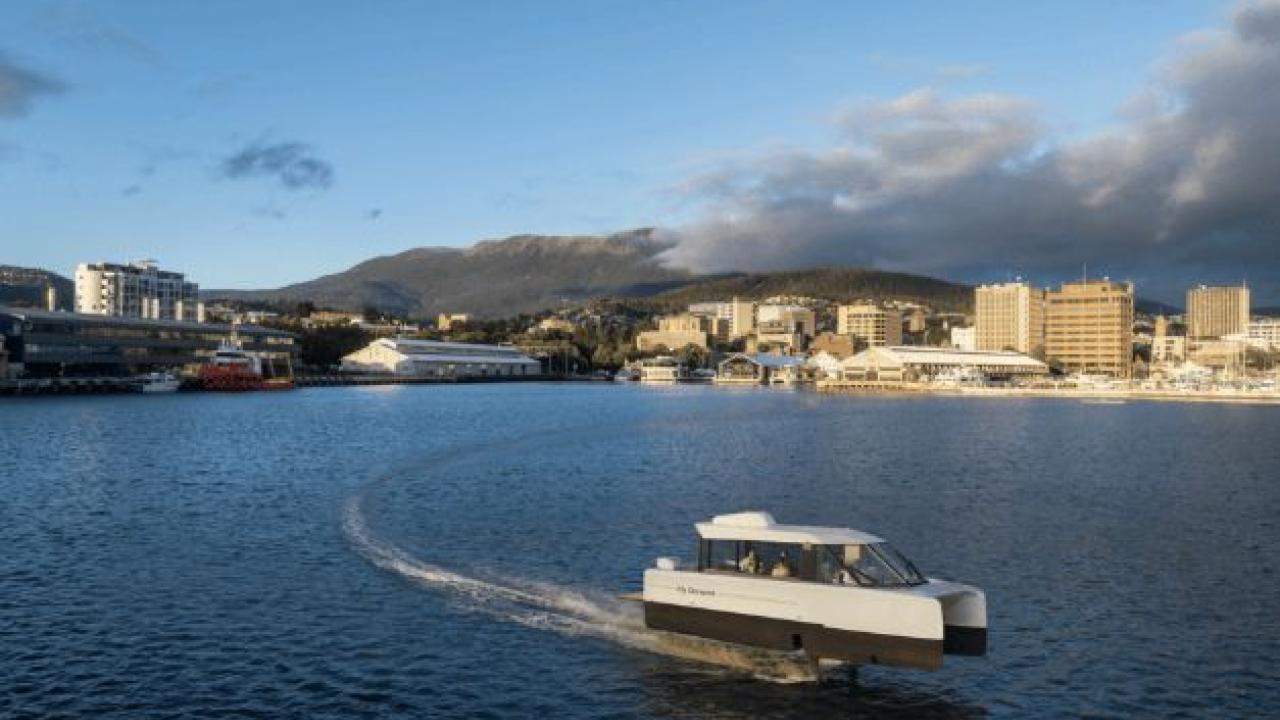
Tasmanian company "Fly Derwent" in partnership with New Zealand-based company Vessev have announced plans to launch Australia's first electric hydrofoil Catamaran network and service set to run from Hobart to New Norfolk on the Derwent River.
The ferry network is said to initially involve the use of Vessev’s VS–9 catamaran, a 10-seat hydrofoil vessel, with larger VS–12 models also earmarked for use, capable of transporting up to 30 passengers.
Fly Derwent's Cameron McCulloch said the project aims to reshape how waterways are used for transport.
“This world-leading technology unlocks affordable, river-based commuter and tourism transport in Hobart without the need for large-scale infrastructure changes,” McCulloch says.
“It’s an entirely new mode of transport that enables us to use waterways in a way that is more like a metro system than a ferry service.”
The DNV-classed VS-9 measures 8.95 metres in length and displaces 4.4 tonnes at full load. With the use of hydrofoils, the vessel’s hull can remain 50 cm above the surface of the water while travelling, allowing the vessel to maintain high transit speeds without being affected by waves, even in bad weather.
This then ensures a much more comfortable ride and little to no fatigue for the passengers.
The hydrofoils, specially developed by Vessev for the VS-9, are fitted with precision flaps that remain submerged underwater.
The flaps enable the foils to change shape to become more efficient, a system similar to those used on sailing boats in the America’s Cup races.
The catamarans can also travel at around 25 knots, or just over 46 kmph, while producing minimal wake, allowing the boats to maintain high speed without the threat of erosion damage to the surrounding river banks.
The catamarans will be powered by Tasmania’s renewable electricity grid, with developers also exploring battery storage and mobile charging solutions.
Tasmania already operates at close to 100% renewable electricity over a typical year, powered predominantly by hydropower and complemented by wind and solar, and that same grid will charge the Fly Derwent fleet.
The first vessels are expected to be delivered to Australia in early 2027.
Vessev said it is working collaboratively with applicable classification societies and local regulatory bodies to ensure compliance with all local requirements for the vessel type.
Vessev CEO Eric Laakmann said what’s happening in Tasmania is the beginning of a much larger shift in how cities think about water mobility.
“Electric hydro foiling enables an entirely new category of water transport,” Laakmann said.
“Tasmania is a standout environment to demonstrate this at scale, where abundant renewable energy and strong local ambition come together to show what zero-emissions marine transport can look like in the real world.”




Add new comment