
Farmers getting drivers licenses taken off them for illegal land clearing
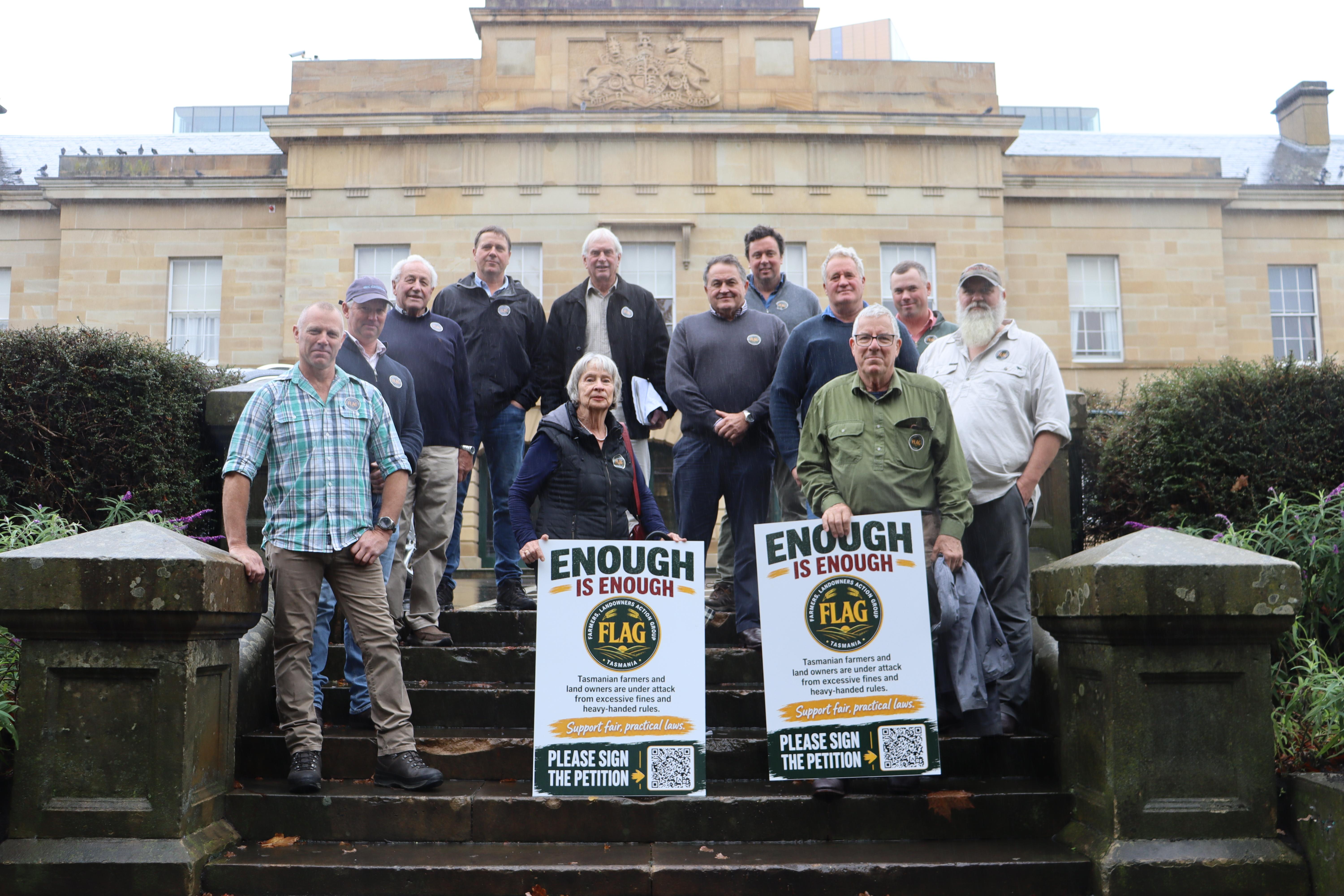
At least two farmers claim they have had their driver licences revoked when they’ve been unable to pay substantial penalties imposed by the Forest Practices Authority after being prosecuted for illegal land clearing.
In recent years an 84-year-old man on King Island and another farmer at Lilyale in Northern Tasmania said they have had to apply through local authorities to have the licences reinstated so they could continue to work.
Caveats have also been applied to land for the payment of fines at point of sale.
If a landowner cannot afford to pay a fine after the 28-day due date the Monetary Penalities Enforcement Service can add an enforcement fee and trigger severe enforcement sanctions such as suspension of a driver licence and/or vehicle registration.
The Forest Practices Authority handles minor reports through warnings and remediation orders, however some rural landowners believe it has significantly ramped up prosecution of farmers for land clearing, even when the breach has been unintentional.
Harsh penalties, including fines of up to $100,000, plus a perceived lack of understanding of the work required on farms to make them viable, have led to a growing backlash from farmers, supported by the Shooters, Fishers and Farmers and One Nation political parties.
A “right to farm” campaign shows no sign of easing and a Sydney law firm has been engaged.
A string of Right To Information requests has been submitted to the Tasmanian Government and a petition circulated to fight the severity of laws applied by the FPA.
Led by the newly-formed grassroots advocacy group Farmers and Landowners Action Group, farmers are coming forward every day to founder Lindsay White, who has been videoing and posting personal stories on Facebook.
These include landowners who have cleared trees that re-grew on an old quarry site, trees cleared for fencing off a waterway and trees cleared to build a small dam for irrigation.
All consider the penalties applied excessive and accuse the FPA of being aggressive in its pursuit of a conviction.
While the circumstances and validity of the prosecutions and the size of the fines are being widely debated, Mr White said it’s the heavy-handed tactics of the FPA that is causing the most alarm.
Farmers have been telling him that they have received threatening letters, found FPA officers on their properties unannounced and that they’ve had their driver licence revoked and/or caveats put on their land because they couldn’t afford to pay a fine - with no leniency shown for those who make a mistake or if it’s their first offence.
A recent case involving the Fergusson family and clearing on their land near Triabunna resulted in a heavy fine after the landowners offered to replant an even bigger area of land to make amends.
“One woman farmer from Golconda who cleaned up along a creek so it could be fenced off to improve their land has told me about the intimidatory tactics that were used, which led to her feeling really stressed and unsafe,” Mr White said.
“There are things that farmers can do to be more aware of the laws and better adhere to them, but when a problem arises it should be handled in a better way than this.
“With satellite imagery being used to catch people, FPA officers all over the landowners, huge fines imposed that most can’t even afford - farmers feel like they’re being targeted and treated like hardened criminals instead of just trying to do the best with the land that they own.”
Mr White originally went in to bat for neighbours Melissa and William Fergusson who were fined $100,000 in the Hobart Magistrates Court in May for clearing about 19 hectares of land at Grindstone Bay.
The penalty became the catalyst for widespread farmer protests across the state and a fierce political and public pushback against what they describe as “heavy-handed” government overreach and excessive red tape regarding private land-clearing laws.
In a single recent financial year, the FPA issued $657,000 in fines to private landowners, followed by another period where 18 formal prescribed fines were handed down, ranging from $5000 to $132,000.
Mr White said more than $2 million in fines have been paid to the FPA in the past five years, with penalties imposed through the court process not included in that figure.
“Our formal parliamentary petition from FLAG is demanding an urgent review of the state’s clearing laws,” Mr White said.
“We have nearly 3000 signatures so far and it will be presented to Parliament in late July.
“The FPA was set up as an advisory department but has morphed into an adversary department that seems to be more about collecting money.
“As a self-funded department it can only survive on the amount of fines it accrues and I believe that is part of the problem.
“FLAG members maintain that the rules are “heavy-handed, confusing, and completely disconnected from the realities of farming.”
Meanwhile the FPA maintains that checking their “Check before You Chop” guidelines is a basic legal obligation for any landowner before clearing native vegetation.
The FPA has not responded to multiple requests to comment.




Add new comment