
Human expertise vital in future of AI
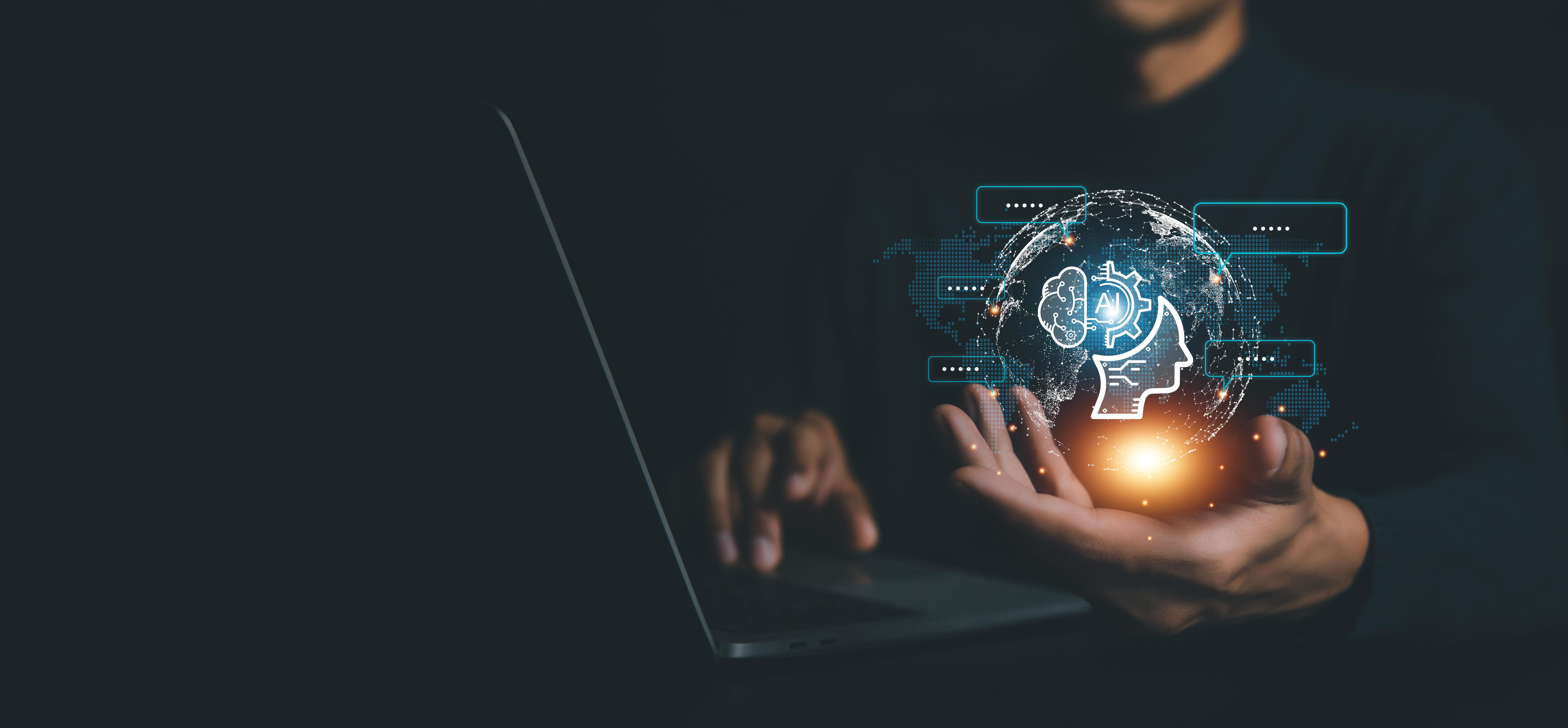
Artificial Intelligence tools have the potential to help growers spot plant disease earlier, forecast a harvest more accurately or decide where irrigation water will have the greatest value.
An AI tool, properly trained, might find patterns across huge amounts of data and do it in seconds, while a person might reasonably only do a fraction of that amount, do it to a poorer standard, and take hours.
As the tools improve, AI could turn the stream of sensor readings sometimes left gathering digital dust on a farm office computer into timely, practical advice. Where labour and time are stretched, making better use of this information matters.
However, AI also presents a challenge for those of us educating the next generation: how do we teach students to use AI confidently while ensuring they can still think for themselves?
I expect AI to become a much bigger part of our industry over the coming years. Sensors and imagery will produce more information; AI will make it easier to combine and interpret it.
A farmer may be able to ask a question about a paddock and draw on soil, weather and production records together, rather than consulting each separately.
Better forecasts could help producers plan labour, inputs and sales.
Some of these uses are still developing, and their value will have to be demonstrated on farms. But our graduates need to be ready for an industry in which working with AI becomes routine.
However, a recommendation on a screen is only as useful as the data and methods behind it.
Sensors can fail, models developed elsewhere can miss something in Tasmania, and confident answers can be wrong.
My own view is that AI is currently much better at summarising and synthesising information than it is at interpreting meaning and context.
That’s why human expertise remains so important: AI can assemble information, identify patterns and generate possibilities, but it still relies on people to determine what is relevant, meaningful and correct.
Farmers know this instinctively.
If a tool recommends irrigating a paddock, someone still needs to consider the crop, the forecast, the soil, the cost of pumping and what they can see on the ground.
AI can offer insights and help people test their decisions.
But AI cannot be trusted to make the decision alone – it needs the expertise of the user.
That is why agricultural education matters as much as the technology itself.
Tasmanian Institute of Agriculture (TIA) graduates should be comfortable bringing together farm data, exploring options, checking claims and explaining a recommendation to a producer.
They also need enough agricultural knowledge to recognise when an AI-generated answer does not make sense.
This creates a challenge for universities. AI can help a student understand a difficult concept, practise an explanation or examine different approaches to a problem.
It can also produce a polished assignment for a student who has learnt very little.
We know that unguided AI use can harm learning when students must later work unaided.
We therefore need our students to learn to use AI while ensuring they are still really learning about agriculture.
The University of Tasmania is doing both through a two-lane approach to assessment.
In one lane, students work in open conditions and can use AI appropriately and with acknowledgement.
We can teach them to direct it, test the answers and apply it responsibly to realistic tasks.
That might mean using AI to help analyse farm information, then checking its suggestions against the realities on the ground.
The other lane uses supervised assessments to verify what students can do themselves.
These may include practical demonstrations, presentations, interviews or exams, where students must explain and defend their reasoning.
When the task is to demonstrate agricultural knowledge, AI will be excluded. If the skill being assessed is effective AI use, students can demonstrate that skill under observation.
Both lanes are essential. An agricultural graduate should be able to use the tools they will encounter at work.
They must also be able to understand a farming system, interpret evidence and make a sound judgement when the technology is unavailable or mistaken. A farmer seeking advice deserves both capabilities.
TIA can bring teaching, research, world class facilities and working farms together. Our students encounter this new technology alongside the people and conditions it is meant to serve.
They can learn that a useful prediction must survive a conversation with a grower and a test in the paddock.
AI will change agriculture. It may give Tasmanian producers new ways to use resources efficiently, respond to risks and strengthen their businesses. Its value will depend on people who know what to ask, what to check and when to trust their own expertise. That is the kind of graduate we intend to develop.

Add new comment