
Supermarket milk prices surge
Milk prices at major supermarkets have surged due to the war in the Middle East.
Coles has increased the price of its home-brand milk by up to 20c.
One litre of Coles brand fresh milk has risen from $1.65 to $1.85, with two litres up from $3.20 to $3.55 and three litres from $4.65 to $5.15.
A Coles spokesperson said the price increases would cover rising costs for the business and farmers.
“We are passing on the additional costs which have been, and will continue to be, incurred in our dairy supply chain,” the spokesperson said.
“We know rising cost pressures are affecting many Australians, from farmers and suppliers facing higher input costs such as fuel, fertiliser and packaging, to families navigating increases in petrol, energy, insurance, mortgage and rent.”
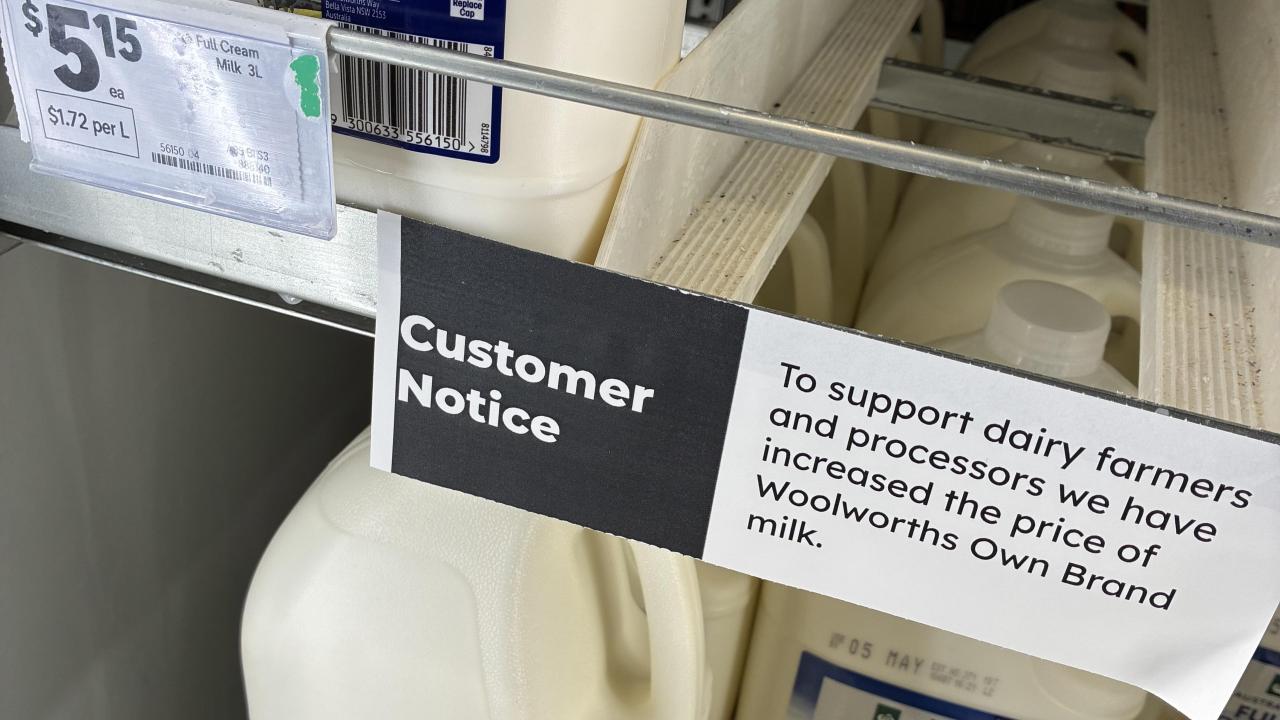
Meanwhile, Woolworths has started displaying messages in-store for customers.
“To support dairy farmers and processors, we have increased the price of Woolworths Own Brand Milk,” the message reads.
Farmers have been calling on supermarkets and processors to increase retail milk pricing.
Seven industry groups representing dairy farmers - Australian Dairy Farmers, New South Wales Farmers’ Dairy Committee, EastAUSmilk, South Australian Dairyfarmers’ Association, TasFarmers, United Dairyfarmers of Victoria, and WAFarmers Dairy – have joined forces to call for the increases.
They want to see retail milk prices rise by 30 cents per litre, guaranteed pass-through of value through processors to farmers, and stronger clarity and compliance under the Dairy Code of Conduct.
TasFarmers Dairy Council Vice Chair Andrew Aldridge said a unified national approach is critical.
“Cost pressures are being felt by farmers supplying all manufacturing streams, not just retail, and this conversation must extend to foodservice and export‑focused sectors, so those producers are not left behind,” Mr Aldridge said.
“As costs rise, we must be agile in how we set prices because if increases are not shared across the entire supply chain, the industry won’t be able to sustain ongoing cost growth.”
Australian Dairy Farmers President Ben Bennett said producers and processors are battling a range of significant challenges, including rising fuel and fertiliser costs, ongoing seasonal variability, flat retail pricing, and increasing global uncertainty.
“Australian consumers currently enjoy some of the cheapest fresh milk in the developed world, but our farmers are facing some of the highest production costs,” Mr Bennett said.
“A modest increase in retail milk pricing would help ensure farms remain viable and continue producing this essential, nutrient-rich food, but only if that value is passed back through the supply chain.
“Milk is an essential, nutrient-rich food used every day by Australian families.
“Fair pricing today is what will ensure Australian dairy remains on Australian tables tomorrow.”




Add new comment