
More than 120 attend Tasmanian Institute of Agriculture Dairy Research Facility Field Day at Elliot
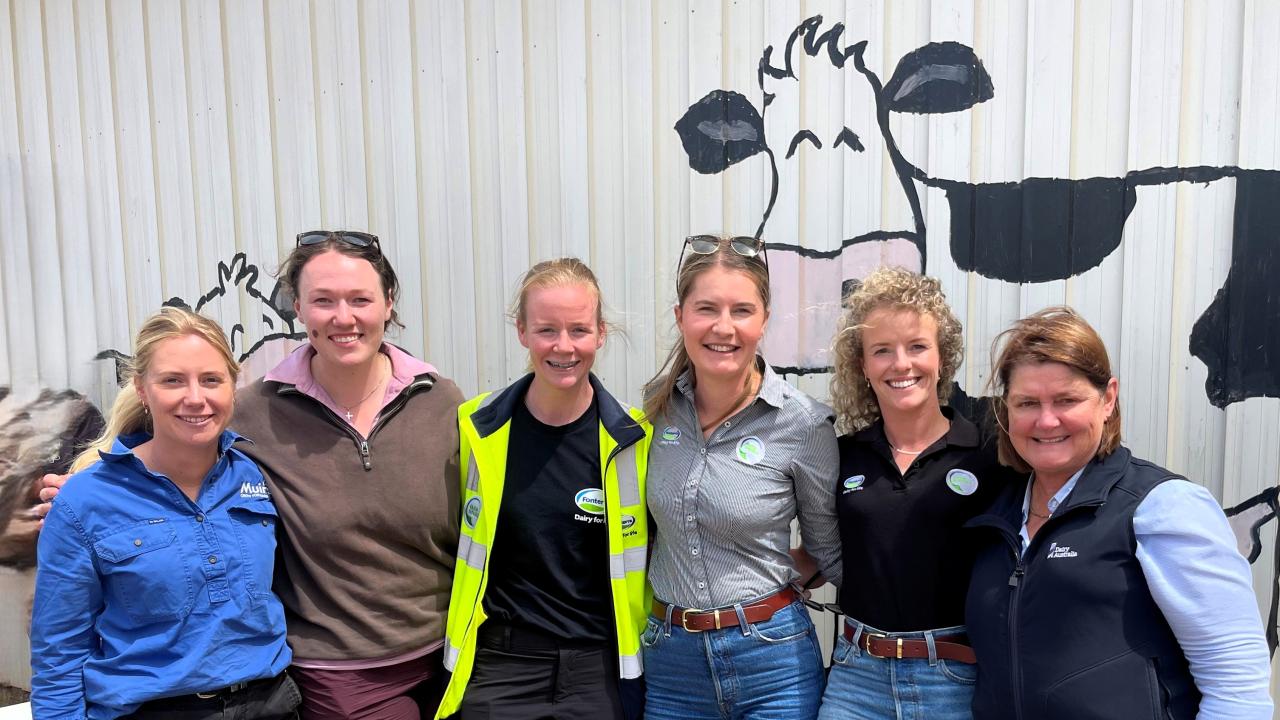
A deep dive into the State’s dairy industry highlighting the latest research and development drew more than 120 stakeholders to the Tasmanian Institute of Agriculture Dairy Research Facility Field Day at Elliot on Tuesday.
The day’s program began with updates from TIA director, Professor Mike Rose, Associate Professor James Hills and farm manager Andrew Marshall.
Mr Marshall, who lives nearby at Oldina on acreage, took on the role as farm manager just over two years ago and was thrilled to be involved in his third open day.
He said the day was a chance to pass on all that the TIA team has learned around achieving efficiencies and profitability on a dairy farm.
Three years ago a section of the farm was mapped out into small “farmlets” that have been used for structured experiments based on a wide range of key industry issues, including feed production, animal performance, analysis of farming systems, grazing management and irrigation.
Each farmlet was established with 1ha paddocks situated over 32ha to enable the team to test research hypotheses under real farm conditions and ensure the results provide practical solutions for farmers.
“While there were some initial major improvements, it’s the ongoing small improvements, those little treatments, that tend to make a real difference over time and leads to better productivity,” he said.
In the last year in particular there’s been some really exciting results, it’s been quite mind-blowing and it all comes down to using different farming methods.
Some of the variables in the farmlets has been the trialling of different fertilisers, grass seeds, irrigation and the use of synthetic nitrogen.
During an intensive soil health sampling campaign which took place from mid-February through to April last year, TIA researchers measured, among other things, earthworm densities, deep cores for labile carbon and total carbon stocks, mineralizable nitrogen and nematode diversity, with the expectation that there would be clear differences between each farmlet.
The field day was a chance to present the initial findings and also explore the impacts and changes happening within the dairy industry with the help of a panel discussion featuring farmer Gavin Beaumont, Ruari McDonnell from Dairy Australia, Sam Flight from Fonterra, Rocky Cape farmer and DairyTas chair Luke McNab and farmer Meg Lawrence.
Mr McNab said that during the past 10 years the biggest change he’s seen has been the makeup of farm ownership from family farms to corporate ownership, increased herd sizes and more value being placed on labour.
“We’ve moved away from growing so many fodder crops to save on labour, although as Halter collars and virtual fencing are developed that might be more achievable again,” he said.
Togari farmer Gavin Beaumont, who is also the general manager operations of dairy investment company Prime Dairy Operations, said it now takes less time to produce more milk, and that the more efficient the milking process, the more time cows can spend in the paddock eating grass and producing milk.
“Any farmers who wonder what they can do next, should be thinking about irrigation and pastures, growing grass, better pasture performance which in turn means consistent performance from the herd.
“There is potential to improve all the time.”
The research farm recently underwent a multi-million-dollar upgrade as part of a $7.8 million joint-investment from the Tasmanian Government and the University of Tasmania
The upgrades included a new 50-bay rotary dairy, a new 12.5 megalitre effluent dam, increased irrigation water storage capacity in one of the dams from 24 to 115 megalitres, 11 kilometres of underground irrigation pipeline, and the conversion of 32 hectares of previously unirrigated land for farmlet trials.



Add new comment