
TasFarmers Matters - For future growth, just add water
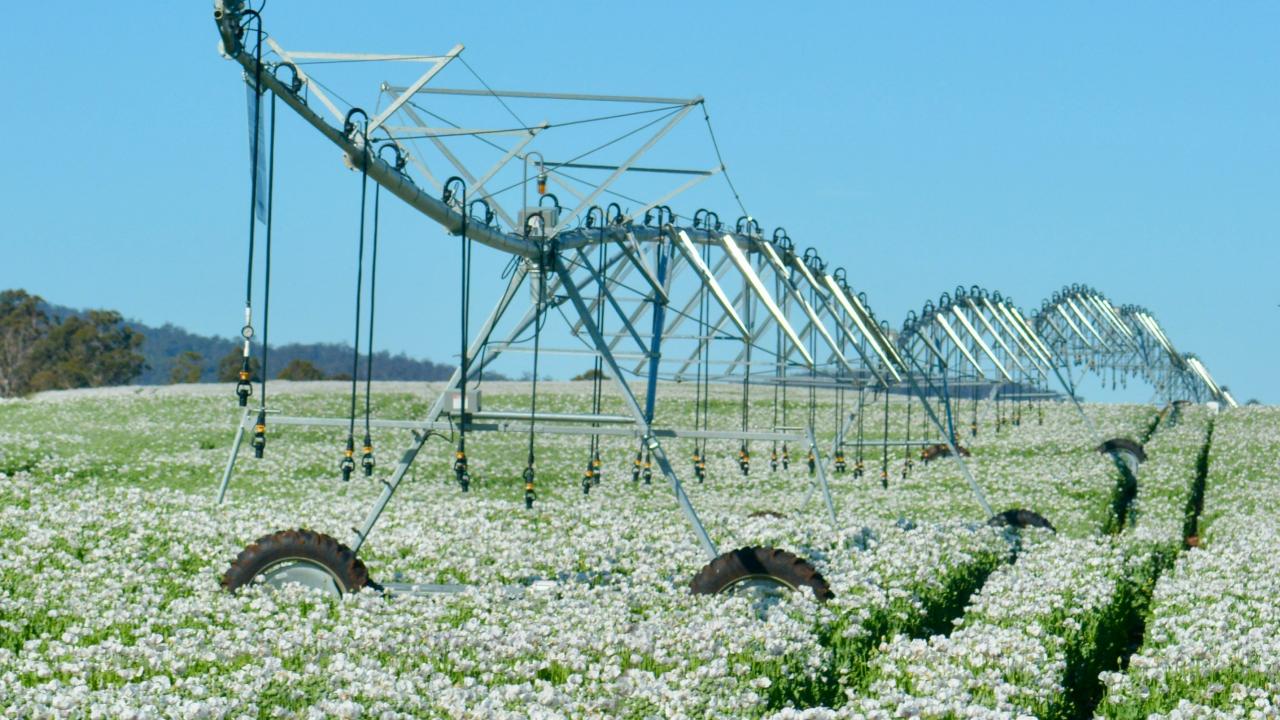
WATER. Too much is trouble; too little is catastrophic.
The key reason agriculture in Tasmania continues to grow, pardon the pun, is the significant development of irrigation.
Farmers have led the strategic development of water resources in this state, supported by funding assistance from state and federal governments, by demonstrating where sensible irrigation should be fostered.
One of the early leaders was Nick Van Den Bosch, who promoted the “Summer Rains” concept, which in many ways formed the genesis of Tas Irrigation’s strategic development of water availability.
Private schemes emerged to meet the varying demands of different districts, such as the Winnaleah Irrigation Scheme, drawing from the Cascade and Frome dams, and the Macquarie Settlement Scheme.
Tasmania now holds 27 per cent of the nation’s water storage while accounting for only 1 per cent of the nation’s land mass.
The scale of agricultural output has expanded exponentially and gives investment comfort to growers, but also to processors who take product from irrigated land and turn it into value-added good.
Processors will not invest here without the confidence that high-assurity water gives them.
In addition, Tasmania has access to natural water supplies from rivers and groundwater that are the envy of mainland farmers.
While this water is not freely accessible by any means, it is easier to access and subject to fewer political pressures than mainland water catchments like the Murray-Darling Basin system.
The management of natural water is strictly regulated and controlled by the Tasmanian government very conservatively.
Often, decisions are made relating to water availability without discussion with farmers in those catchments.
The policy that determines water use and availability in Tasmania is arguably the most important policy for all farmers.
So much of what farmers do is determined by water availability and cost.
It should be a key priority for any organisation seeking to represent farmers, and farmers themselves should be involved.
It doesn’t matter what the commodity is, water is critical.
The future holds many risks for the cost and availability of water for farming. It is different for different districts.
While one district might be looking to get more water from rivers or increased take-off during winter, for other districts, the impact of Marinus Link on water availability and cost will be deeply worrying.
Other districts will be thinking of expanding existing schemes, while others will be looking to create new private developments as a cooperative with neighbouring farms.
Every farmer will be concerned at the prospect of government interference with on-farm water storage.
One of TasFarmers’ most important policy committees is the Water Committee.
This committee continues to have a strong impact on Tasmanian and federal governments’ policy initiatives, and on a local level, it is one of the most important avenues into government departments that control water availability.
The TasFarmers Water Committee structure works at its absolute best when it is filled with farmers who have a strong interest in water and the best use of it.
TasFarmers has a very strong voice when speaking to government and to organisations such as Tas Irrigation, and this voice is made so much stronger when we have farmers with direct experience in water usage, management and the benefits it brings to Tasmanian agriculture.
The Water Committee is always looking for farmers who can make a positive difference, and it doesn’t matter what you farm; in fact, the more diversity, the better the outcome will be for Tasmanian farmers.
Get in touch and make a difference; the industry will thank you for it for decades to come.




Add new comment