
Potato price negotiations clouded by fuel uncertainty
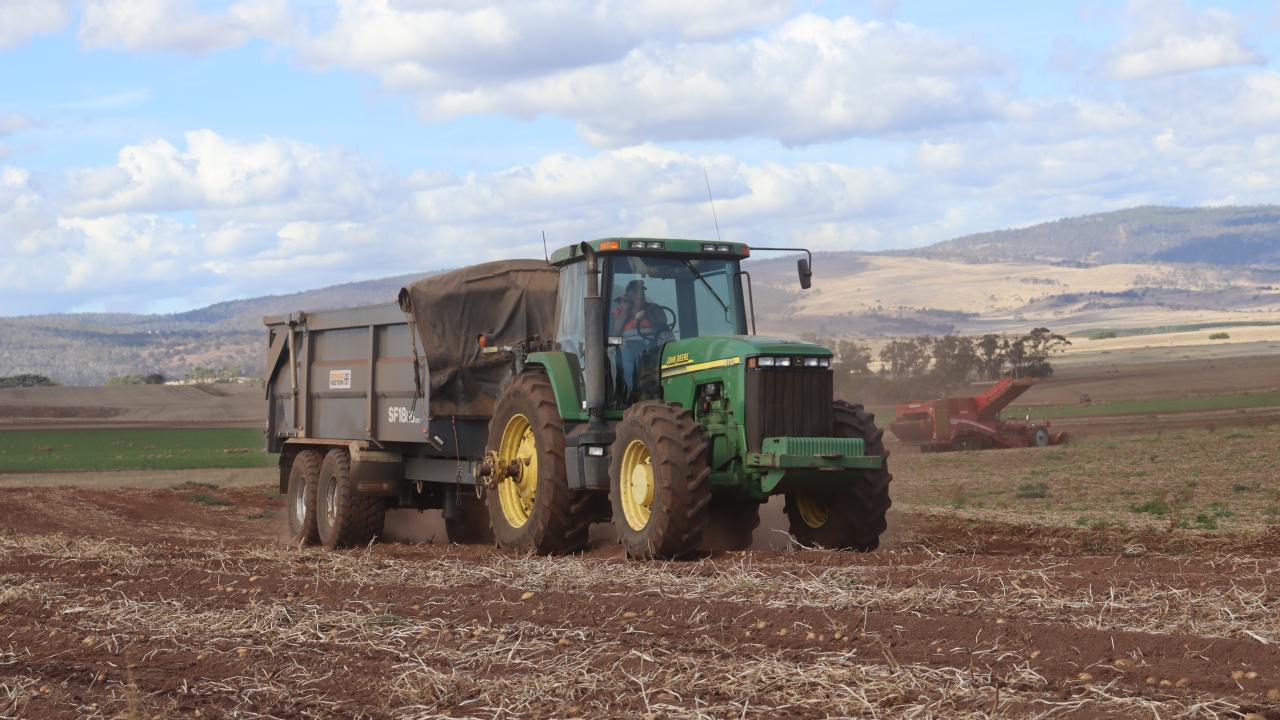
Tasmanian potato growers have begun negotiations this week with major processors for price and contract conditions for the 2026/27 potato crop, but diesel supply uncertainly has been clouding the process.
The industry today welcomed confirmation from Premier Jeremy Rockliff that fuel supplies into the state remain stable, while warning the government that farmers must be directly involved in contingency planning.
Peak body TasFarmers wrote to the Premier last week seeking urgent clarity on diesel supply risks and what would happen if shipments into Tasmania were disrupted.
In a formal response today (dated April 15), the Premier confirmed supply chains are operating as expected, with shipments scheduled through April and early May, and no statewide shortage currently identified.
TasFarmers chief operating officer Neil Grose said the response provided reassurance but stopped short of what farmers need to plan with confidence.
“We’ve got some comfort that fuel is arriving and the system is holding, but farmers can’t run on reassurance alone,” Mr Grose said.
“We need clear, ongoing visibility and we need agriculture embedded in every stage of the planning.”
The Premier outlined that the Tasmanian Government has activated an incident management team, begun scenario-based contingency planning and strengthened coordination with industry and national partners.
Planning includes prioritising critical sectors if supply tightens, monitoring fuel stocks and shipments, and preparing allocation frameworks if required.
Mr Grose said those measures are necessary but must reflect the realities on the ground.
“Fuel is not optional for agriculture,” Mr Grose said.
“This news empowers farmers and gives them confidence in planting, harvesting, irrigation, freight and milk collection. If supply tightens, the consequences are immediate and statewide.
“Cropping programs are underway, contracts are being negotiated, and dairy farmers are moving milk every day. These decisions rely on certainty,” Mr Grose said.
While acknowledging the State’s work, TasFarmers said the situation highlights a larger gap at federal level. Mr Grose said that is where the focus must now shift.
“Tasmania is an exposed, island economy. We rely entirely on shipped fuel,” Mr Grose said.
“What we now need from the Federal Government is a clear national fuel security plan, including how diesel is being secured internationally and how Tasmania will be protected.”
“Farmers need a straight line of sight. Without that, it’s very hard to make decisions with confidence.”
With a significant fire currently burning at one of Australia’s two oil refineries in Geelong, Labor leader Josh Willie has also reiterated that there needs to be a clear plan for Tasmania regarding the escalating fuel crisis, saying the fire at Viva Energy’s Geelong refinery and its potential impact on Tasmania is cause for concern.
He said that the refinery reportedly provides almost all of Tasmania’s petroleum requirements.
“No one is blaming the Tasmanian Government for the war in Iran or the refinery fire, but it is responsible for managing the impact on Tasmanians,’ he said today.
While other states are getting ahead of the curve, the Liberals have provided no clear contingency plan, no public prioritisation framework, and no clear advice on how Tasmanians will be kept informed if conditions deteriorate.
“They haven’t told Tasmanians who will be prioritised, how supply will be managed, or what happens if fuel shortages worsen.
“They haven’t outlined a plan regarding how key sectors such as agriculture, tourism or community services will be protected.”
The fire at Viva Energy’s Geelong refinery late Wednesday has raised questions about fuel supply across southern Australia, but authorities say Tasmania’s position remains stable.
The Geelong facility is one of only two operating refineries in Australia and is a key supplier of fuel across southern Australia, with petrol production expected to be affected while the extent of the damage is assessed.
The Tasmanian Government said it was monitoring the situation, with current advice that fuel supply remains secure and deliveries are continuing through the national supply chain. Tasmania is understood to be operating at Level 2 of the national fuel security framework, meaning fuel remains generally available.
Mr Rockliff has also posted online today that the government is looking at sourcing additional diesel supplies internationally to provide a ready reserve to protect transport and agricultural sectors.
"We have identified some decommissioned fuel storage facilities at Selfs Point that have the potential to unlock additional storage capacity," he said.
"These facilities are quite dated, but we will be assessing whether it can be refurbished, upgraded and brought back online to potentially host our strategic fuel reserve over the long term."
Federal Energy Minister Chris Bowen said petrol production was likely to be affected for some time, while diesel and jet fuel output was continuing at reduced levels as a precaution.
Fuel supplied through the Tasmanian network by Viva Energy, a major supplier to the state, is supported by import arrangements and a network of terminals, helping to maintain continuity of supply.
Port and logistics operator TasPorts said supply systems remained in place to support ongoing distribution, including to more remote communities.
This includes the Bass Strait islands, where fuel security is supported by on-island storage and regular shipping schedules. On King Island, several months of fuel is held in storage, while Flinders Island operates under similar supply arrangements.
Viva Energy has indicated it will rely on imported fuel to maintain supply while repairs are undertaken, drawing on its national terminal network and existing import program.
While the refinery fire adds pressure to the broader national fuel environment, there is no indication at this stage of any disruption to Tasmania’s fuel supply.
Authorities say the situation will continue to be monitored, with current advice that normal purchasing patterns remain appropriate across the state.




Add new comment