
Rushy Lagoon sale close to being finalised
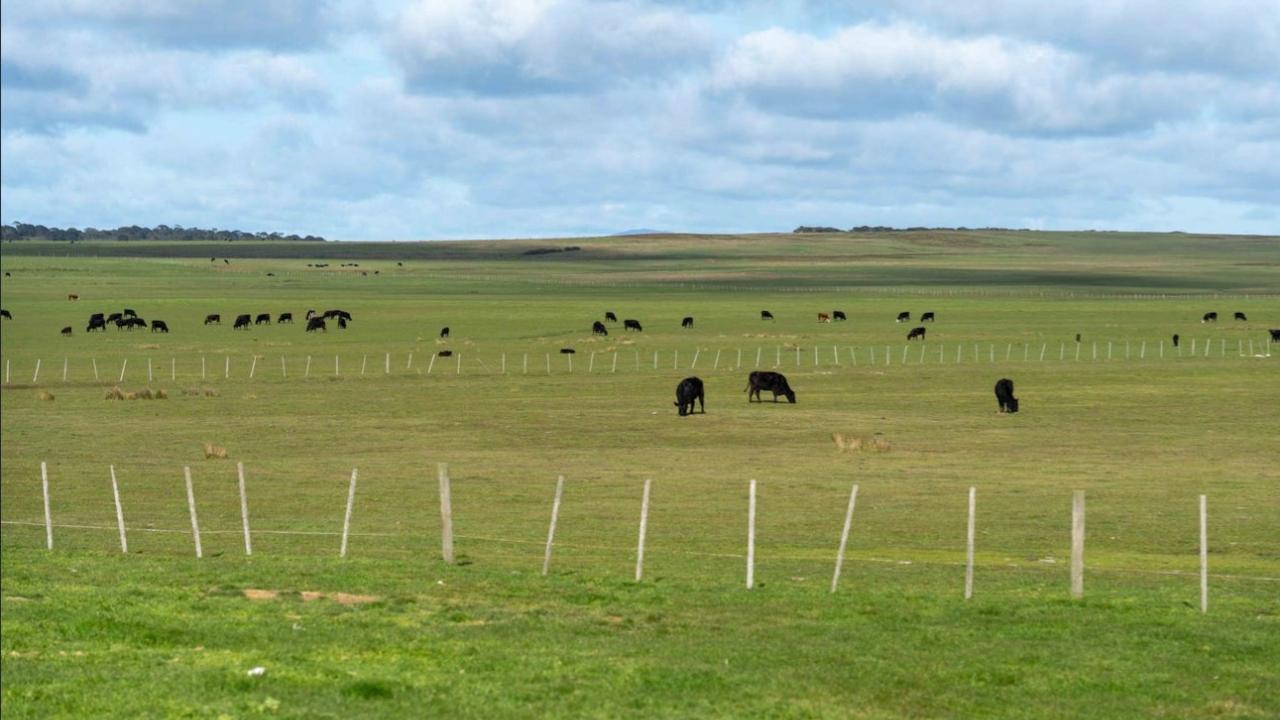
The sale of Tasmania’s largest agricultural property, Rushy Lagoon, is expected to be finalised within the next month.
With expressions of interest ending in November and the property now under contract, the agent handling the sale, Peter Ryan of RMS Advisory, said the sale should be complete by late February.
“It’s been a drawn-out process and there’s a few more trap doors for the vendor to go through but nothing is likely to change now,” Mr Ryan said.
The sprawling property in the far North-East is made up of five farms, totalling more than 21,700ha.
Historically operated as a diversified enterprise with dairy, beef, sheep and cropping, there are concerns that the new owner has large-scale carbon credit tree farming in mind for the future – depleting the state’s potential food and fibre production.
No official plans or applications have been confirmed by government departments.
Established after World War II by the British Tobacco Co., Rushy Lagoon, including East Wyambi (1221ha) was a particularly productive sheep and cattle property through the 70s and 80s with one of the largest shearing sheds in the country.
It was sold to Bert Farquar and later the Pye family from New Zealand and boasts substantial water resources and spectacular coastline near Ringarooma Bay on Bass Strait, with an estimated carrying capacity of 85,000 dry sheep equivalents.
Potential future income streams include lease payments from a proposed wind farm development, sand mining royalties and carbon offset payments.
The property is earmarked for a proposed large-scale wind farm project involving up to 210 wind turbines and significant infrastructure.
The property was first listed for sale in early 2018 with price expectations around $65-70 million but despite strong interest, it did not sell at that time and was withdrawn from the market.
Following the passing of owner Allan Pye in March, 2024, Rushy Lagoon was again put on the market, this time as part of his estate, with expectations of fetching more than $100 million.
Mr Ryan, based in Mt Gambier, said that Australia’s agricultural properties have taken an exponential leap in value, particularly northern cattle stations where $100 million could change hands without anyone being surprised.
“We’ve just had Paraway Pastoral come on to the market and that could sell for more than $2.5 billion,” he said. “Technology has revolutionised how much country people can farm with minimal labour costs.”
TasFarmers president Ian Sauer said he has unconfirmed information that the land has been purchased by a UK-based forestry investor and another partner.
He believes there’s a high probability that Rushy Lagoon will go into trees as a forestry/carbon credit projects that utilises Australian government funding to tick off commitments to global net zero carbon and biodiversity targets.
“We understand that this could mean a large part of Rushy Lagoon would be converted to growing pine trees, another part left to revegetate and possibly some of the more productive land being used for production purposes,” Mr Sauer said.
“It’s something that would be scrutinised by the Foreign Investment Board.”
Mr Sauer said it doesn’t matter who buys the land – if it goes into trees it’s an opportunity to grow food lost and it will have a negative impact on agriculture in the state.
“First and foremost we believe that farmers can do anything they want with their land, and we see growing trees on a farm just a fibre with a longer rotation, but what TasFarmers has a difficulty with is if people buy land knowing that they’re going to get tree planting subsidised through any form of government funding – we think that creates a market failure,” he said.
“Everybody we speak to in the North-East says that Rushy Lagoon is nowhere near meeting it’s potential, and with some good agronomy and a strategic plan and a bit of innovation its production could be increased dramatically.”
Mr Sauer said that it would be disappointing if it was used for trees when the future is all about food security in a world with a growing population.
He said TasFarmers has written a series of letters to federal politicians and forestry investment financing companies with no response.
“We really do need to think seriously about how we utilise land but my feeling is a deal might have been done,” Mr Sauer said.
“We’ve got to plan a lot better to meet the growing demand for food and fibre.”



Add new comment
Comments
Rushy lagoon
A great
Idea would be for the state gov super fund along with public investors to purchase and use as a training property ie dairy ,beef ,wool ,fat lms,cropping grain fodder etc.
Could be a 3 year cause for 12 -18 using all areas over 3 years.
Would be a greay opportunity for young rurals.
Could be run by a board of 5
2 from gov 3 from private investors.
Priorty is for it to be run as a profitable business.
Have done full estate of income - expences etc and it would work.