
Salmon industry gets desired result with new antibiotics
The first suite of results on the use of florfenicol in Tasmanian salmon farms has provided good news for both fish health and the environment.
Testing of wild fish, seafloor sediment and the watercolumn near salmon leases has shown negligible amount of the antibiotic.
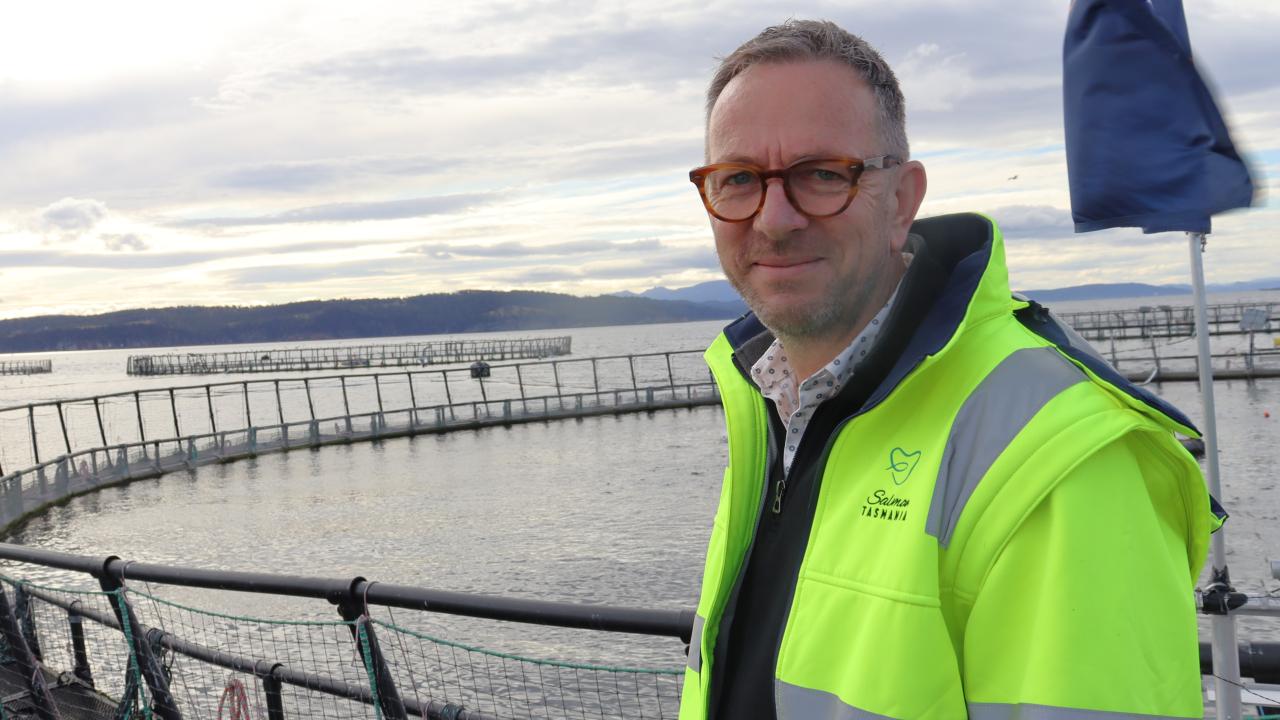
Salmon Tasmania CEO John Whittington said the results confirm that florfenicol is the most effective treatment, it’s safe for consumers and the best option for the environment.
“The salmon that have been treated with florfenicol are healthy, it’s the textbook response expected with this gold-standard treatment,” Dr Whittington said.
“This is great news for our salmon farmers who have been working hard to have every tool in the toolbox to try to ensure last summer’s mortality event doesn’t happen again.”
The state’s salmon industry was given emergency approval by the Australian Pesticides and Veterinary Medicines Authority (APVMA) to use the antibiotic on its fish in an effort to fend off the bacteria P. salmonis.
The bacteria was a major contributor to a mass salmon mortality event earlier this year, which killed an estimated 10 tonnes of fish from Huon Aquaculture and Tassal pens in southeast Tasmania.
Salmon companies are also hoping to start using a vaccine developed for use in conjunction with florfenicol, which prompted the most rigorous environmental monitoring of its kind at relevant leases, designed by the independent Environmental Protection Authority and Public Health.
The monitoring program examines the levels of florfenicol in sea floor sediment, water column, and wild fish at various distances from the lease, prior to treatment, during treatment and post treatment on day one, seven, 14 and 21.
The results are in for day one and day seven post treatment at the first two leases where florfenicol was used, and day one at the third lease where florfenicol was used – all near Dover.
The results are markedly consistent across all three lease sites, including:
- Seafloor sediment: There was no detectable florfenicol.
- Water column: Extremely low levels, the equivalent of 20 grains of salt in an Olympic swimming pool the day after treatment, then quickly disappearing because florfenicol breaks down rapidly in seawater.
- Wild fish: Every fish caught was safe to eat, by Australian food standards. There was no detectable florfenicol in 286 fish, one fish recorded a negligible trace, and another recorded a trace, but was still safe to eat. For example, based on this data, an adult would have to catch and eat more than 1000 serves of fish in a week to come anywhere near the acceptable daily intake.
Given the high level of consistency of results, Salmon Tasmania said that the data suggests that sampling of future treatments would deliver similar results that clearly demonstrate no environmental or public health concerns.
“I understand that some people are nervous about the use of antibiotics in Tasmania’s waters, that’s why I am sharing these results now that they are available,” Dr Whittington said.
“What these results show is that it is safe to catch, safe to eat and safe to swim in our waterways.”
All monitoring results are submitted to the EPA and Public Health and will inform future public health advice.




Add new comment