
Ron Murray still using tried and trusted tractors for harvest and planting
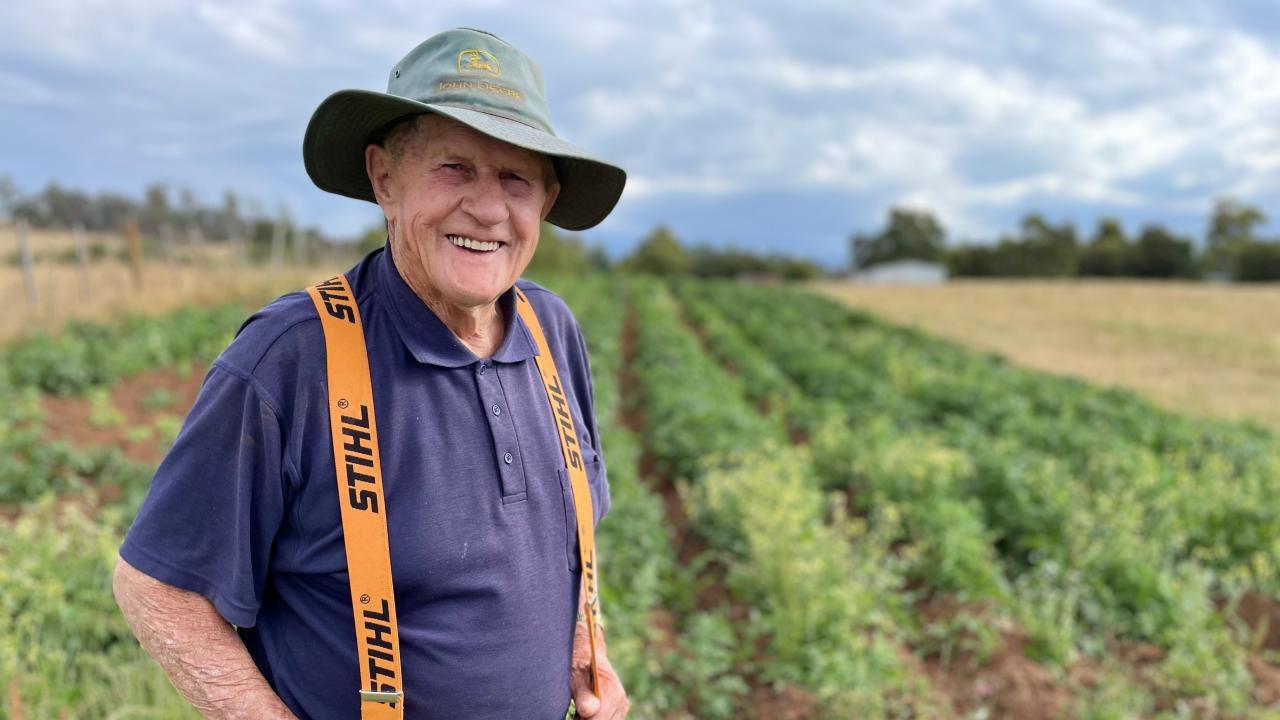
For many Australian families, the classic “meat and three veg” dinner has long been a symbol of home, heritage and hard work.
But for Westbury farmer Ron Murray, feeding a family, let alone a large one, has always required more than just a trip to the local shop.
Fifty years ago, Ron faced the challenge of feeding not four mouths, but nine.
With limited machinery and a growing family to support, he took on the annual task of planting a crop of potatoes, the foundation of many a hearty Murray family meal.
Back in the 1970s, the process was simple but gruelling.
Ron prepared the paddock with a tractor and small plough, then walked each row by foot, dropping seed potatoes from a sugar bag slung over his shoulder.
In the other hand, he carried a bucket of fertiliser, dispensing it one step at a time.
“It was slow work,” Ron recalled.
“But back then, that was how I had to plant the crop.
“When harvest time came, the long hours and hard work were rewarded with abundant crops.”
Alongside the potatoes, the Murrays produced homegrown lamb, making the most of their land and labour.
After decades of manual planting, a chance encounter during a shearing job on the state’s northwest coast changed the way Ron farmed forever.
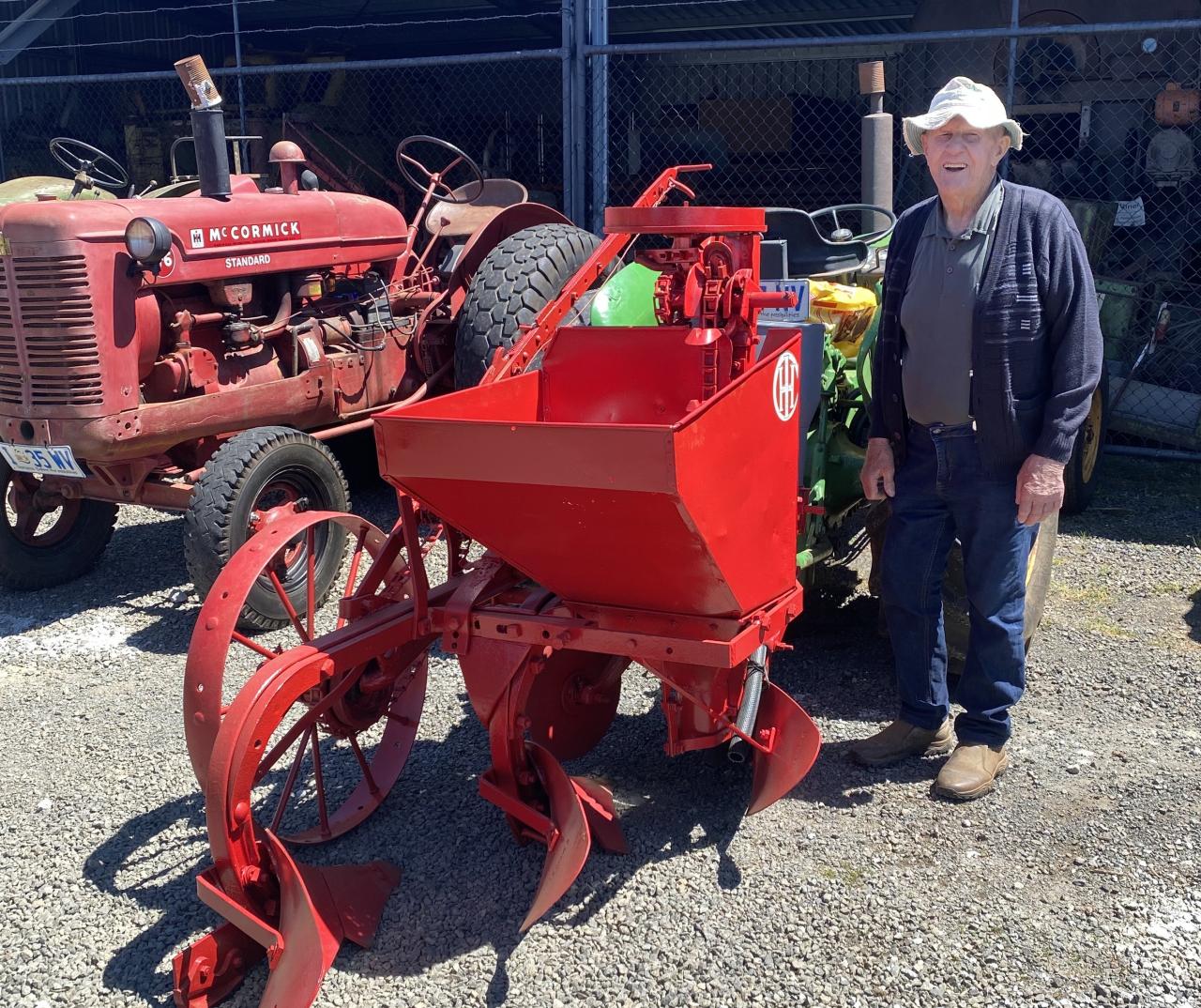
There, he discovered a circa 1940 International Harvester potato planter, a relic of early farming machinery.
A sturdy, simple machine built to last. Ron bought it on the spot.
The new planter made sowing the annual potato crop much easier.
“It takes the work out of it,” Ron said.
“It also turned it into a family event, with my children and later my grandchildren helping.
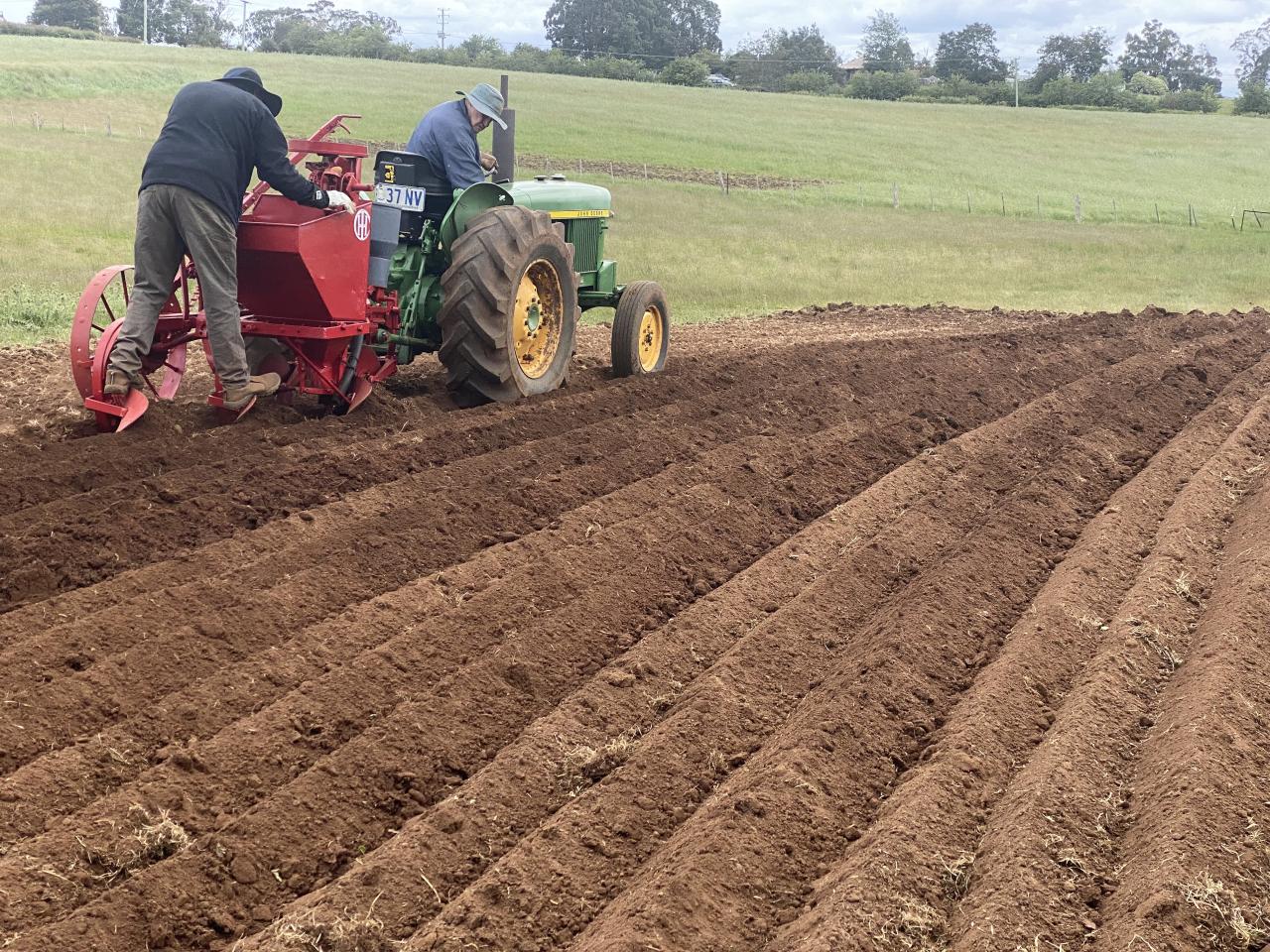
As it was pulled behind the tractor, operating the machine needed an extra set of hands, often supplied by Ron’s children and grandchildren, including daughter Allison and grandsons Harvey and Hayden.
Seed potatoes are loaded into the hopper, picked up by the cups, lifted, and carefully deposited through the feeder tube to avoid tuber damage, which could negatively affect germination.
After the potatoes are dispensed, the soil is gently returned to cover the seeds.
The planting depth and spacing of the potatoes are pre-set, ensuring that each seed potato is placed at an optimal depth for growth, typically around 4-6 inches, with uniform spacing to allow adequate room for the plant to grow.
If the cup is lifted without a seed potato, the operator riding on the back, or walking behind, picks one from the hopper and places it on the cup.
In 2023, Ron decided the old planter had earned some attention of its own and went about organising its restoration.
The machine was stripped back, sandblasted, and thoroughly cleaned to remove decades of rust, soil and faded paint.
Mechanical parts were repaired or replaced, and finally, it was repainted to match the original 1940s design.
The newly restored potato planter drew a lot of interest from antique and vintage machinery buffs at the recent Steam Up held at Pearn's Steamworld.
Now, at age 85, Ron still plants and harvests a potato crop each year, honouring a tradition he began as a young father feeding a bustling household.
Harvesting was once just as manual as planting, but later Ron purchased a potato harvester.
The machine helped speed up the process and saved countless hours of back-breaking work.
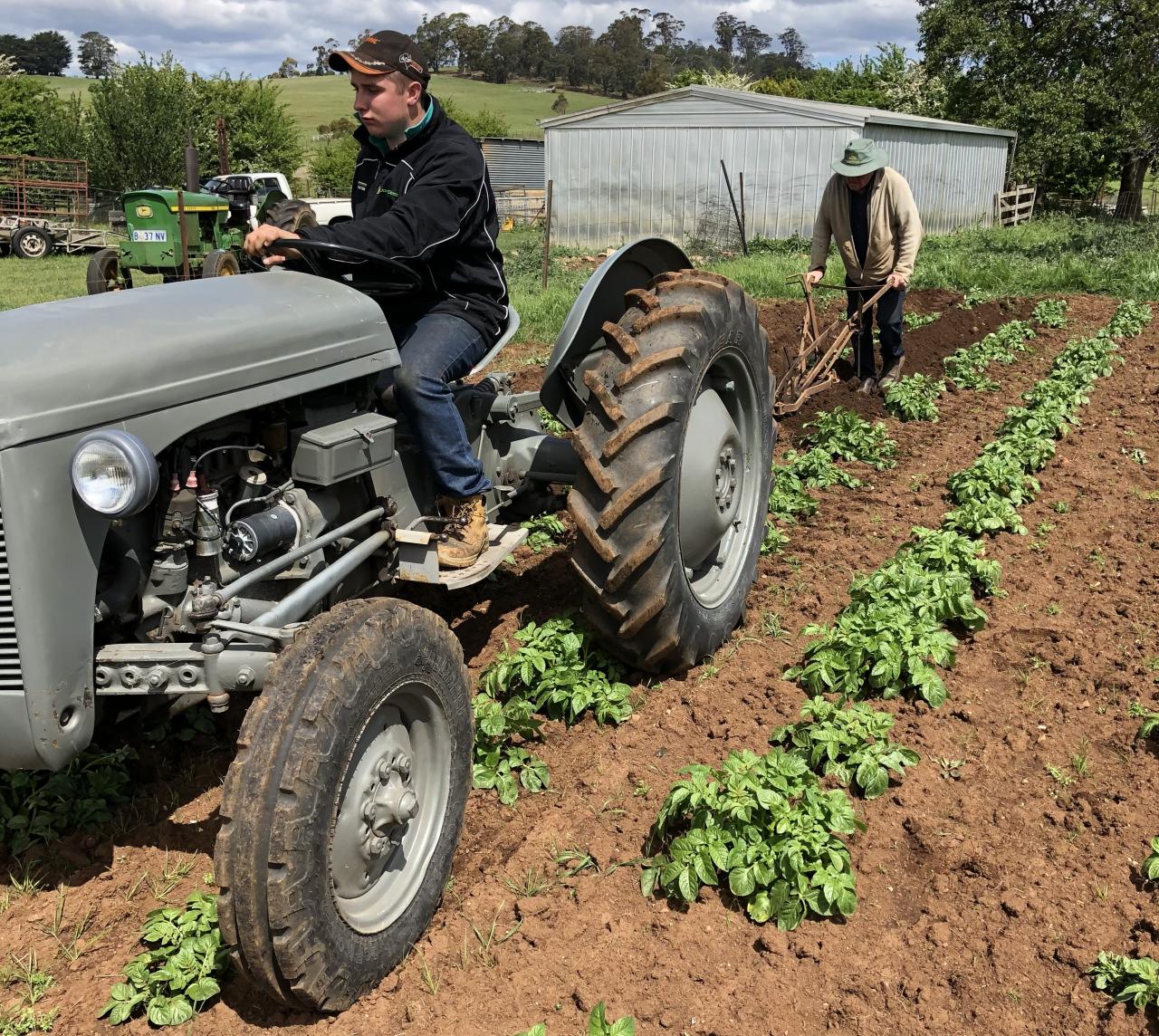
Although the process of moulding new season crops to aid weed eradication still requires manual labour, as seen in the picture of Ron guiding the vintage plough between rows as it is pulled behind the tractor driven by his grandson, Cameron.
His next plan is to restore the harvester, as he did with the planter, bringing it back to its former glory.
In an age of convenience and speed, Ron Murray’s story is a reminder of a different kind of living, one built on persistence, self-reliance and the quiet pride of feeding one’s family from the land itself.
This year's crop is in the ground, having been planted with with his son, Joe's, help.




Add new comment