
Fishing - Trout angling conditions expected to improve
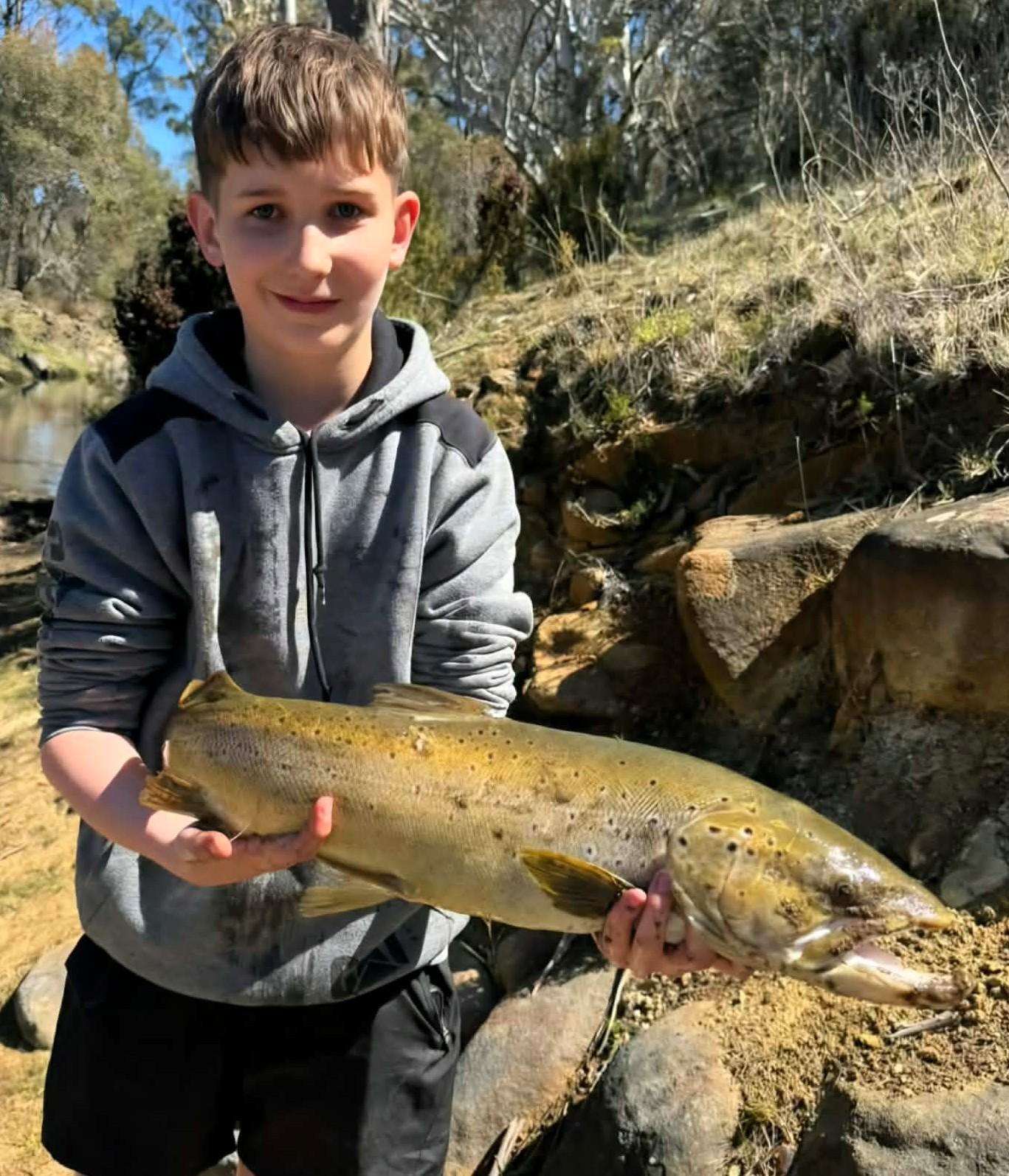
What a wild week of weather Tasmania and the rest of Australia have just experienced. Trout fishing has been challenging, but conditions and catches should improve over the next few weeks.
Colder waters such as Great Lake are beginning to fish better, with bait and lure anglers landing quality brown and rainbow trout. It's also a good time to chase the tagged 'money' trout still swimming in several waters.
Anglers fishing from Great Lake's shores with wattle grubs and worms, either under a float or on set rods, have caught some good fish. Similar methods have produced plenty of trout at Brady's Lake, Lake Binney and Tungatinah Lagoon.
Lake Echo has also begun to fire, with good bags taken around structure at its northern end. Other waters featuring in reports include Brushy Lagoon, Bronte Lagoon, Talbots Lagoon, Four Springs Lake, Lake Leake, Craigbourne Lake, Lake Mackintosh, Lake Burbury, Penstock Lagoon, Little Pine Lagoon and Lake Rowallan.
River fishing should improve as flows settle after the recent rain and snow. Sea-run trout anglers still have a chance while whitebait are moving, although the season has been disappointing and time is running out.
Whitebait fishers report slightly better catches this season, but many are still putting in long hours for a feed. The 2026 whitebait season closes on Wednesday, November 11.
Australian salmon, black bream, mullet, barracouta and tailor are moving through many estuaries, along with some good-sized silver trevally.
Meanwhile, researchers from the Institute for Marine and Antarctic Studies have completed the first round of a sand flathead stock enhancement program in Tasmania's south-east.
In September, about 250 large sand flathead were moved from north-eastern Tasmania into the south-eastern zone. Half were longer than 400mm, with the largest measuring 545mm. Six males and six females were also transferred to IMAS aquaculture facilities as the first breeding stock for a captive breeding program.
A further 300 fish are planned for translocation in late October or early November, with the first spawning expected in November. The program will test whether introducing large adult fish and releasing captive-bred fish can rebuild depleted stocks. The aim is not only to increase numbers but also to restore a healthier mix of fish sizes.
Anglers and campers are reminded that seasonal campfire bans began on Monday, October 26, on reserved land in parts of Tasmania. The restrictions have been brought in because of dry conditions and the prospect of warmer weather.
The bans cover national parks and reserves in Break O'Day, Brighton, Central Highlands, Clarence, Derwent Valley, Dorset, Flinders, George Town, Glamorgan-Spring Bay (including Maria Island), Glenorchy, Hobart, Huon Valley, Kingborough (including Bruny Island), Latrobe, Launceston, Northern Midlands, Sorell, Southern Midlands, Tasman and West Tamar.
Campfires, pot fires and solid-fuel stoves are prohibited in affected areas, but gas stoves and gas barbecues are permitted. During a Total Fire Ban, outdoor fires and liquid-fuel stoves are also prohibited. Electric and LPG cooking appliances are allowed, subject to fire safety conditions. Check Parks and Wildlife Service and Tasmania Fire Service advice before heading out.
The New Norfolk Licensed Anglers Association will hold its fifth trout fishing competition of the 2026-27 season this weekend. The 'Open Waters' competition allows members to fish their favourite spots from 6pm on Friday, October 30, with weigh-in from 3pm to 3.30pm on Sunday, November 1. Entrants must be financial members before the competition begins.
Tip of the week: Snakes are becoming more active, with anglers reporting numerous sightings. Watch where you step when walking or fishing along the shore, by day or night.
Send fishing reports, pictures and tips to valleyfishes@gmail.com.
Tight lines until next week.



Add new comment