
Jack sows seeds of success
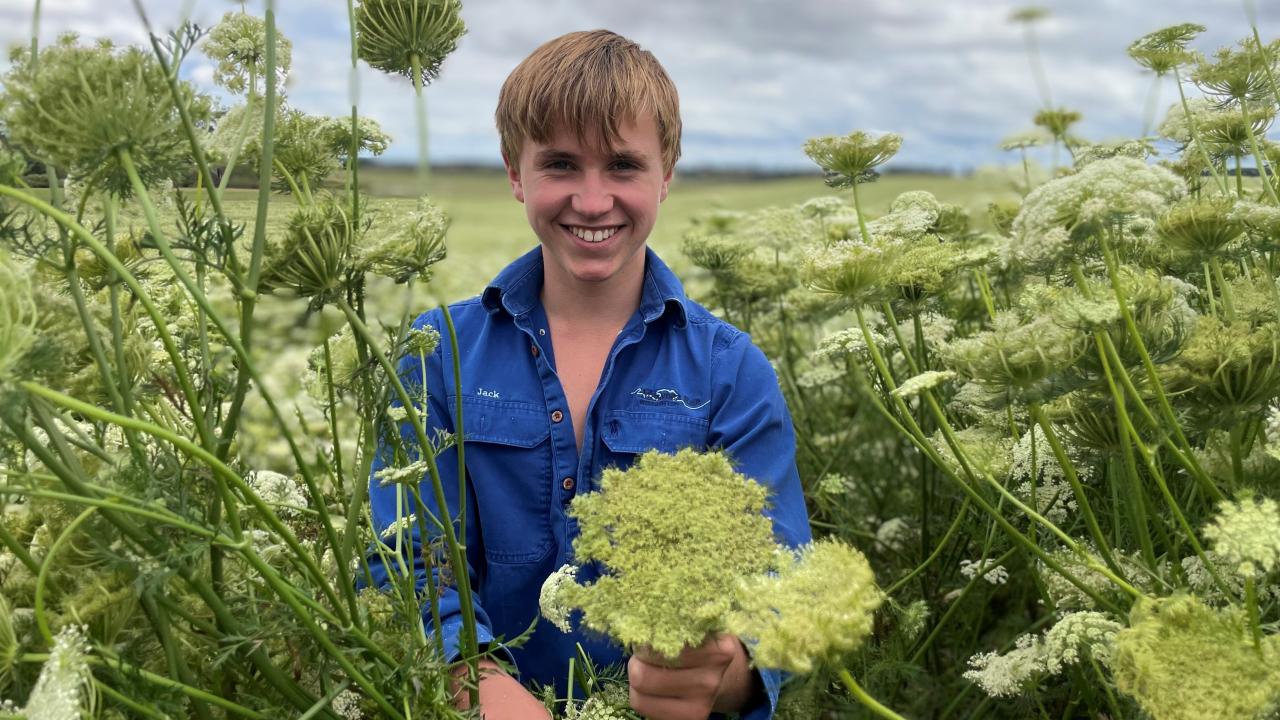
Jack Frost has grown a crop of carrot seed that the French can’t wait to get their hands on.
The 14-year-old son of Westwood farmer Rob Frost is not only an accomplished farm machinery operator, he is across the planning, planting, monitoring and harvesting of the hybrid crop which will eventually be added to the many shipping containers full of seed to be exported from Tasmania this year.
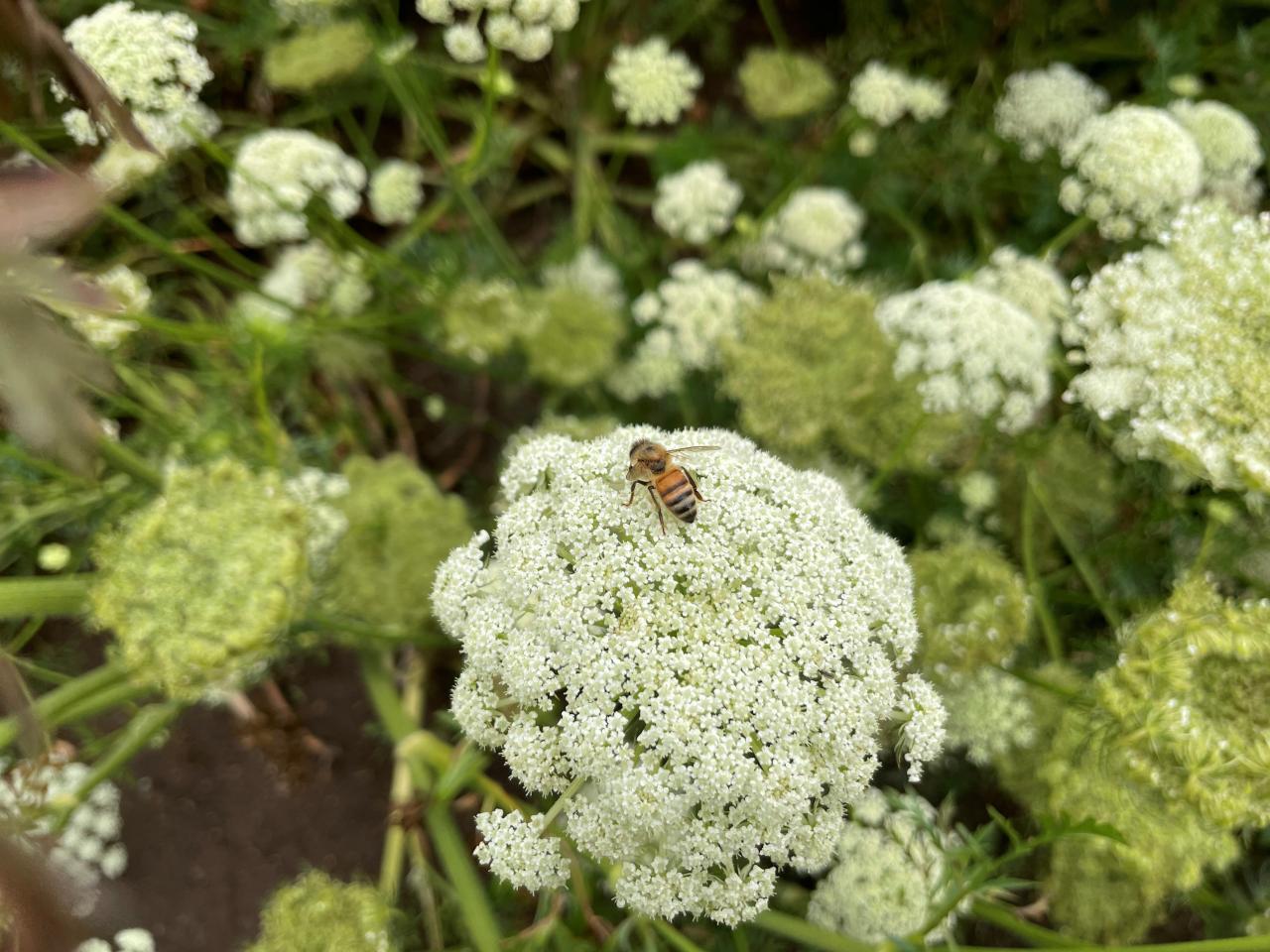
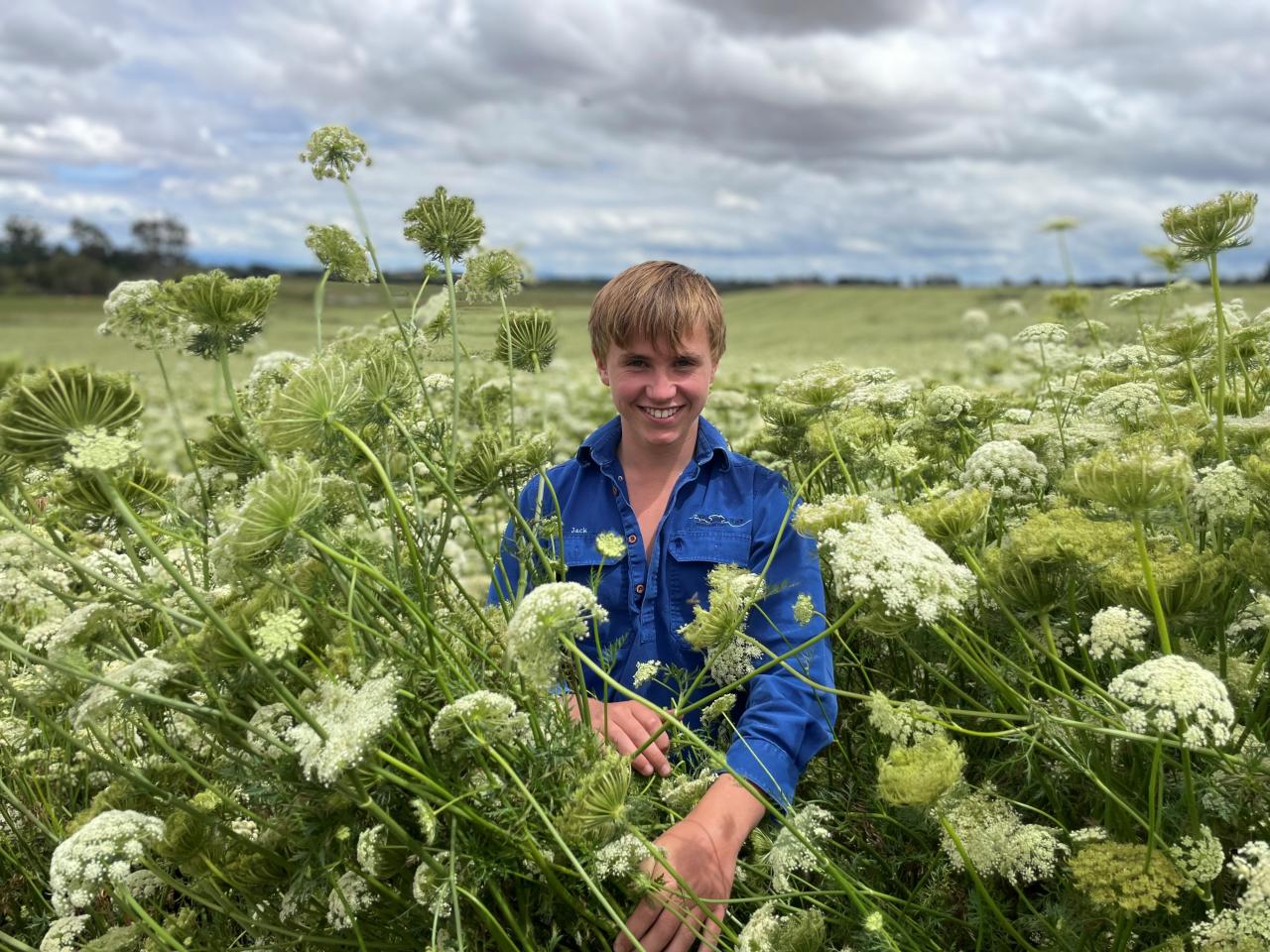
Checking on the carrots this week with South Pacific Seeds northern production manager Andrew Jones, the carrot tops towering above him in places, Jack was pleased with the bee activity and the seed set and is confident of a bountiful harvest.
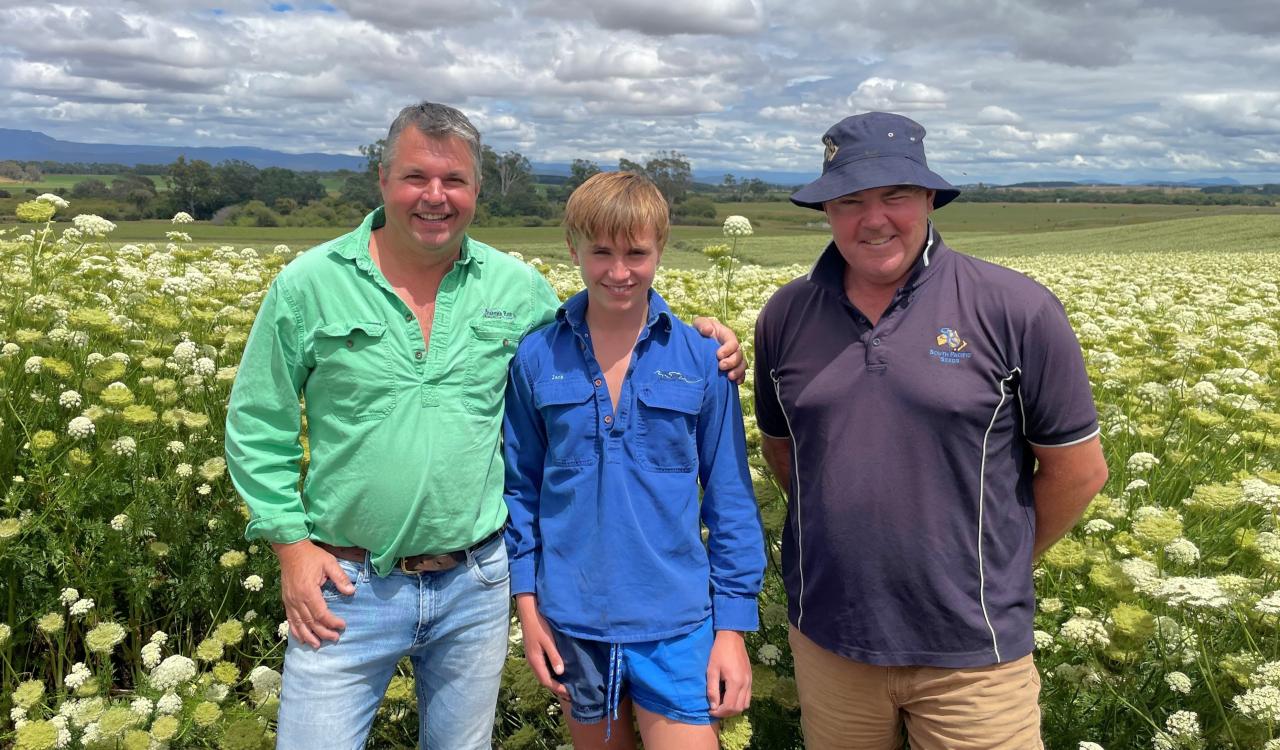
It’s part of a new business strategy for the 356ha Meander Rise property, just north of Carrick.
The farm, which borders and has water rights to the Meander River, has been transformed over the past five years by Rob and his two sons, both aesthetically and production-wise, and its future is looking bright.
“We’re mainly a cattle operation, with 196 head of Angus cross, and we fatten lambs in summer, but the aim is to transition into more of a cropping operation with the addition of more irrigation,” Jack said.
“We had potatoes on here before the carrots and we’ll have a mixture of carrot seed and potatoes next season.”
The Frosts opted to plant only carrot seed this season because the returns outweighed those of potatoes, but Jack has committed to a further 10ha of carrot seed next season alongside spuds.
It’s been a learning curve for Jack, with the contractor’s support and expert mentoring proving invaluable.
“Every crop that we grow, with a few exceptions, is a different variety, so unlike a grass seed or cereal crop we can’t make up the losses in another field, we have to have each field performing as well as we can to supply the market,” Mr Jones said.
“We call this hybrid Barbara, and the customer entrusts us to produce this seed and multiply it on their behalf.
“In this case the seed has come from France to be put in the ground and it will go back to France. The chances are the carrots you are eating tonight could be the progeny of this crop.”
In every field there are two rows of female plants which have been bred to be male-sterile, adjacent is a male pollinator line which gets destroyed at the end of flowering. The crop is isolated by several kilometres to stop the chance of out-cross from another variety in the area.
Jack said the crop was planted in February and is due to be harvested next month.
“We’re a few weeks behind because of cold weather, but Mr Jones said the seed heads look like they’ve been fully pollinated so it’s looking quite good.”
After the male rows are strategically removed and the seed head is mature, a windrower cuts it off at ground level, puts it into a row to dry and mature and a harvester will pick it up and thresh it with a normal combine.
The two seed lines that are being crossed have been chosen to produce excellent yield, storage and taste.
The carrots in the ground will not have those same qualities and the roots will be left to break down in the soil while the tops dry out.
Jack is particularly across the water monitoring for the crop, marrying up the weather and the pivots using the latest technology from AgLogic.
“We’re watering at night so we don’t disturb the bees during the day and there’s less evaporation,” Jack said.
“We need 100 percent pollination - so the bees are very important.”
Mr Jones was quick to add that if varroa mite comes to Tasmania and impacts bee numbers it will be challenging, and it’s likely hover flies would have a bigger role to play.
“There’s been a few challenges with watering and maintaining the right levels across the crop because of how the season has panned out, and we’re a bit behind, but we’ll make that up,’ Rob said.
“Because it’s a 13-month crop, you spend half the year trying to get water off the paddock, and half the year trying to keep the water on the paddock.”
SPS has indicated that Jack’s carrot seed is one of the state’s frontrunners and has dangled its own carrot, with a prize for the best.
“The contract for the grower is around $20,000 per ha gross, and it costs around $12,000 per ha to grow it,” Mr Jones said.
“But that is an average grower in an average season.
“The Frosts aren’t average growers and this isn’t an average crop in any way, we hope they will do much better than that.
“Demand always outstrips supply and for the first time in 28 years we actually have more growers than crop to put in, but knowing that I‘m sure that next year we can put our hand up for more.
“Tasmania is the toast of the world for hybrid carrot seed.”



Add new comment
Comments
Congratulations Jack
Congratulations Jack