
Lawrenny Estate rolls out the barrels
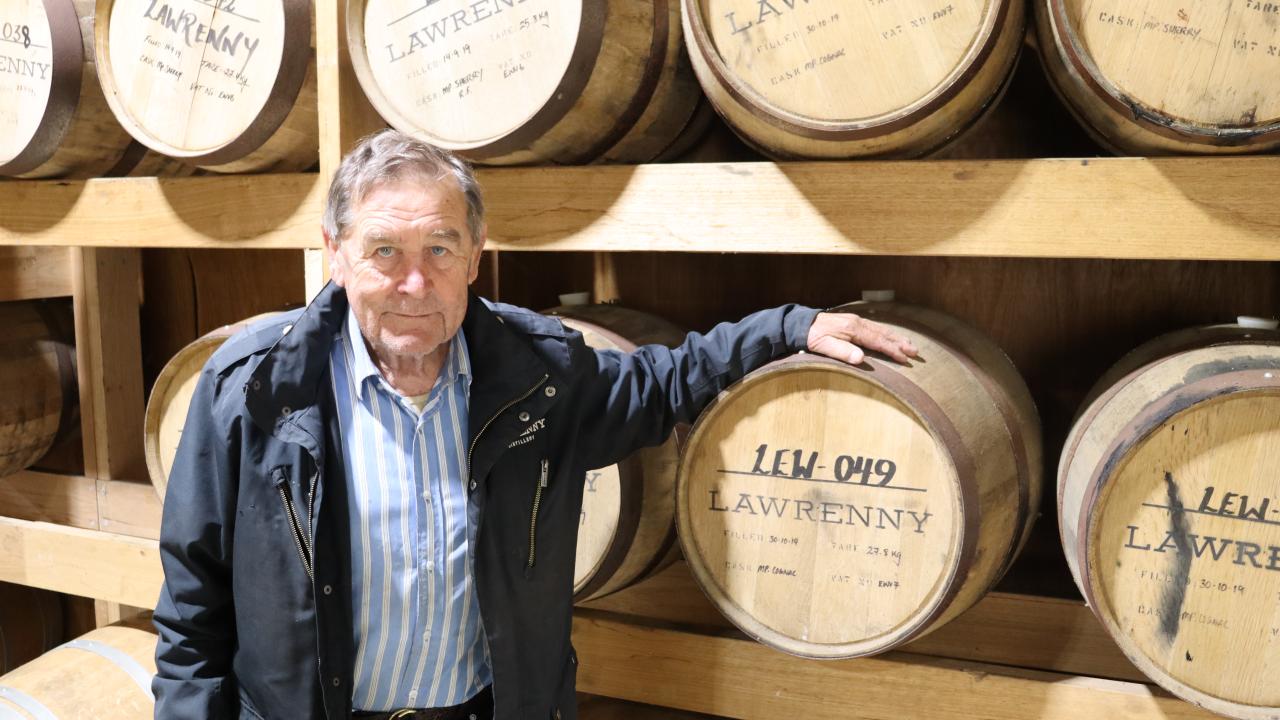
Ross Mace blames Bill Lark for making him take the plunge into whisky distilling.
“He was here one day in 2016, fishing,” Mr Mace said.
“He looked at the barn and said ‘that’d make a good distillery’.
“So then I commenced my small retirement hobby.”
It has become more than a hobby for Mr Mace and is now one of the main things Lawrenny Estate is known for.
A more than 160-hectare farm outside of Ouse, the origins of Lawrenny Estate started with Lieutenant Edward Lord, who was part of the First Fleet.
“His first land grant is where the Domain is in Hobart and the old Mercury building was his townhouse,” Mr Mace said.
“In 1813, the government wanted the Domain and they swapped him for here.”
Lieutenant Lord named the farm Lawrenny after the Welsh town he was from.
In the late 1850s, the estate was bought by the Clark Family, who built the beautiful house on the property that is still standing, and then sold it to the Brock Family in 1896.
“At the end of World War Two, they had no remaining male offspring because their two boys were killed in the conflict,” Mr Mace said.
“So they sold Lawrenny back to the government to be split into soldier settler blocks.”
The land was split into 14 80-hectare blocks.
In 1992, Mr Mace and his family bought the block containing the historic property, and 10 years later, purchased the land next door, effectively doubling the size of the farm.
Before buying the farm, he had a crop-dusting business that operated in New South Wales and southern Queensland.
“We were in a partnership with Strahan Village and Franklin Manor,” Mr Mace said.
“And after coming down, we fell in love with Tassie.
“So we decided to move down here.”
When Mr Mace originally bought the property, it was a dairy farm.
However, he had no interest in running a dairy farm.
“I couldn’t imagine doing that seven days a week,” Mr Mace said.
“I was born on a cattle property my parents owned north of Roma and then at Goondiwindi.
“I love beef cattle, as opposed to dairy – I understood them.”
Since starting the distillery, Mr Mace said they had cut back on developing other parts of the farm.
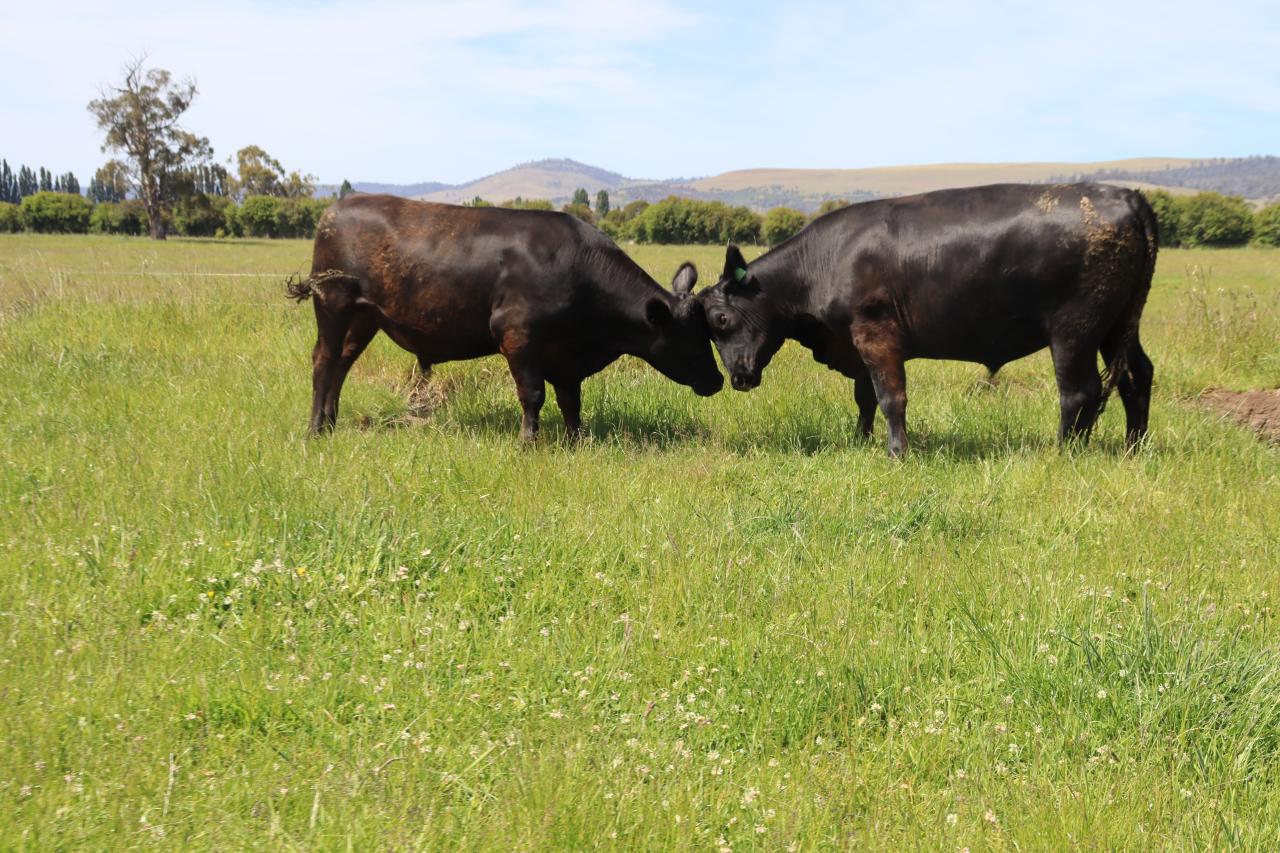
“We produce 250 head of cattle a year.
“We could almost double that if we ran it intensely.
“But at this stage, we don’t want to do that.”
Mr Mace said they had also cut back on stock numbers.
“After we cut back, we’re starting to get better gradings from Meat Standards Australia (MSA).
“I’m not sure if increasing the use of fertiliser and heavy grazing is the right way to go.
“If we do improve it or increase the number of stock, we’ll do it very slowly because we don’t want to sacrifice the quality.”
Lawrenny Estate were recently named Tasmania’s best Larger Non-Grainfed producer at the (MSA) Producer Awards 2023-25.
The old barn that Bill Lark said would make a good distillery was redeveloped in February 2017 and distilling in the building began that October, before the cellar door opened in 2018.
The Lawrenny Estate spirits are made with barley grown on-site and water straight from the River Derwent that flows past the property.
“When we started distilling, my wife and I knew nothing about making whisky,” Mr Mace said.
“I knew I could build it, because it’s just mechanical, but not knowing anything about it prompted us to headhunt the best people we could find.”
One of those people is head distiller Joe Dinsmoor.
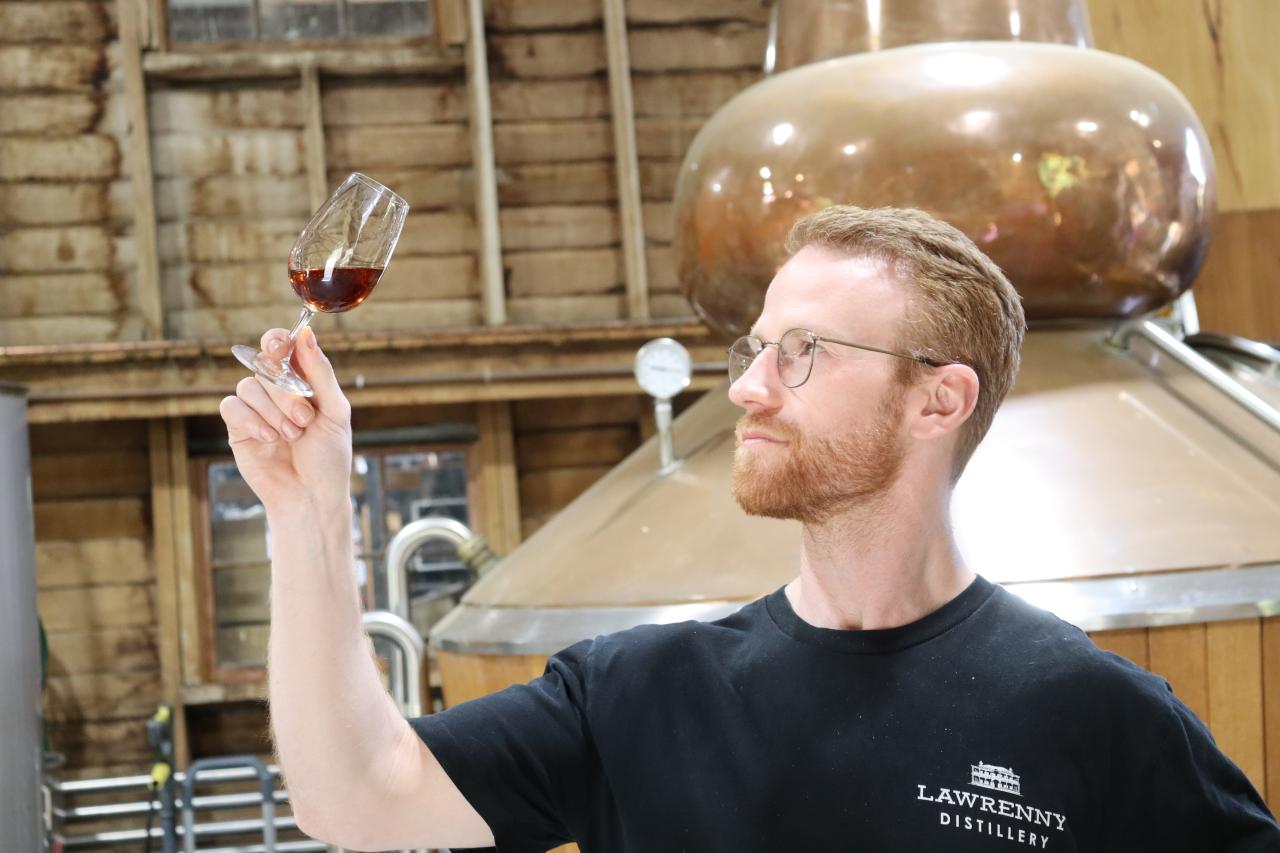
A former head distiller at Archie Rose in Sydney and Forty Spotted Gin, Mr Dinsmoor said when he was first introduced to Mr Mace and his wife, Mary, he saw plenty of potential at Lawrenny Estate.
“When I walked in, it was just the initial shed with the stills and brewing equipment installed,” he said.
“It’s like walking into a restaurant that doesn’t have a head chef.”
Mr Dinsmoor said being head distiller at Lawrenny Estate had been an enjoyable experience.
“Find me one industry that hasn’t faced challenges in the past eight years.
“We pretty much launched our first whisky just before COVID hit.
“All of a sudden, everyone wants to drink – which is fantastic for us.”
During the pandemic, Lawrenny Estate made hand sanitiser for frontline workers.
Once Tasmanians were free to explore the state, Mr Dinsmoor said there was a “bronze period” for the distillery.
“We saw a huge number of people coming through and that was fantastic.
“And then once everything opened up, international travel was probably still off-limits for some people, so we had some great interstate visitors.”
Despite issues such as high interest rates, Mr Dinsmoor said he was still blessed to be in the role.
“Every day I can come out, and no matter what window or door I look out of, it’s always inspiring.”



Add new comment