
Low emission project launched at Landfall
Tasmania's Low Emissions Livestock (LEL) project is expanding into pasture-based beef operations and the early data is looking promising.
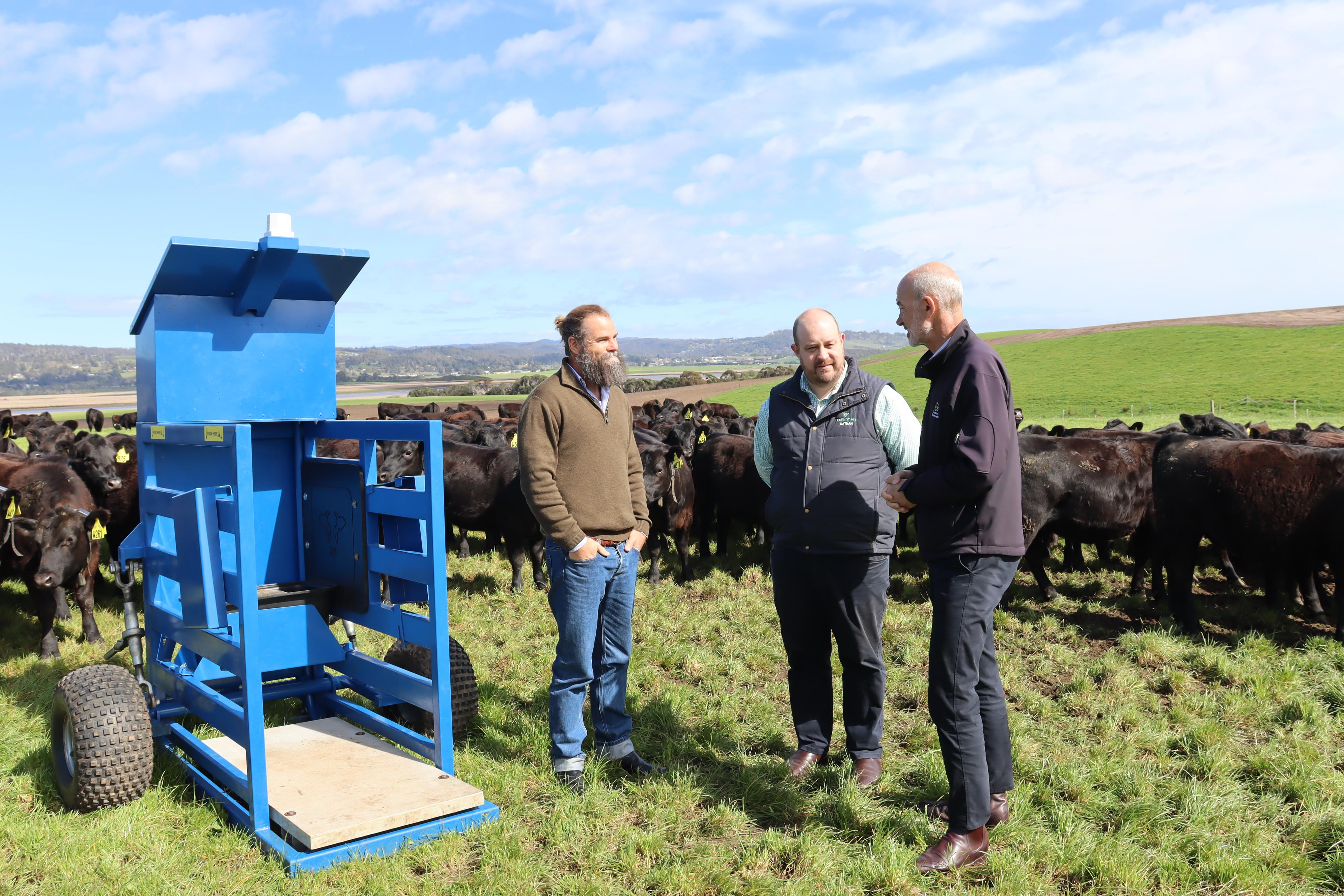
Trials are underway on Angus stud Landfall’s Sassafras farm, East Bourne and at Clovelly Tasmania’s livestock operation at Bowood, near Bridport, with SeaFeed lick blocks and OptiWeigh monitoring equipment being used to reduce methane emissions from cattle while tracking animal performance in real time.
Deputy Premier and Environment and Climate Change minister Guy Barnett visited Landfall’s Dilston headquarters today to see the technology in action - and the black Angus were only too happy to demonstrate.
The lick blocks, made with five percent Tasmanian native red seaweed Asparagopsis and salt from NSW-based salt manufacturer Olsson’s and some molasses sweetener, had bovine tongues going and then the cattle, in a bid to get to even more seaweed treats, weighed themselves throughout the day by putting their front feet on Optiweigh scales.
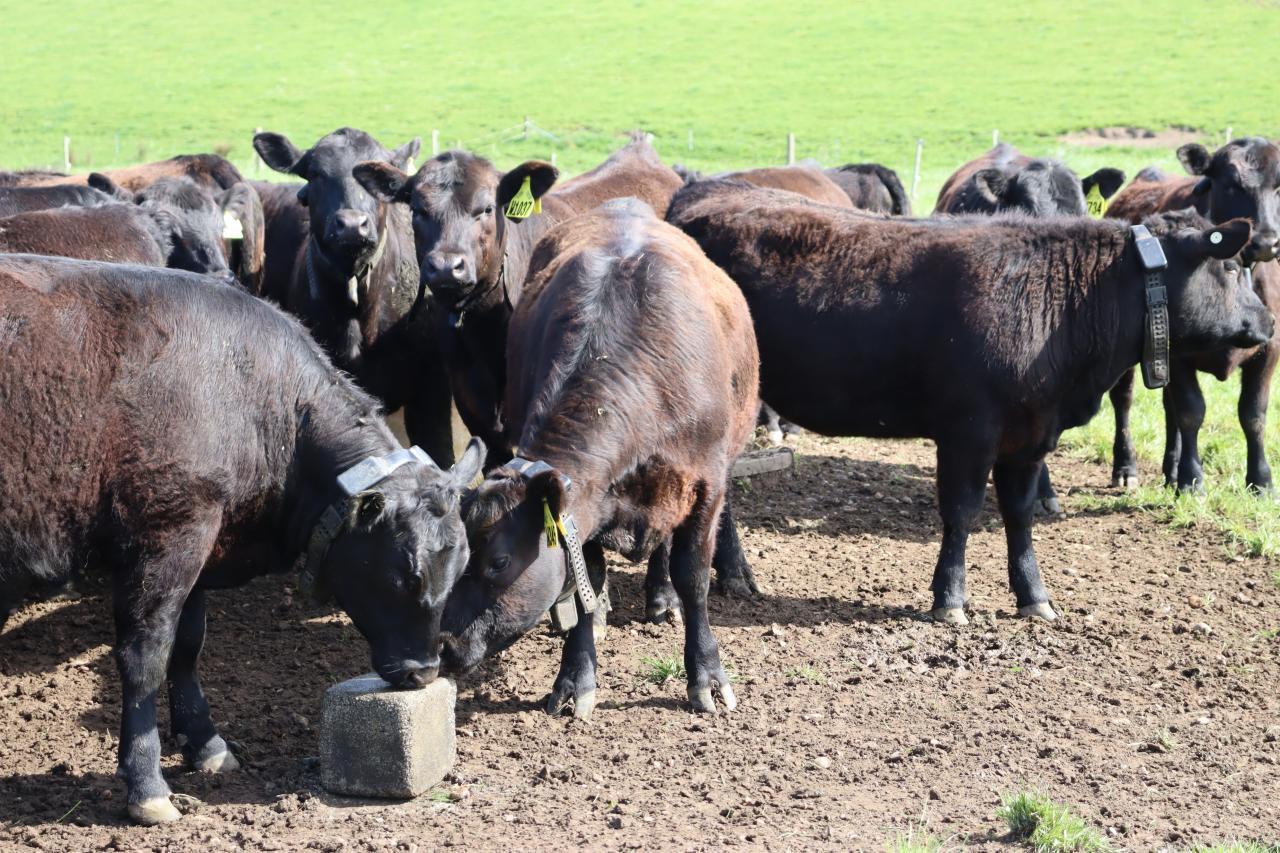
The scales digitally read the cow’s ear tags to gather individual data which is showing good weight gains alongside emission reductions.
Landfall north-west farm manager Ferghal Berry said that there are three groups of cattle on the farm - two with 200 head in each for the trial and a control group of 120 head.
“So far we’re seeing a big enough increase in weight gain above what we would normally expect to cover the cost of lick blocks - plus the emission reduction is a win for the environment,” he said.
“The project website is a fascinating rolling tally of the outcomes and we get an added benefit of seeing daily feedback of weight gain rather than every one or two months.
Minister Barnett said the State Government was working in partnership with industry to realise the commercial potential of emission reducing supplements.
“Livestock is a significant contributor to Tasmania's greenhouse gas emissions, and this is just one way we can reduce them to ensure we continue to meet our target of net zero emissions, or lower, from 2030,” Minister Barnett said.
“Importantly, the trial has already shown we can reduce methane emissions from grazing livestock by more than 20 per cent without compromising farm productivity.
The project, delivered by TasFarmers with Sea Forest and the Tasmanian Institute of Agriculture, has previously focused on feedlot and dairy systems.
Its next phase extends the trial to pasture-based grazing enterprises across both beef and sheep, with beef remaining the primary focus.
TasFarmers Low Emissions Livestock Project lead Jonathan Jones said the expansion would allow the technology to be demonstrated in conditions more representative of Tasmanian livestock production.
“Expanding into pasture-based systems means we can show this technology working the way most Tasmanian farmers run their livestock,” Mr Jones said.
“Bringing more properties into the trial, and putting the data straight onto a public website, means farmers can see the results for themselves as they come in.”
TasFarmers chief executive officer Nathan Calman said the expansion of the project reflected growing confidence in the work being undertaken by TasFarmers, industry and the Tasmanian Government.
“Moving into pasture-based beef systems, and publishing our data in the open, keeps this trial grounded in what will actually work on Tasmanian farms,” Mr Calman said.
“This project is about giving farmers practical information they can use, while building a stronger understanding of how innovative emissions reduction technologies can work in real farming systems.”
Sea Forest CEO Sam Elsom said he has no doubts about the benefits that seaweed in livestock feed will have in the future.
“We’ve been developing these feed supplements since 2018 and we know they can deliver the methane abatement, now we just need to get the farms to use it,’ he said.
“That’s why TasFarmers is involved - our goal as a business is not just to create the environmental outcomes but to show that there can be positive economic outcomes for producers.
“Instead of energy being lost to the atmosphere as a greenhouse gas, that energy is preserved by the animal and used to help it grow - that means more kilograms of beef and more money for farmers.”
The Low Emissions Livestock project website is available at: taslowemissionslivestock.com.au

Add new comment