
Mike Rose from TIA reveals why our food bills are not higher
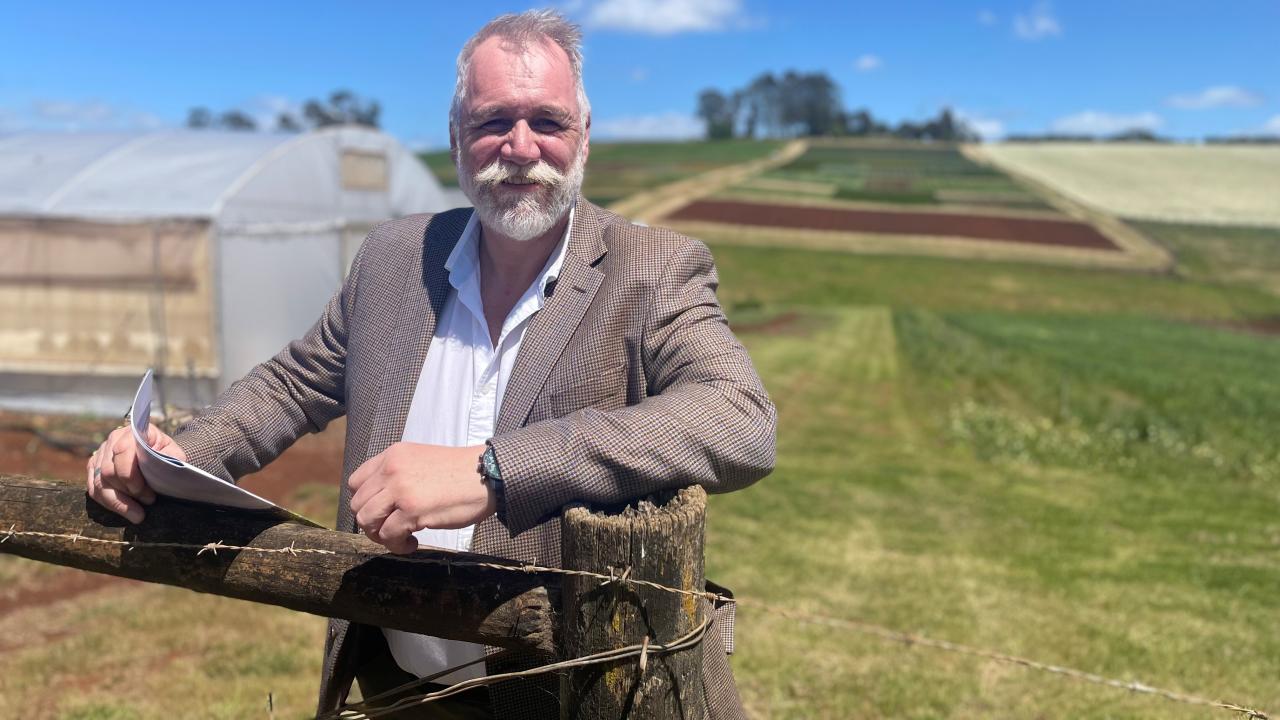
Tasmania’s agricultural sector is more than a backdrop to our postcard landscapes. It is a pillar of the state’s economy and identity: a statewide network of farms, processors, transport businesses, input suppliers, veterinarians and contractors, supporting regional towns. Agriculture underpins Tasmania with jobs, export earnings and the reliability of our local food supply.
In the five years to 2023, the value of Tasmania’s agricultural sector grew strongly, at a compound rate of around 8 per cent per year, compared with broader state economic growth of around 1.1 percent. Agriculture matters now, and it is on track to become much more important to us in the future.
Yet the biggest gains on farm, year on year, rarely come from a single good season. They come from the steady work of agricultural research that leads to innovation - the trials, measurements and hard lessons that turn into better pasture, healthier animals, more resilient crops and smarter use of water, fertiliser and energy. In a state where weather swings, biosecurity risks and freight realities are part of our daily conversations, research is not a “nice to have”. It can be the difference between making progress and holding ground, or going backwards.
The Tasmanian Institute of Agriculture (TIA) is a joint venture between the Tasmanian Government and the University of Tasmania, with a mandate to deliver agricultural research, industry development, training and education for Tasmania. Much of that work is done in partnership - with farmers, industry bodies, schools and training providers, processors and government - with a focus on practical outcomes.
From paddock questions to practical answers
Ask any producer what they’d like from research, and you’ll hear variations on a theme: “Help me grow more with less risk.” That might mean lifting milk solids per hectare without burning out pasture, protecting wine grapes from bushfires and smoke taint, or keeping vegetable yields stable under changing weather patterns.
Tasmania has real advantages for agriculture: in many districts we have reliable water, cool-temperate growing conditions, strong soils, and a reputation for quality. But those strengths only pay off when they can be converted into consistent production. Research helps do that by taking uncertainty and turning it into decision rules: when to sow, what variety to choose, how to manage pests, how to feed through a dry spell, and which changes genuinely lift productivity and profit rather than simply shifting costs around.
Over time, those gains compound. A small improvement in pasture utilisation, calving management, feed efficiency, irrigation scheduling or disease control can add up, year on year, to a big difference across thousands of hectares and hundreds of herds. It is the “one per cent” effects, repeated and locked in, that underpin long-run growth across the sector.
Agricultural research is especially important for Tasmania
Tasmania is an island economy. Distance to market and transport costs are always in the background, particularly for bulky, perishable products. Productivity matters because of this “Bass Strait tax”: if a farm can produce the same output with fewer inputs (or more output with the same inputs), it can remain competitive even with higher freight costs, and even if energy and labour costs are higher too.
Research also helps manage Tasmania’s particular risk profile:
- Climate variability: cool springs, late frosts, intense rainfall events and very dry summers can disrupt production. Research that improves soil structure, irrigation efficiency and water infiltration, pasture persistence, crop timing and heat-stress management is not academic - it is risk insurance.
- Biosecurity: being an island helps, but the Bass Strait is not a forcefield. Research strengthens surveillance, diagnostic capability and on-farm management plans so that new pests or diseases are spotted earlier, spread is limited, and practical management options are available if a threat becomes established.
- Environmental and market expectations: consumers, supply chains and export markets increasingly want evidence around environmental sustainability, animal welfare and emissions. Research can help develop ways to meet those expectations - including better measurement and traceability - without placing unmanageable costs on producers.
More food from the same land, and a steadier supply
Higher yields, lower losses and better quality mean more litres of milk, more tonnes of vegetables, more cartons of fruit and more kilograms of meat from the same landscape - while protecting the environment that production depends on.
But the biggest public benefit isn’t only “more”. It is steadier.
Food supply is vulnerable to shocks: a disease outbreak, a wet harvest, a sudden input-price spike or a global pandemic. When supply is unpredictable, processors struggle, contracts become riskier, and shelves (or export orders) become harder to fill. Research that reduces volatility - by building resilience into crops and livestock systems — supports a more reliable flow of food through the chain.
That reliability matters especially for regional communities. When production is steadier, processing plants can keep shifts running, seasonal work stays available, and local spending in towns remains stronger. In that sense, agricultural research supports regional development as well as farm business performance.
Agricultural research and food prices
A recent article in the scientific journal Nature outlined how decades of agricultural research have helped keep food prices down through sustained productivity growth - and warned that slower growth in research investment can contribute to upward pressure on prices over time. The authors estimate that, on average, each dollar invested in agricultural research returns ten times that value to society.
That said, the price paid to farmers is only one part of what households pay for food. Food prices are also shaped by freight, energy, packaging and labour costs, exchange rates, retailer margins and global commodity markets, among other factors. Even so, agricultural research remains a real lever on food prices: lower unit costs and greater reliability help keep producers in business through tough cycles, reducing the risk of supply contraction that can push prices higher later.
When research reduces losses, through disease prevention, improved storage, better timing, or reduced wastage in transport, it means a greater share of what is grown actually reaches consumers. Less waste in the chain is one of the few ways to improve affordability without asking anyone to accept lower standards.
Research can also create new, higher-value products. In Tasmania, this includes work across industry and research partners on new crops and new varieties suited to local conditions - examples include traditional Chinese medicines, and new varieties of pastures with improved drought tolerance. These innovations can lift returns without relying only on higher volumes. When farm businesses are more profitable, they are better placed to invest in local staff, technology and infrastructure that stabilise production and supply.
Keeping research grounded: farms as living laboratories
The most effective agricultural research is not conducted at the top of an ivory tower. It is designed with farmers, tested on real properties, and translated into practical tools that can be used on-farm. Field days, decision-support tools, variety guides, feeding strategies and integrated pest management plans are all part of how research is turned into action.
One of Tasmania’s strengths lies in its ability to connect the researchers of TIA quickly with producers, industry bodies and government around shared problems. A recent example was the response to the outbreak of potato mop top virus in Tasmania. More generally, that collaboration is where research stops being a report and becomes a change in practice: fewer days lost to disease, better pasture persistence, smarter irrigation, tighter calving patterns, improved soil fertility strategies, and better management of weeds and pests.
The bottom line
Agricultural research is often invisible until you imagine its absence. Without it, farms rely more on guesswork, losses rise as the climate changes, input use becomes less efficient, new pests enter, and production becomes more volatile. Over time, that can mean less food produced locally, a weaker export position, and more pressure on household budgets when supply tightens.
In the years ahead, Tasmania’s agriculture will depend just as much on knowledge – the kind that is measured, tested and shared – as on the innovation and hard work of our farmers. Neither of these should be taken for granted. As for research, it is not only about future possibilities. It is a present-day tool that helps keep our farms profitable, food plentiful, and prices steadier than they otherwise would be.

Add new comment