
Rushy Lagoon sale process queried
The Foreign Investment Review Board is dragging out its decision on the sale of Tasmania’s largest agricultural property, Rushy Lagoon, raising questions about the transparency of the process, according to TasFarmers.
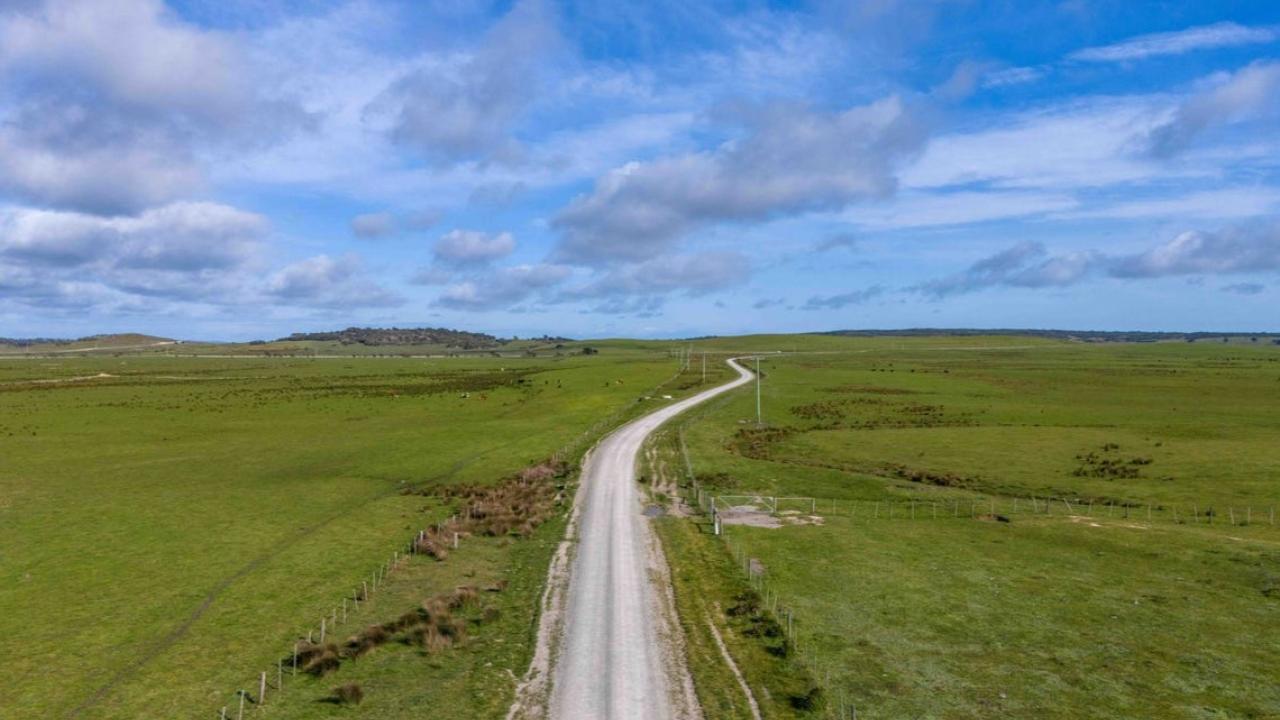
Tasmania’s largest farming property, in the state’s far north-east, is set to be sold to a British forestry investment firm.
The proposed sale of the 22,000-hectare dairy, beef and cropping operation, reportedly exceeding $100 million, has already sparked concern among primary producers about the potential conversion of productive agricultural land into industrial-scale monoculture pine plantations.
TasFarmers president Nathan Cox said the situation raises broader questions about transparency, process and the long-term future of agricultural land in Tasmania.
Mr Cox said the advocacy body has raised serious concerns about the FIRB process and the lack of transparency surrounding the reported sale to Gresham House, warning the situation risks undermining confidence in agricultural property markets and government decision-making.
“We had been told there were no other serious bidders, but that is simply not correct," Mr Cox said.
“There were some genuinely interested parties, including those with strong agricultural credentials, who were actively assessing the property and prepared to invest."
Mr Cox said there were also firm parties interested in the dairy component of the operation, but the sale period appeared to have been cut short."
“That raises real questions about whether the process allowed for fair and competitive offers to be made,” he said.
TasFarmers is also questioning the level of federal government involvement in the transaction, noting a disconnect between market expectations and the reported outcome.
“Our understanding is the market value sits somewhere between $70 million and $80 million, with multiple private parties willing to transact at that level and commit further capital to the asset,” Mr Cox said.
“It would appear the successful bid is closer to $100 million, supported by federal government funding. That kind of intervention risks distorting the market.”
Mr Cox said the FIRB process lacks transparency and accountability.
“The FIRB process is not transparent. When application fees exceed $1.2 million and there is little visibility on how decisions are made, it raises legitimate questions about independence and accountability,” Mr Cox said.
TasFarmers warned that this level of intervention will have broader consequences across the agricultural sector, including artificially altering property values and impacting production confidence.
“This sets a very dangerous precedent,” Mr Cox said.
“Artificially inflating land values through subsidised purchases disrupts the market and makes it harder for genuine farmers to compete.”
“There is also a real risk to production. If large tracts of productive farmland are removed or repurposed, it undermines processor confidence and disrupts local supply chains.”
TasFarmers also raised concerns about the lack of consultation with industry and local stakeholders.
“There is no evidence that any local, independent consultation or due diligence has been undertaken on the change in land use,” Mr Cox said.
“Farmers and regional communities have been left without answers.”
TasFarmers is now calling on the Federal Government to immediately clarify:
- Were any forms of public or government-linked funding used to support this acquisition?
- What was the full list of bidders, and were all given equal opportunity and time to complete due diligence?
- What criteria were applied under the national interest test?
- Was any consideration given to the loss of productive agricultural land?
- What consultation occurred with industry and local stakeholders?
Mr Cox said farmers are increasingly questioning whether the process has been conducted fairly.
“Farmers aren’t naive, we know how markets work. You bring forward your best offer and you’re given a fair shot,” Mr Cox said.
“What we’re seeing here doesn’t reflect that. When credible buyers are unable to fully participate, when the price sits outside expected market signals, and when there’s no transparency around government involvement, people are right to question whether this process has been conducted properly.
“At the moment, there are too many unanswered questions.”
Established after WWII by the British Tobacco Co., Rushy Lagoon, including East Wyambi (1221ha) was a particularly productive sheep and cattle property through the 70s and 80s with one of the largest shearing sheds in the country.
It was sold to Bert Farquar and later the Pye family from New Zealand and boasts substantial water resources and spectacular coastline near Ringarooma Bay on Bass Strait, with an estimated carrying capacity of 85,000 dry sheep equivalents.
The property was first listed for sale in early 2018 with price expectations around $65-70 million but despite strong interest, it did not sell at that time and was withdrawn from the market.
Following the passing of owner Allan Pye in March, 2024, Rushy Lagoon was again put on the market, this time as part of his estate, with expectations of fetching more than $100,000,000.


Add new comment
Comments
Market moves
One organisation manages to outbid others through innovation which then raises the value of the market. The incumbents, never happy about being outbid, either embrace the innovation or leave the market. Complaining is seen as either ironic or hypocritical. Have a read of The Wealth of Nations for more information.