
Sherwood Boer Goats label meets demand
Not many farmers want to breed meat goats. But a lot of people want to eat goat meat.
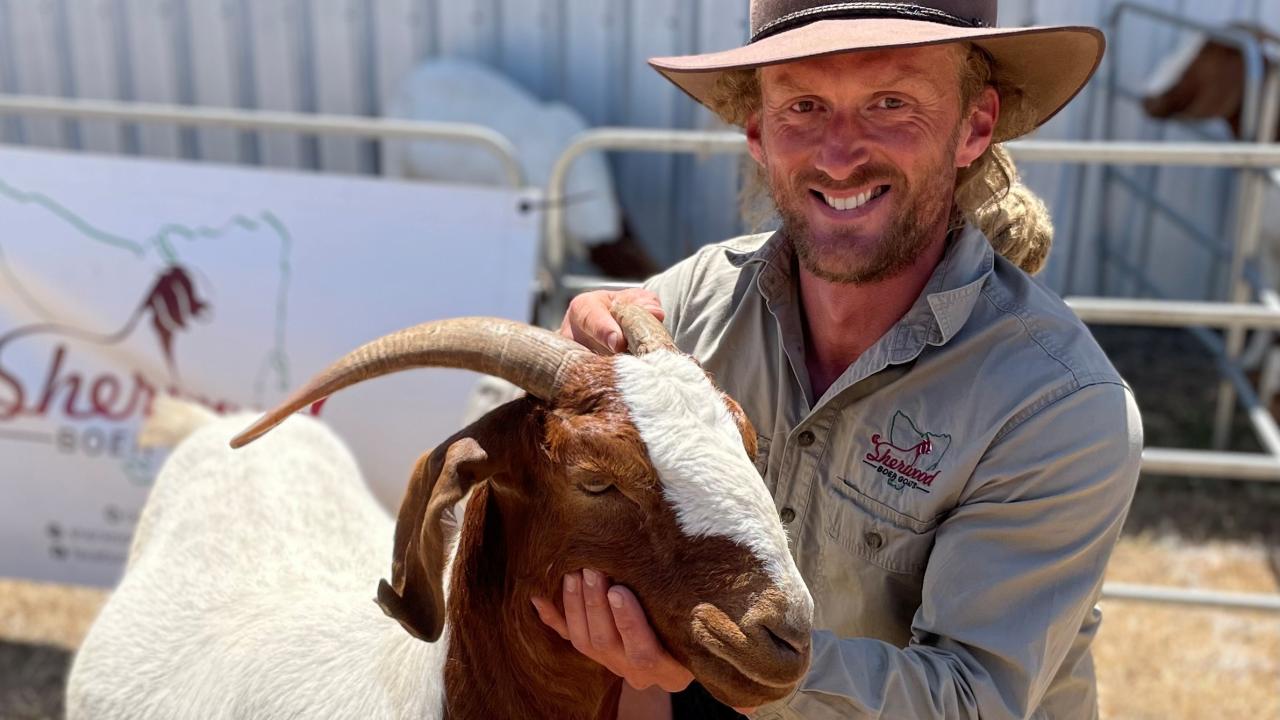
That’s the realisation which led to Callan Morse of Latrobe starting a commercial goat herd more than a decade ago.
It was a fact borne out at his Sherwood Boer Goats and Tasmanian Premium Goat Meat trade display at GoatFest on Sunday, where people kept asking him “where can I buy goat meat?”
He can now easily answer that question, but that wasn’t always the case.
“My interest was always in breeding studstock and seedstock and to attract more people into the industry to meet demand – but to be fair that’s been largely unsuccessful,” Mr Morse explained.
“With no established industry for goat meat and no sales at Powranna to take excess saleable stock, breeders would come and go quickly.”
Mr Morse started a collectively supplied label in April, 2024, called Tasmanian Premium Goat Meat, with 10-15 suppliers of various sizes and sales steadily gaining momentum.
He is now able to supply close to 30 businesses - butchers, cafes, providores and restaurants, as well as private customer sales.
“It’s created a light at the end of the tunnel for those who have meat goats,” Mr Morse said.
“I believe Tasmania is the most lucrative state in the country to produce goat meat, because we can’t get priced out of the market by wild-harvested goats like they do interstate.
“There’s a little bit of rangeland goat meat that makes its way here frozen, but fresh, locally produced and locally sourced products are what private and wholesale customers really want.”
Boer-infused goat meat (chevon) is considered the best goat meat for eating, with Mr Morse recommending the prime chevon, up to two-tooth, for traditional lamb-style cuts of chops, legs, backstraps and the mature meat, four-tooth to full mouth, for smallgoods, burgers, sausages, pies and slow-cooked curries and casseroles.
“Tasmanian Premium Goat Meat is offering up to $8 per kilo carcass weight for our stock and we hope to offer more it the future,” he said.
“Similar age private stock going to a commercial abattoir interstate would fetch maybe a third of that, and that’s only if you can get them booked in.”
With a herd of about 200 on land around Sunnyside, Railton, Latrobe and Barrington, Mr Morse doesn’t have far to take them for processing.
The majority go to The Local Meat Co at Claude Road, near Sheffield, while some ends up at the Stowport Abattoir or the Gretna eatworks.
Morse’s Butchery at Latrobe made the goat meat burgers and sausages for the barbecue at GoatFest – and they all sold out before lunch time.
Ironically Mr Morse’s family owned the butchery up until the 1980s and on its 100th anniversary last year he started supplying the same butcher shop with goat meat.
“There’s no doubt chevon is popular in the Asian, African and Middle Eastern cultures but it’s not just a source of protein for ethnic and migrant communities - they are the minority,” Mr Morse said.
“High in protein and low in cholesterol, those who enjoy the taste and texture of unique meats would enjoy chevon.”
Meat goats are also proving handy cross-grazers on sheep and cattle farms – browsing top down instead of grazing bottom up and munching on unwanted feed and weeds.
Around a 20 per cent stocking rate - a couple of hundred goats run with 1000 ewes - can be cost neutral for the farmer.
“I really just want to make goat meat more accessible to everyone in the state and support the breeders, no matter how big or small, who have supported me over the years,” Mr Morse said.

Add new comment