
Tasmanian government to provide conditional funding to $50m Westbury BioHub project
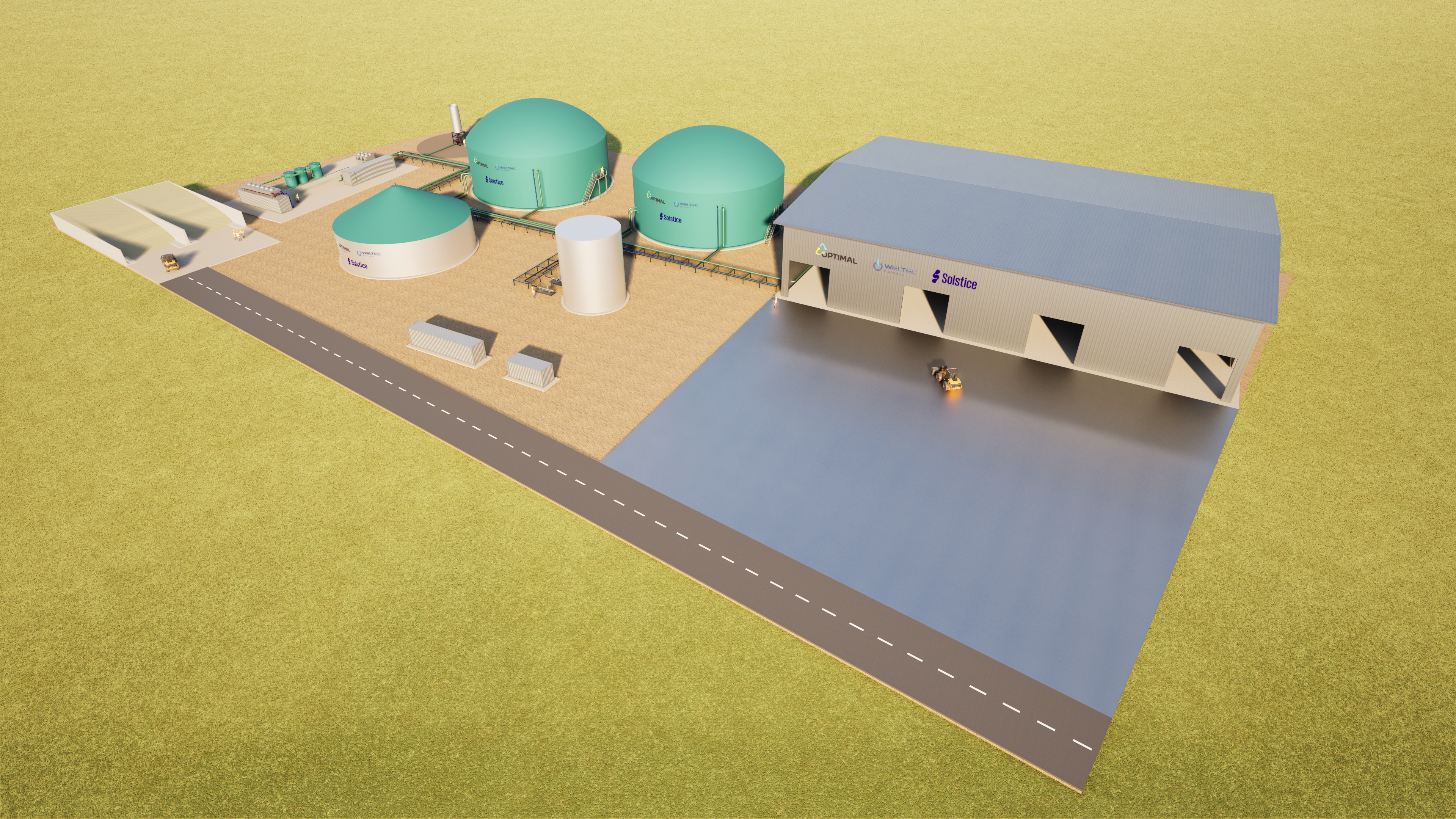
The Tasmanian government says it will invest up to $12.5 million in the proposed $50 million Westbury BioHub, with the funding to be performance-based rather than an upfront construction grant.
The project is proposed to be one of the first commercial-scale agricultural waste-to-biomethane projects.
Proponents Solstice Energy and Optimal Renewable Gas are aiming to convert around 36,000 tonnes of agricultural and food processing waste each year into renewable biomethane and organic fertiliser at the facility.
The facility's biomethane is intended to be added to Tasmania’s existing gas network.
At full production, the BioHub is expected to produce around 188 terajoules of renewable biomethane each year, enough to supply around three per cent of Tasmania’s current annual natural gas demand, as well as around 12,000 tonnes of organic fertiliser.
It is expected to reduce greenhouse gas emissions by approximately 13,300 tonnes of CO₂-e annually.
The proponents said the state’s government is performance-based, with payments linked to verified processing of eligible organic material following commissioning rather than provided as an upfront construction grant.
Construction is intended to start in early 2028, subject to approvals, with biomethane production commencing in early 2029.
Solstice Energy CEO Phaedra Deckart said the funding announcement was an important vote of confidence in both the project and continued investment in Northern Tasmania.
“This investment brings the BioHub, a $50 million investment in Northern Tasmania, another step closer to reality.
“It is the kind of project we want to see more of in regional Tasmania: investment that builds on industries already here and creates new local economic value.”
“This is power from the paddock: it turns Tasmanian farm waste into renewable gas for Tasmanian industry.
“It can go straight into the gas network already in the ground and be used by businesses without changing existing equipment or infrastructure.”
Optimal Renewable Gas Managing Director Mike Davis said the project would support the state’s farming and food production industries.
“The technology is proven, the resource is here, and the infrastructure is here.
“We now have an opportunity to turn material currently treated as waste into renewable energy, organic fertiliser and economic value for the region.
“What leaves one Tasmanian business as waste can become the fuel that powers another.
“It is fuel from the field, produced locally, and used locally by the industries that help drive Tasmania’s economy.”
Environment Minister Guy Barnett said finding new ways to recover value from organic by-products generated by Tasmanian industry helps strengthen our circular economy, supports regional investment and creates new economic opportunities.
“Projects like this are the kind of practical initiatives the Tasmanian Government wants to support.
“While we’re not yet providing funding, our conditional commitment gives the proponents the confidence to progress to the next stage while making clear the requirements that still need to be met.”
Any government funding for the BioHub will be delivered through the Waste and Resource Recovery Board, with its chair, Pam Allan, saying that an assessment of the proposal tested the project’s commercial model, environmental considerations, outputs and more.
“Recovering value from by-products and residue materials is a priority for the Board and is an important part of building a sustainable future for Tasmania’s transition to a circular economy,” Ms Allan said.
“Innovation can turn challenges into opportunities.
“This project presents an opportunity to improve resource recovery outcomes and has the potential to deliver lasting benefits for industry and the community.”


Add new comment