
Authorities issue warning about farm machinery fire risk
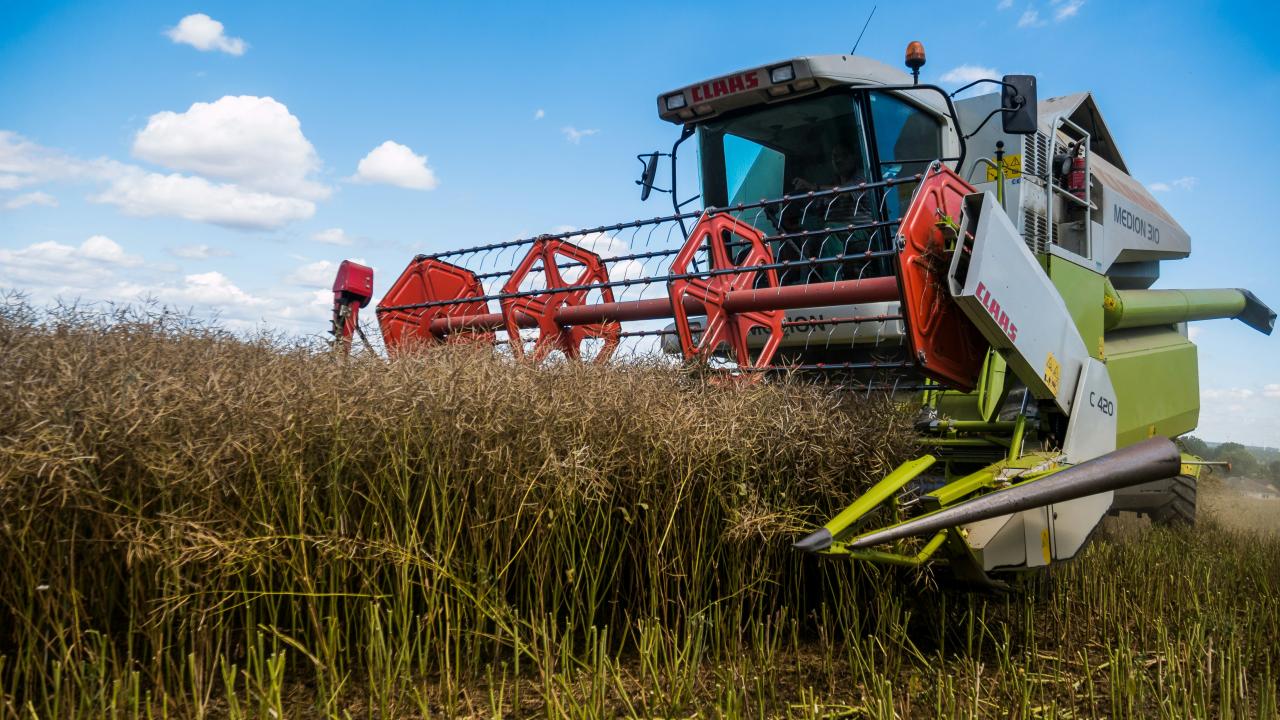
Farmers are being cautioned to take care operating machinery despite the lifting of a total fire ban on Monday.
Community Fire Safety director Chris Collins said the use of machinery, such as harvesters, slashers, brush cutters, mowers and vehicles can lead to accidental fires in or near dry vegetation.
Fires in Cleveland and Scottsdale earlier this month were both caused by slashing equipment a rocks and creating sparks in dry grass.
“Fires often occur when metal parts on machinery strike other metal or rocks, producing sparks that ignite dry vegetation, particularly grass or crops,” Mr Collins said.
“They can also result from machinery breakages or failures that spread hot metal fragments around or behind the machine, such as rusted or burnt-out baffles in exhaust systems.
“In some cases, fires ignite within or on machinery, and burning debris falls on to adjacent fuels, for example, when bearings on a slasher or header seize and accumulated grass and scrub fragments catch fire.
“And machinery or vehicles with hot exhausts may drive through or park on very dry vegetation, igniting the fuel beneath them.”
Mr Collins said that well-maintained machinery significantly reduces the risk of breakages and failures, while also limiting the external build-up of combustible material around hot components such as exhaust manifolds, shaft bearings, and slasher decks.
“Once a fire starts, it can grow rapidly – both in terms of heat and flame intensity and the speed at which the fire front travels,” he said.
“The best time to extinguish a fire is when it is very small, so having appropriate fire suppression equipment on site is essential.
“This not only helps keep fires under control and minimises damage to surrounding areas but also protects the machinery itself.”
A detailed analysis undertaken by Tasmania Fire Service when it produced the Machinery Operations Guideline showed that for the five-year period between 2013 to 2018, there were 47 fires that could be categorised as caused by machinery.
On average, there are nine machinery-caused fires reported to TFS each year.
Most of these fires occur between December and March, demonstrating a correlation with ignition likelihood factors such as harvesting periods, hazard abatement works such as slashing, farming practices, and the summer holiday period.
Several of these ignitions developed into large fires, including one that burned approximately 740ha in Southeast Tasmania.
The TFS Machinery Operations Guideline, available on the fire.tas.gov.au website, provides a table of critical weather values that require operators to know the air temperature, relative humidity, and wind speed.
While temperature and humidity change slowly, wind speed can vary quickly, and the greatest danger is driven by fuel moisture content, which influences ignition and fire spread in vegetation.
Using the table with onsiteeasurements enables operators to work safely until conditions become too dangerous, at which point operations should ceas untiul conditions improve.
However, machinery operations are best avoided on days of Total Fire Ban or timed to occur during any cool/moist periods on the day.
“The good news is that only one or two of these fires typically occur each fire season, although many more are believed to happen and are managed by machinery operators without TFS assistance,” Mr Collins said.
“The not-so-good news is that when these fires do occur, they often become quite large and damaging before they are brought under control.
“There is a strong correlation between large-scale fires caused by machinery operations and conditions that fall outside the critical values outlined in the guideline’s table.”




Add new comment