
Fuel and fertiliser cost concerns for farmers

Farmers are nervously bracing for a double whammy on production costs with war in the Middle East affecting both diesel costs and fertiliser supplies.
Diesel prices in parts of Tasmania have risen from about $1.87 to more than $2.17 per litre in the past week, creating uncertainty for farmers, contractors and freight operators across the state.
With nearly half the world’s urea exported from Middle Eastern countries and disrupted trade routes through the Persian Gulf, Australia’s fertiliser supply could also be impacted right when winter crops are due to be planted.
TasFarmers has warned “without fuel there is no food”, calling on governments to guarantee diesel supplies for agriculture and freight as global tensions push fuel prices sharply higher.
“Diesel powers tractors, harvesters, irrigation pumps and the trucks that move food around the country. If supply becomes uncertain, the impact flows straight through the food system,” TasFarmers president Ian Sauer said.
Livestock transport business Page Transport, at Carrick, has warned its customers that its fuel levy will have to rise if the current situation continues.
With about 60 trucks on the road in Tasmania and Melbourne using around 150,000 litres a month and fuel prices up 75 cents per litre in the past week, the business is facing around a $50,000 monthly fuel bill increase.
On Wednesday it was paying $2.30 per litre for diesel and this increased cost will ultimately filter through to the supermarkets and livestock processors that use the freight service.
“It’s hard to read where we’ll be in a week’s time, but we’re more worried about running out of fuel than the price,” co-owner Geoff Page said.
“The dearest fuel we’ll ever have is none.
“We’re telling our drivers to fill up in East Devonport because we could run the Westbury service station dry – which is what has happened at Exeter.”
The price hike couldn’t come at a worse time for farmers, who are right in the middle of produce harvest season and using more fuel than at any other time of the year.
Mr Page said that buoyant cattle prices are resulting in increased stock movements so there’s no escaping the pain.
TasFarmers is calling for federal and state governments to ensure diesel supplies are prioritised for essential services, including agriculture, freight and food distribution as farmers and contractors face delays or uncertainty around diesel deliveries.

Mr Sauer said this was creating concern for businesses planning planting, harvesting and irrigation work.
“There are contractors running heavy equipment across the state who are being told their diesel supply may not be guaranteed,” he said.
“If that uncertainty continues for weeks rather than days, work slows down, crops stay in paddocks longer and costs start rising across the supply chain.”
Many farms also rely on diesel irrigation pumps because electricity connections are unavailable or prohibitively expensive.
One Scottsdale potato and hay contractor, Patrick Battler, said that running two harvesters six days a week has already seen his diesel bill jump by nearly $1000 per week.
“But even that is preferable to running out altogether,” he said.
“I’ve got a little bit of diesel in reserve, but you can’t buy a season’s worth of diesel in one hit.”
TasFarmers warned that panic buying could make supply pressures worse.
“What governments must ensure is calm management and an orderly distribution of fuel, so our nations’ food security is protected first,” Mr Sauer said.
On Tuesday the National Farmers’ Federation welcomed the opportunity to take part in a ministerial roundtable convened by Chris Bowen alongside Julie Collins, Tim Ayres and Catherine King.
NFF president Hamish McIntyre said it was important farmers had a seat at the table and that it will continue working closely with Government to ensure agriculture has reliable access to diesel and other critical inputs.
“Now is the time for calm, considered and sensible actions during such uncertainty,” Mr McIntyre said.
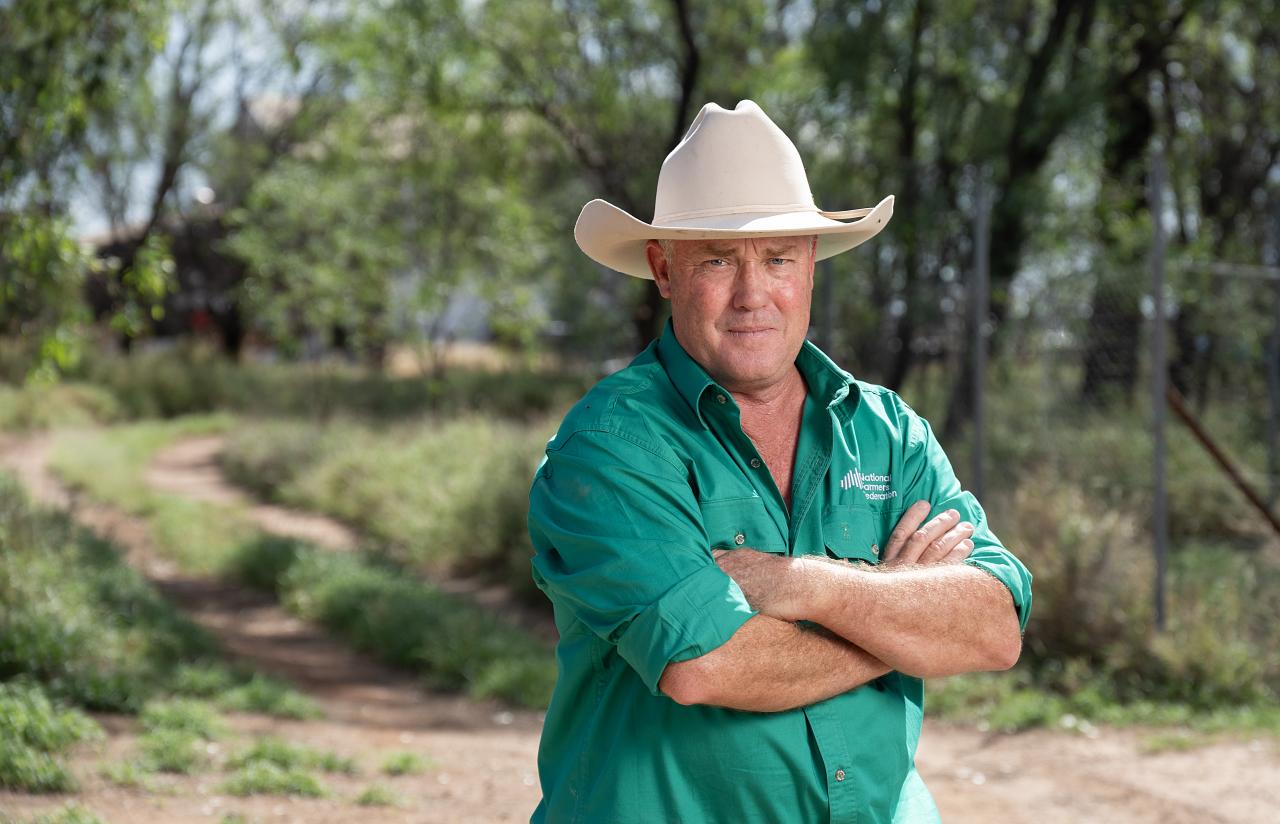
“Farmers rely on fuel to get food and fibre from paddocks to plates and ports every single day. As we move into the winter cropping season, demand for diesel naturally increases as farmers prepare paddocks and plant crops.
“We are already seeing signs of tightening supply and rising costs for key inputs. If farmers can’t access reliable and affordable fuel and fertiliser, some may be forced to scale back plantings. That hits farm incomes, agricultural production and food availability.
He said Australian agriculture has proven its resilience in the past when unnecessary pressure is placed on the system and that staying measured and making smart decisions is critical.
“We believe the Government must explore all options to better understand and protect local food and fibre production from vulnerabilities such as global conflict. We expect the forthcoming national food security plan to address exactly that,” Mr McIntyre said.
“The NFF also strongly supports growing domestic manufacturing capability, including a local biofuels industry. A domestic low-carbon liquid fuels industry would provide economic benefits and diversification opportunities for farm businesses, while also strengthening Australia’s long-term sovereign fuel capability.”
KING ISLAND MAYOR MOVES TO REASSURE RESIDENTS
by Pam Rolley
King Island Mayor Marcus Blackie has reassured residents that the island’s fuel supply remains secure, despite global supply concerns and growing media attention on potential shortages.

“Our fuel holdings on King Island by design are proportionately higher than the rest of Australia,” Mayor Blackie said.
“TasPorts are the importer, bulk storer and wholesale distributor of fuel on King Island. They have an excellent and recently modernised large fuel farm at Grassy Port, with a dedicated expert local team distributing to the power station, retail servos, larger industry and farming operations.
“It’s important to note that we consider power grid generation, farming and agriculture, fishing boats, transport logistics and Council service delivery our priority for bulk fuel. Some limits to underpin those priorities may be considered but we will certainly not be rationing anything at this stage.
“That being said, now would be a good time to adopt a few commonsense efficiencies such as parking up your guzzlers and driving your most efficient cars for a while, carpool-sharing lifts to and from work or town, walk or bike more, reduce trips to only when necessary and reaffirm the most efficient work practices.
“Furthermore, the diversity of our closed system power generation from diesel, wind and solar gives us excellent redundancy, long legs as well as energy security. With the adoption of a few local efficiencies and adjustments, we can weather this current global storm with confidence.
“With all this in mind please continue to be friendly to all retail staff just doing their jobs as the shortage of some goods – especially imported – is now probable.”
Meanwhile, King Island Motors has introduced a precautionary limit on fuel dispensed into portable containers to help maintain stable supplies across the community.
Service station owner Paul Lay said customers will be limited to one jerry can fill per customer per day.
Businesses and farmers requiring additional fuel will still be able to purchase it, however prior approval will be required to ensure supply remains available for everyone.
Mr Lay said the measure was intended to prevent unnecessary stockpiling while fuel supplies remain stable.
“Currently there is plenty available for people, and as we want that to remain the case we are bringing this policy in,” he said.
The restriction applies only to fuel dispensed into jerry cans, with normal vehicle refuelling continuing as usual.




Add new comment