
Leading Tasmanian distiller takes home top beef prize
Ross and Mary Mace produce some of Tasmania’s finest whisky and gin and can now also claim the title of being the State’s best beef producers.
Last Tuesday at the Meat Standards Australia (MSA) Producer Awards 2023-25, held in Adelaide, the Mace’s accepted the award for Tasmania’s best Larger Non-Grainfed producer based on their outstanding MSA results.
Over the two-year period, they consigned 234 head and had an average MSA Index of 63.41 and compliance of 99 percent.
Nestled in the Upper Derwent Valley at Ouse sits the historic Lawrenny Estate where Ross and Mary and their family own and operate their whisky and gin distillery and cattle enterprise of mainly Angus and Hereford stock.
Ross, a crop dusting pilot, and Mary moved from Queensland to Tasmania and originally bought the 80ha Lawrenny Estate homestead block in 1992.
Ten years later, they doubled the property size when they bought the adjoining 80ha block.
An annual average rainfall of 400mm and access to irrigation from the River Derwent ensures Lawrenny Estate’s clover and ryegrass pastures remain green and productive all year round, regardless of seasonal conditions.
The Mace family also grow barley to produce their single malt whisky.
“We buy in predominantly Angus weaners at a liveweight of 330kg to 350kg,” Ross said.
“It takes about 15 months to get them to our desired weight, which is a minimum dressed weight of 380kg and a top of 420kg.
The cattle are sold to JBS Swift and a cattle buyer that is commissioned by JBS buys weaners directly from breeders.
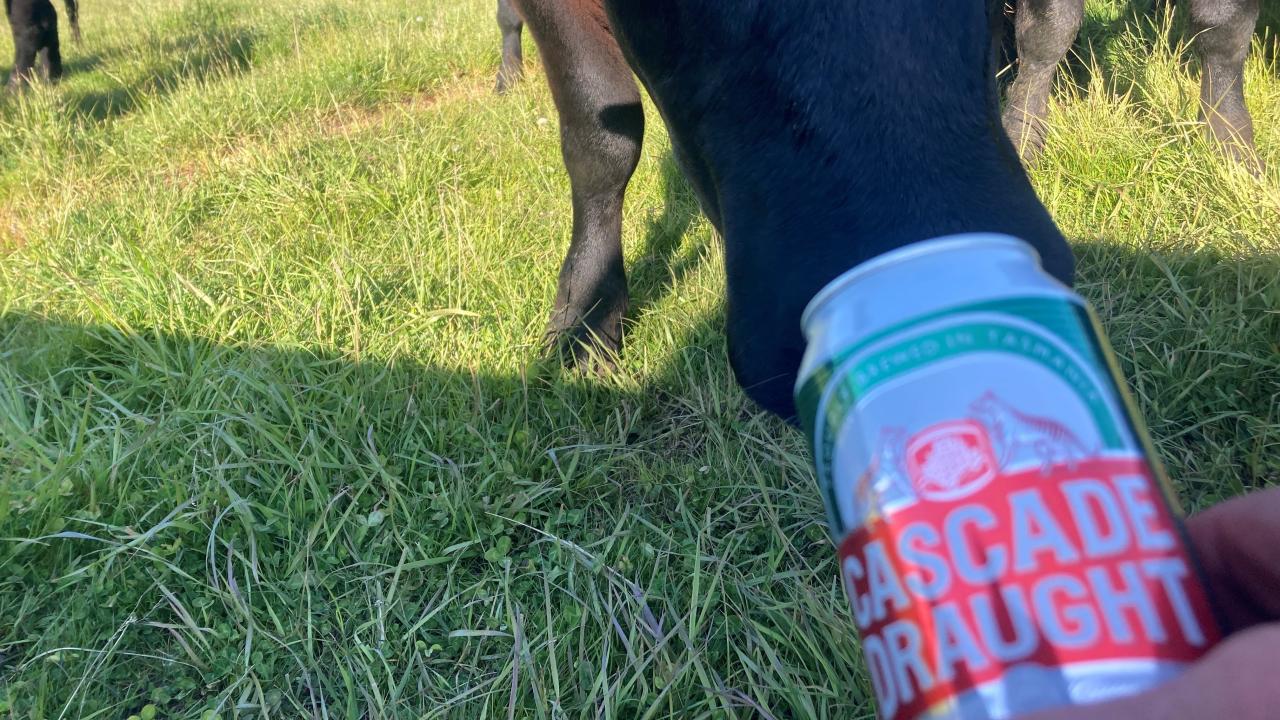
Rock reckons the secret to the high scoring success is having quiet cattle with consistent fresh feed, and he slips them a cheeky sip of Cascade Draught every now and then when he finds one rolling around on the floor of the ute.
“Pre-winter, if we have to feed out in May, we use hay for roughage, and during the height of winter in June, July, and August, we feed high quality silage which we make on-farm using our own pastures. We feed hay again in August and September as necessary,” Ross said.
Ross’s target market is the JBS premium grassfed brand, Little Joe, which has a range of specifications including that cattle must achieve MSA grading and have a marble score of 4+.
Any of Ross’s cattle that don’t go into the Little Joe brand, go into JBS’s Great Southern Pinnacle Grass Fed Beef brand, which also requires MSA grading and a marble score of 2+.
“Our goal is to achieve the grades for those beef brands and we really look at the carcase data, particularly eye muscle area, fat cover and rump," Ross said.
Lawrenny Estate has a long history of beef production, starting when it was first established in 1813 when the land was allocated to Lieutenant Edward Lord, who was in the first contingent which sailed to establish the Van Diemen's Land settlement on the Derwent in February 1804.
Lawrenny Estate originally comprised more than 16,200ha and became renowned for its cattle, sheep and abundant fields of wheat, barley and hops.
Fast forward to the end of World War Two, and its then owners, the Brock family, having lost their two sons in the War, sold Lawrenny Estate to the Tasmanian Government to be split up into returned solider settlement blocks.
Since Ross and Mary bought Lawrenny Estate in 1992, they have invested in restoring the property.
“It’s terrific to be able to say we produce some of Tasmania’s best whisky, gin, and beef,” Ross said



Add new comment