
Terrence takes natural approach to a new level
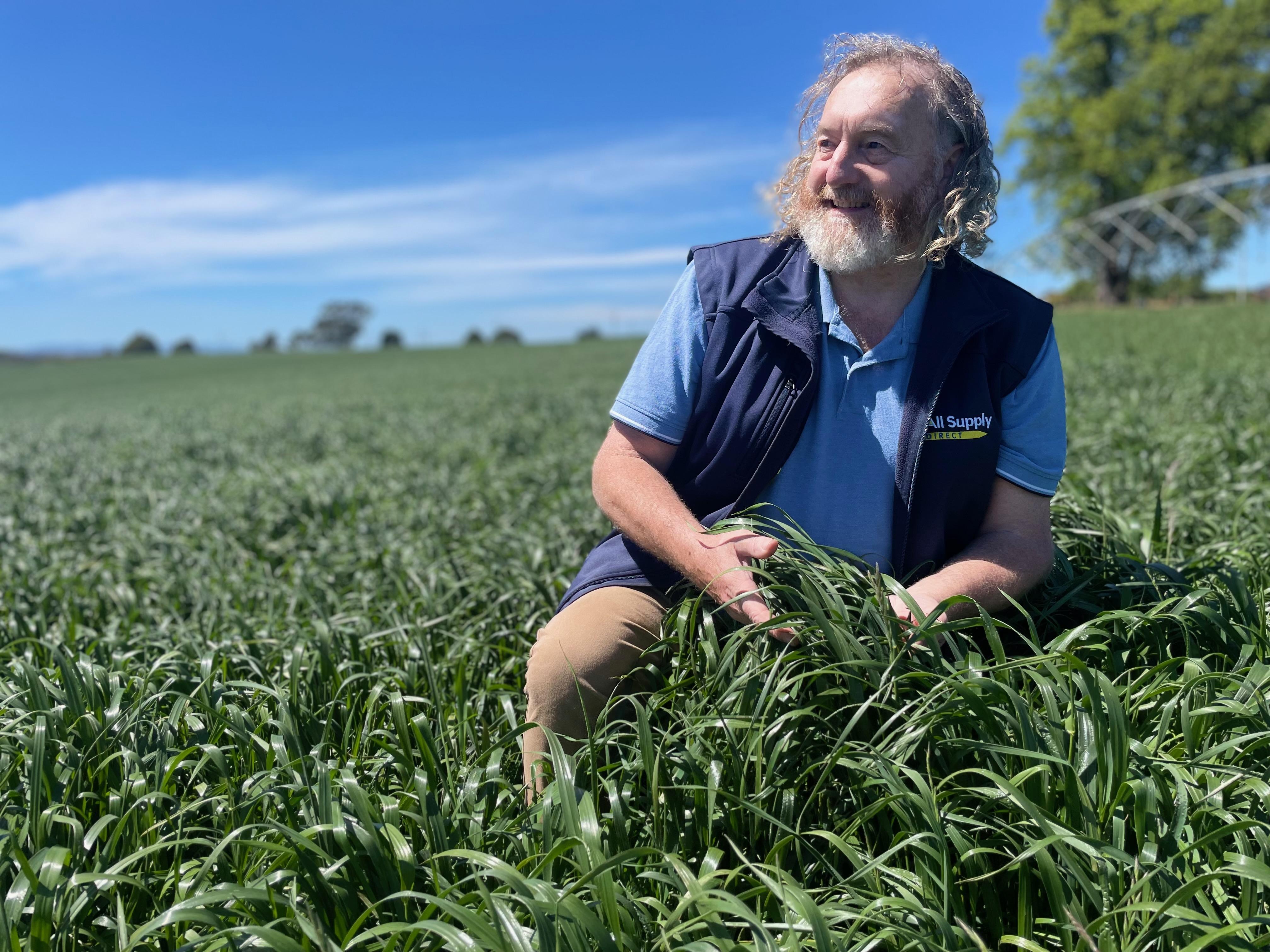
As commercial potato growers across Australia navigate rising input costs, soil health degradation and pressure to adopt sustainable practices, third-generation Tasmanian producer Terrence Rattray is proving that reducing synthetic inputs doesn't mean sacrificing yields.
Leveraging 30 years of organic farming experience at Anchor Farm Organics and Yum Tasmanian Gourmet Potatoes, based in the state’s north-west, Mr Rattray has successfully integrated biological and organic inputs into his conventional cropping program to achieve projected yields of 70 tonnes per hectare on a 16-week growth cycle.
The spuds are grown on seven farms, totalling 700ha, in and around Forth and Don, and on two interstate farms in Thorpdale, Victoria and Bundaberg, Queensland.
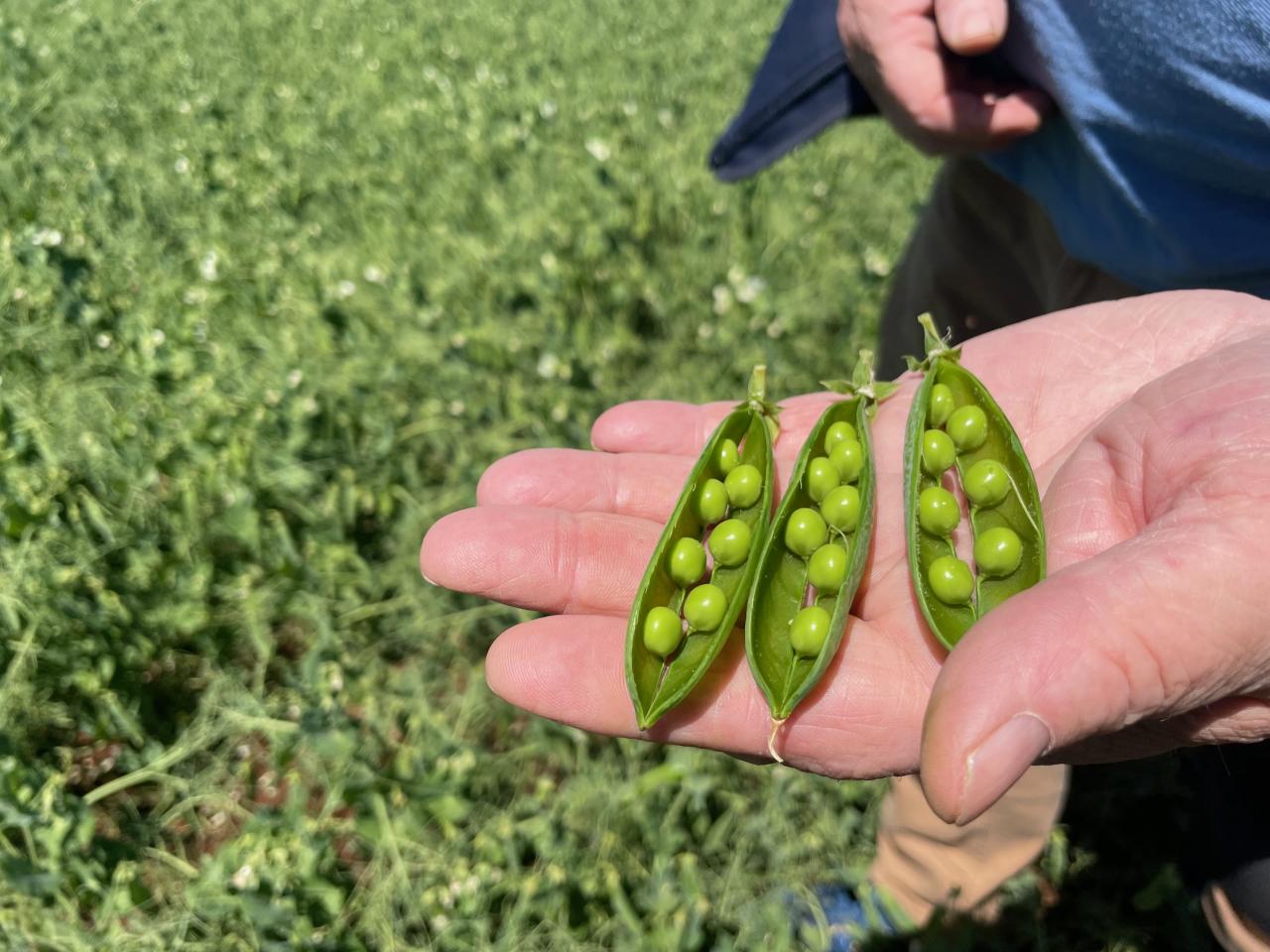
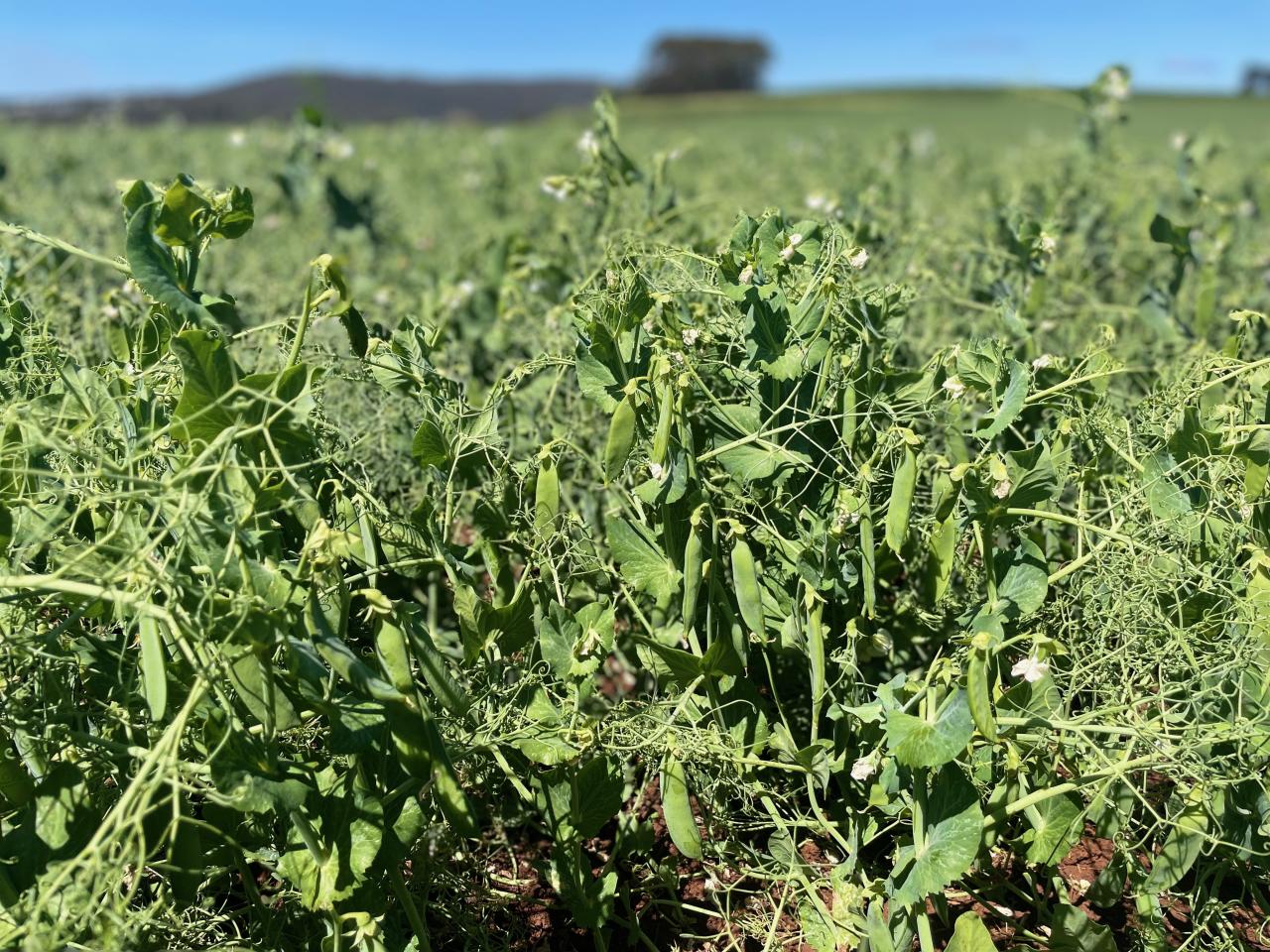
While they’re his core business, peas also feature this season, with a record yield looking likely from his North Motton paddocks where the plants are thriving and producing 16 pods each.
Potatoes are grown one year in seven on rotation with poppies, wheat, peas, broccoli and pyrethrum, plus Italian ryegrass pasture for a seed crop and silage.
For a man who initially avoided farming, Terrence has grown into the role of one of the state’s top vegetable producers - and he doesn’t mind doing things differently.
Originally growing up on a north-east dairy farm he wasn’t that keen on following his father and grandfather’s footsteps - so he took up carpentry.
After seven years plying his trade in Victoria he moved back to Tasmania in 1995, buying a 65ha plot at Pyengana.
He started growing organic potatoes simply as a means to renovate the old, depleted pasture, and came to realise there was demand for organic food from consumers at the same time that stricter rules around chemical use was coming into supermarkets.
That was when he swung fully back into farming, identifying an opportunity to supply Woolworths with organic potatoes.
“Woollies had 30 suppliers when it introduced mandatory quality assurance, which most farmers didn’t want to do,” Terrence said.
“So I said yes, I’d do it, and that became our strength, along with supplying vegetables year-round when others supply for just a few months.
“Here on the north-west coast we have the best climate for growing spuds for 12 months of the year - that’s why I chose to buy this land at Don only a few hundred metres from Bass Strait - it’s frost-free and you can plant anytime.”
Unlike many farmers, Terrence times his biggest planting for early January, the tops die off in July and the underground dormancy isn’t broken until September when they go straight into cool store so he can supply supermarkets with a fresh product in September, October and November before starting with new season produce in November.
“Yes you sacrifice a bit of yield but to have good, fresh market potatoes year round is the aim.
“Many farmers will time their maximum yield for November planting and when that is harvested in March or April our main crop is only half grown.”
These days only 20 tonnes of the 10,000 tonnes of potatoes he grows are certified organic, with demand declining due to improved monitoring and no residues detected.
Event Anchor Farm has diversified to grow not just certified organic produce but also conventional potatoes on nearby properties.
“Conventional produce these days is quite safe, any synthetic inputs we use on food crops is well regulated by the major supermarkets through quality control programmes,” Terrence said.
“But at every opportunity we need to use less synthetic products, especially when it comes to adding potassium.
“I won’t use muriate of potash (potassium chloride) - it’s undesirable to have it in the soil because it’s lethal to beneficial soil bacteria, and even burns plant roots.
“That’s why I prefer Ectol potassium ash. It's derived from sugar cane residue which is refined into a beautiful clean product, mostly potassium carbonate with traces of potassium sulfate, which has a large range of micro nutrients and it’s competitively priced.
“I was already familiar with their seaweed-based products which I’ve used for a very long time as a general tonic in vegetable crops and on pastures, so this is a way I can still use organic principles with all my crops.”
Terrence said he is always looking for ways to better prepare soil and have it in the best possible condition for the next potato crop.
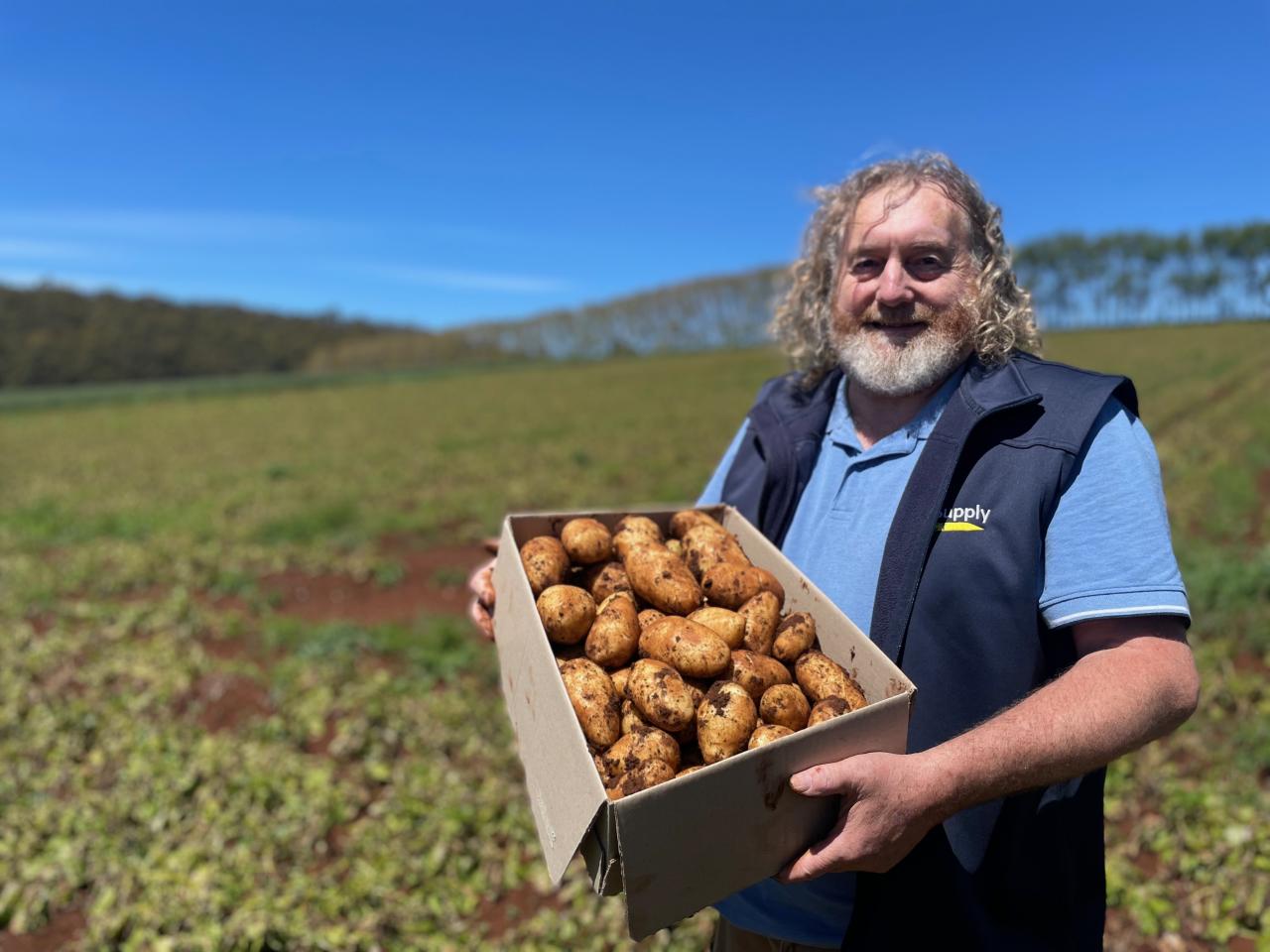
Digging a box full of Dutch creams this week at Perfecta Farm, in a former cherry paddock at Ulverstone, Terrence ran his eye over the much-loved staple and declared he was more than happy with the quality - saying the better the potato is when it goes into storage the better it will keep.
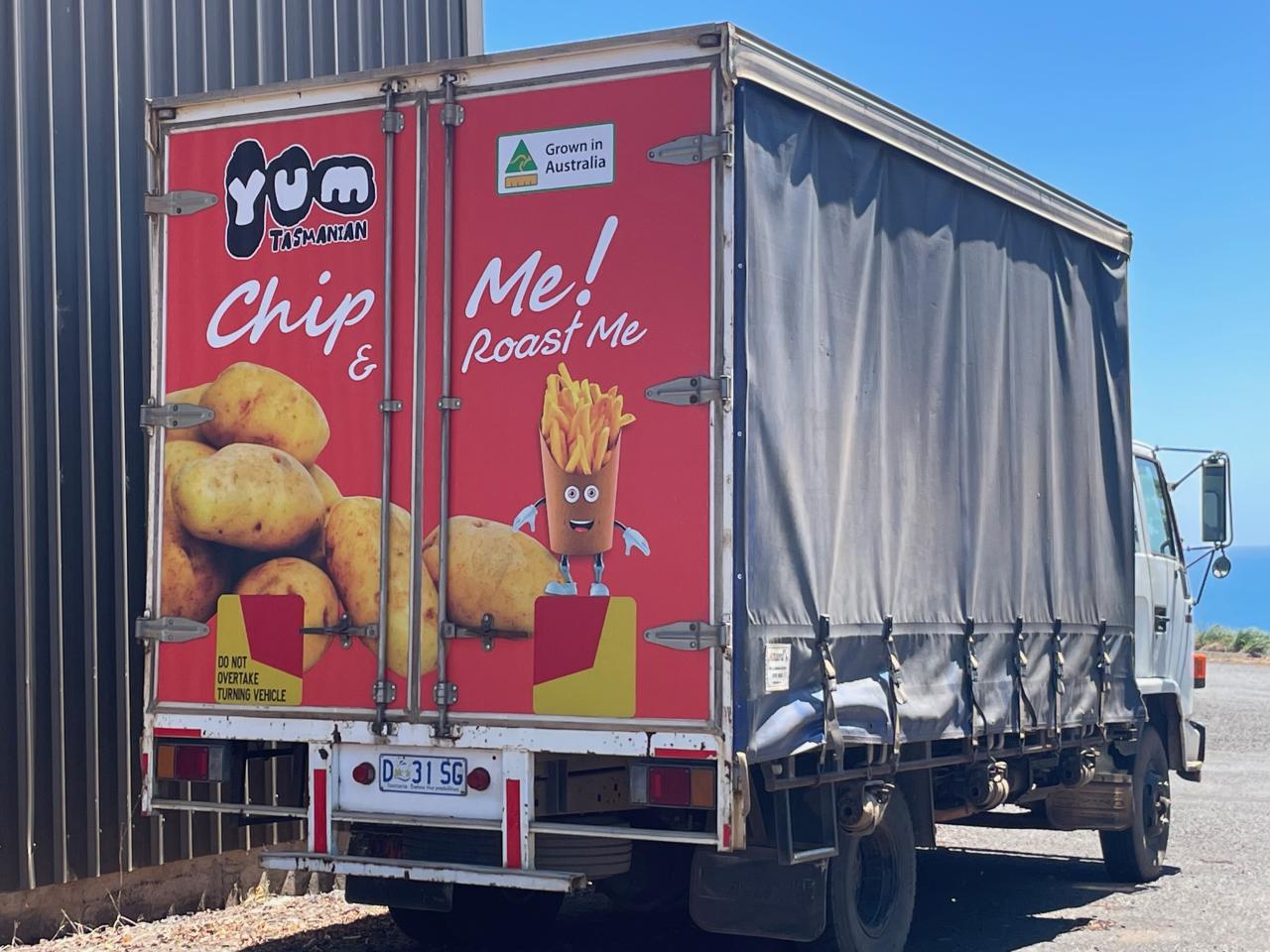
He also grows various russet-type potatoes for their high starch content, which is ideal for chips and appropriately branded as Yum Chip Me, while other varieties such as Nicola, Mayan Twilight, Kipfler, Purple Bliss, Red Royal, Kennebec and King Edwards are found fresh in Coles, Woolworths, IGAs and also sold through interstate wholesalers.
On Monday night he spotted his spuds being cut up for chips on My Kitchen Rules!
Also on the farm the ryegrass crop is nearly ready to flower and the seed will be processed through Midlands Seeds and Upper Murray Seeds.
His grass straw is sold to beef and dairy farmers and already it’s fully subscribed for this year with a shortage of fodder predicted.
“It’s really shaping up to be a good growing season,” Terrence said.
“I have a good operations manager in Troy Cornick, who joined us four years ago, plus farm leading hands Damo and Ash.
“Farming isn’t as straightforward as it once was, plus we’re always being pushed on price while input costs continue to rise, so for me the more I can do to keep things growing well and as naturally as possible to cut down reliance on synthetics, the better.”


Add new comment