
TasFarmers Matters - The search for water solutions
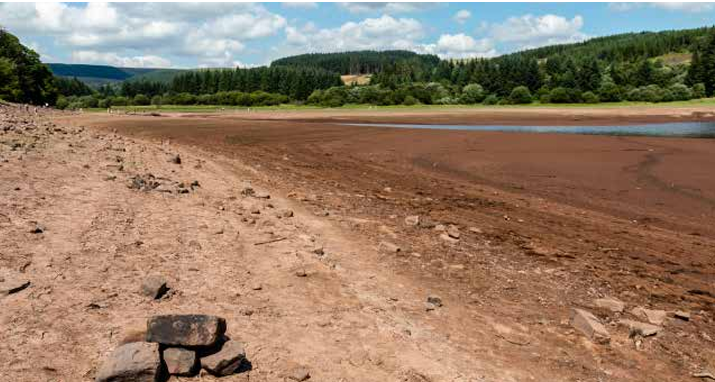
It's dry ... and it’s been dry for a while, especially for anywhere east of Great Lake.
For what it is worth, the Bureau of Meteorology is predicting a drier than average summer due to the El Nino effect.
Often an El Nino is ended with a significant flood, mostly in the form of an east coast low and resulting heavy rain.
Tasmania has about 27 per cent of the nation’s stored water with only 1 per cent of the country’s land mass – much of this is available for irrigation post hydro-electricity generation.
This state is the envy of others for the provision of irrigation water. While it is expensive, it has few of the political and commercial issues seen in catchments such as the Murray-Darling.
Those who have invested in the long-term availability of water coming out of the tap when it fails to fall from the sky are able to confidently make investment decisions on equipment and land as well as planting crops or milking cows, knowing that in all but the driest of dry conditions, they can get water. Mostly. The majority of the Tas Irrigation schemes are based on 95 per cent delivery of the volume over a 100-year period.
The North-West and North- East of Tasmania have seen farming productivity surge in the past 25 years due in part to good soils, but also due to the strategic investment in water storages and distribution.
In Sisters Creek or Ringarooma, a farmer can plant a crop of spuds or milk 700 cows and know water is available from sowing through to harvest.
But not all of Tasmania is in the same position. Some irrigation districts rely on rainfall in catchments that have been significantly less over the past decade or so.
Water supply is becoming very tenuous on schemes that rely on natural rainfall on the eastern side of the state.
This includes storages and lakes such as Lake Leake, Tooms, Crescent and Craigbourne. Whether you believe in climate change or not, rainfall figures show a declining trend in catchments that supply the southern highlands and midlands. Demand for water is increasing as availability is strained.
At the same time, warmer winds mean greater evaporation from large water storages, especially those where turbid water heats quicker than clearer water at higher altitudes.
When dry times hit and farmers in dry regions have crops that need water, the pressure will mount on decision makers to release water from catchments already lower than normal.
While the cut and thrust of this will play out between government departments, farmers and politicians, the deeper issue is to find long-term solutions for reliable water for the Southern Highlands.
Tasmania is no stranger to moving water about to suit the needs of a developing state.
Much of the water that flows north down Poatina Power Station and ultimately into the Tamar River at Launceston once flowed south and into the Derwent.
The diversion of the Ouse and James river systems down Liawenee Canal in the early 1920s and the commissioning of Poatina in 1964 delivered significant economic development throughout the 20th century.
With agriculture the only true economic driver for Tasmania’s long-term economic and social future, the state’s leaders must again address how we manage future water resources.
TasFarmers is, as always, working on long-term agricultural water strategy, primarily through the TasFarmers Water Committee.
Many different policy options are open to being discussed, such as taking water from the Arthurs Lake pipeline through Lake Sorell instead of about it, as it travels towards the Midlands Scheme and how water from Great Lake and the Shannon River might be transferred into the Clyde River.
These are all ideas to be debated, but as always, we are informed by our members and their activity on important groups like the Water Committee.
Now more than ever, it is time for farmers to get involved in the future of farming – and no more important issue is that of water.




Add new comment