
Biosecurity Matters - Frontline in the war against pests
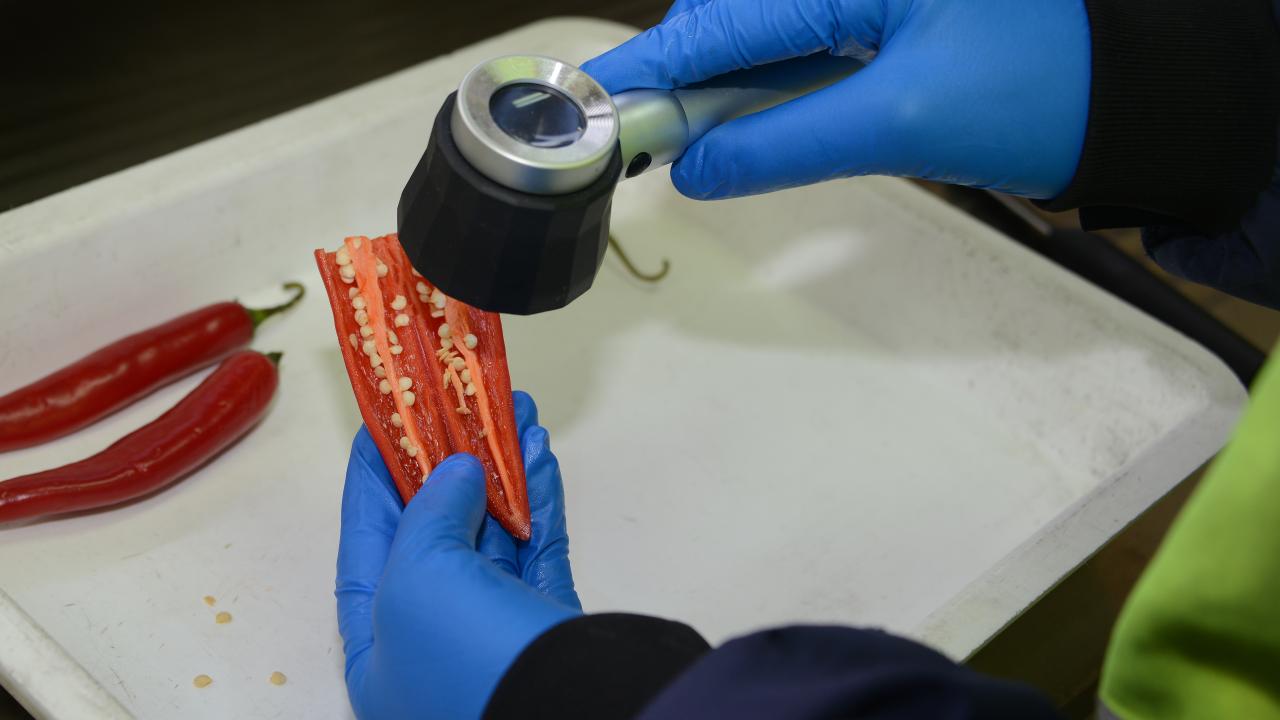
While many Tasmanians are enjoying the arrival of summer, the warmer conditions also bring increased risks when it comes to keeping out unwanted pests and diseases.
During the warmer months millions of pieces of imported fruit are inspected as part of Biosecurity Tasmania’s Securing Our Borders program to prevent pests, including Queensland Fruit Fly, from entering the state.
Keeping Tasmania fruit fly free is essential for protecting the state’s horticulture sector and maintaining access to valuable export markets.
As a safeguard against fruit fly, fresh produce from interstate must be treated before it can be imported into Tasmania. New produce treatment options including irradiation, which is highly effective in managing fruit fly risk, are providing increased protection.
Between October and the end of December Biosecurity Tasmania inspected 3000 import lots, equating to more than 1.4 million pieces of fruit.
All potential host produce for fruit fly is inspected, however, there is a strong focus on high-risk fruits such as mangoes, stone fruits and chillies.
Throughout the peak risk period, Biosecurity Tasmania staff also conduct weekly checks of the state’s fruit fly trap network.
As part of the network there are more than 1000 traps located at key entry points such as ports and production sites.
Late last year the state’s biosecurity system was boosted with the introduction of new X-ray machines at Hobart and Launceston airports.
The new X-ray machines are supporting the activities of Tasmania’s team of detector dogs which also operate at the state’s airports and other key entry points.
Biosecurity Tasmania also relies on the Tasmanian community which plays a vital role when it comes to protecting the state’s agriculture sector.
Anyone who notices fruit that looks unusual or that may contain pests or diseases should report it to Biosecurity Tasmania immediately.
Here are the steps to take:
Secure the pest if it is safe to do so,
Double-bag (snap lock bags are ideal) a sample of the diseased or infested plant material and store it in the fridge,
If possible, take a photo and note the location.
Taking samples in the field may increase the likelihood of spreading the biosecurity risk, that’s why it is important to contact Biosecurity Tasmania so that we can provide further instruction.
Anyone who suspects an exotic plant pest or disease should report it to the Exotic Plant Pest Hotline (1800 084 881) or call Biosecurity Tasmania on (03) 6165 3777.
For more information go to www.nre.tas.gov.au/fruitfly



Add new comment
Comments
Why do it that way?
I’ve often wondered why biosecurity go and visit every trap personally. Wouldn’t it make more sense to use the camera traps proven to be accurate and be able to check them every day from a computer. Wouldn’t that be faster and less costly? There’s lure options that don’t require frequent replacement as well so that can’t be the reason. There’s a few suppliers and they claim high accuracy so is it just that they don’t believe the claims ofthe companies?