
Debate of over pindone on rabbits gears up
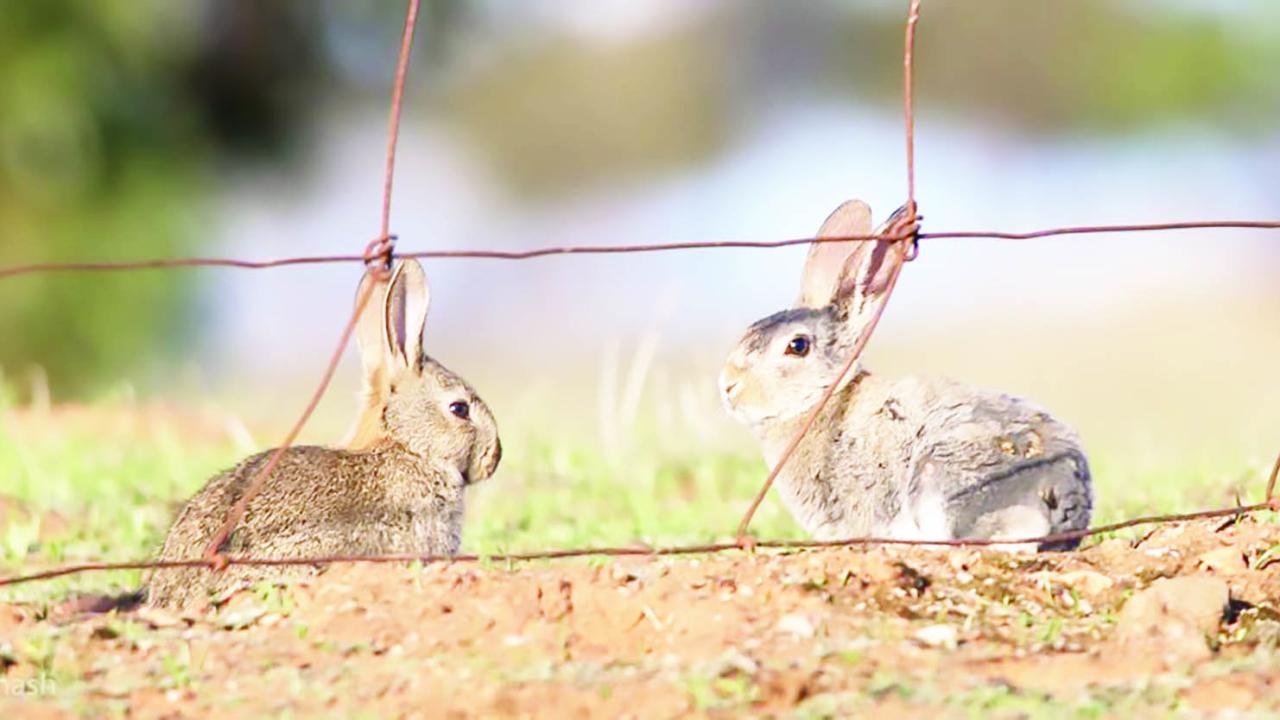
Property owners are continuing to battle large rabbit numbers in some areas while worrying about the impact of poison on native wildlife.
The use of anticoagulant poison Pindone for control of rabbits in Tasmania has increased since 2023, with a recent government push for its use designed to help control numbers in problem areas where biological control, through the regular release of Calicivirus, has been ineffective.
Rabbit hotspots have been reported at Acton Park, Cambridge, South Arm, Granton and Austins Ferry in the South. Northern areas include Campbell Town, Deloraine, Westbury, Mole Creek, Deviot and Gravelly Beach, and in the North-West West Ulverstone, Sheffield, Somerset and Romaine.
There have been 224 Agricultural Spraying Permits for use of Pindone in Tasmania issued to pest controllers and groups of landowners undertaking a collaborative operation.
Biosecurity Tasmania released calicivirus (RHDV1) on 419 properties across Tasmania last year.
Myxoma Virus, or myxomatosis, is no longer released but still exists in the environment and periodically affects rabbit populations when conditions allow.
Like many Tasmanians, Lilydale small-holding owner Katrina Kelly is perplexed by the persistent abundance of rabbits in her district.
“We’ve had a very large rabbit population here for several years,” Ms Kelly said.
“Sadly, the calicivirus release in 2025 wasn’t very effective in our area.”
Ms Kelly is worried that government-endorsed rabbit control methods are undermining one of the species’ few natural checks - native raptors.
“NRE’s rabbit control guidance makes no mention of the risk of secondary poisoning to raptors. Nor does it suggest mitigation measures, such as assessing whether raptors are present in the area, avoiding baiting during the breeding season and use of baiting stations rather than free feeding.
“Several raptors species are already threatened in Tasmania. They are one of the few natural rabbit predators. We need them to help control rabbits, not put them at risk.”
According to the Natural Resources and Environment Department Pindone is unsuitable for broadscale use and can only be considered for immediate damage mitigation.
An NRE Tasmania spokesperson said there has been no reported impact on other wildlife due to its use for rabbit control.
“Rabbit numbers vary depending on location and fluctuate naturally depending on availability of green feed which regulates their ability to breed,” the spokesperson said.
“NRE provides advice and education to assist landowners in controlling their rabbit population and we facilitate the release of biological controls such as calicivirus (RHDV1) to assist in these control activities.
“Pindone can be used by landowners any time of year, however only by holders of an Agricultural Spraying Permit as it is a restricted chemical product. It is an offence to use any Pindone product without a permit.”
University of Tasmania post-doctoral researcher Dr Jeroen Jansen said that as with all poisons and biological control agents, none of them is a “silver bullet” when used by itself.
He said that rabbit populations can recover very quickly following population reductions, hence the saying “they breed like rabbits”, and also recommended a combination of control methods with the emphasis on getting the timing right.
“Rabbits are most effectively and humanely controlled when their population levels are naturally low. However, this does not always coincide with the presence of conditions and vectors that ensure an effective control, such as when deploying biological control agents,” he said.
“With Pindone specifically, the effective application requires a repeated process of pre-feeding and bait distribution. It is therefore not a one-off treatment and therefore prone to be less effective if not following the recommended timing.
Dr Jansen said while every management method has drawbacks, the worst-case scenario is not to manage invasive species at all.
“Poisoning, trapping and shooting are considered ineffective methods for rabbit control if used in isolation. Even biological control agents are affecting progressively smaller proportions of invasive pest populations.
“When poisoning is applied ineffectively, impacts on the target species may be low but high on non-target species. And may only have a short-term, seasonal reductions on rabbit numbers.
“When combined with other management methods, for example, with the mechanical destruction of rabbit warrens by “ripping”, long term impacts, sometimes lasting decades, can be achieved.”
The most recent Pindone research has increasingly focussed on secondary poisoning of native wildlife, with research led by Dr James Pay from the University of Tasmania demonstrating that second-generation anticoagulant rodenticides (SGARs) accumulate in Tasmanian wedge-tailed eagles.
NRE recommends an integrated pest management approach as the most effective and cost-efficient method of containing wild rabbits on a property - requiring the use of more than one control technique in rapid succession.
It said that landowners should update their rabbit management plan and consider rabbit control methods now, in late summer. More information is available on the NRE Tas website: https://nre.tas.gov.au/invasive-species/invasive-animals/invasive-mammals/european-rabbits/tasmanian-calicivirus-release-sites
Landowners can obtain information about rabbit control techniques and developing a rabbit control program at: https://nre.tas.gov.au/rabbits or report a rabbit infestation and/or register interest for the next calicivirus release at: https://forms.biosecurity.tas.gov.au/forms/report-a-rabbit\




Add new comment
Comments
pindone poisoning of non target species.
Two points> South Australian authorities cancelled the baiting of rabbits along the Nullarbor rail line because of the effect on native species but I suggest this was 1080. Then a baiting program along the Coorong utilising poison oats was said to have decimated the bronze wing Pigeon population. Pidone is recommended in semi-rural holdings because there is a antidote, in effect indicating there "could" be poisoning of dogs etc.