
Fergusson family call for change after receiving $100k fine
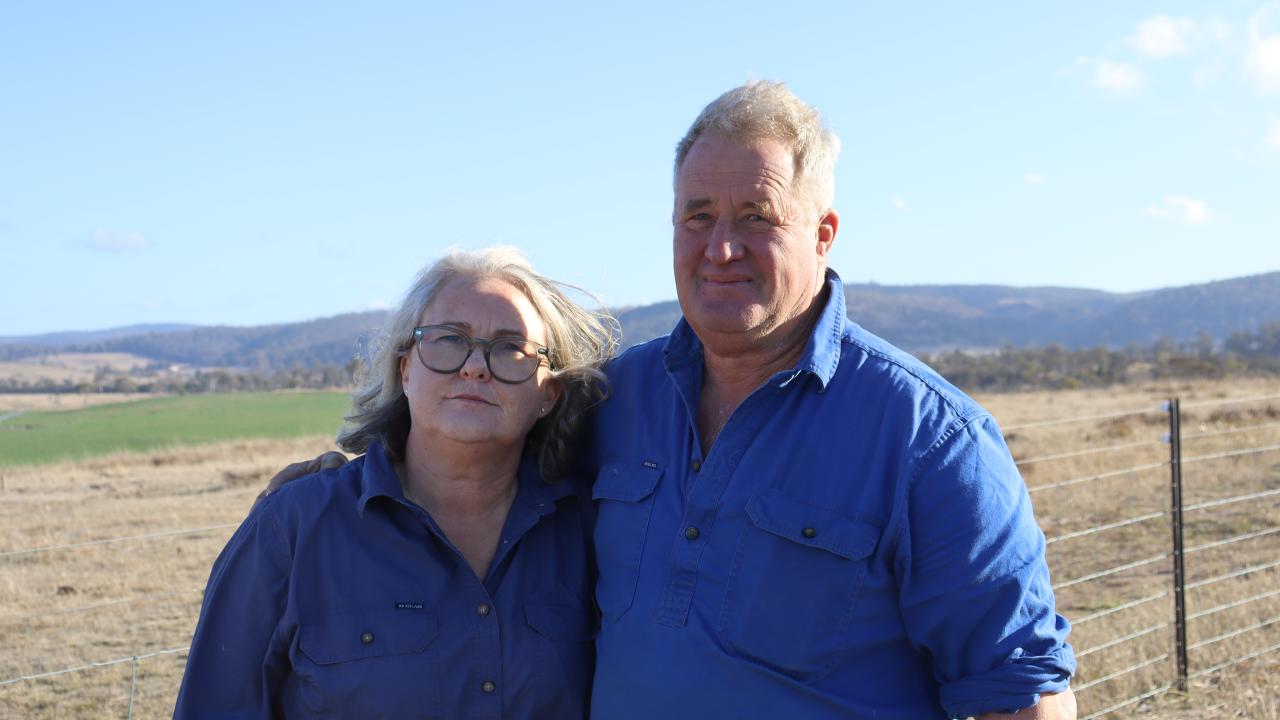
A group of East Coast farmers believe primary producers are being forced out of the industry by overbearing regulations and red tape.
One farming family believes the Forest Practices Authority is targeting farmers and focusing on punishment and large fines rather than practical environmental outcomes.
The unrest comes after William Farlie Fergusson was fined $100,000 after pleading guilty to unauthorised tree clearing on his family’s Grindstone Bay farm near Triabunna.
He was charged with the unauthorised clearance and conversion of 7.1 hectares of a threatened native vegetation community, specifically Eucalyptus globulus (Tasmanian blue gum) dry forest and woodland, and the unauthorised clearing of 11.5 hectares of trees.
The owner of neighbouring property Redbanks, Lindsay White, the father of Federal Member for Lyons Rebecca White, heard what happened to the Fergussons and was outraged.
He said there were many examples of farmers copping big fines for unwittingly breaking rules around what they can do on their own land.
“We’ve been harassed and threatened by these organisations for so long now, and the fees and charges which are constantly being put on us are inhibiting the way we can farm,” Mr White said.
“And a lot of farmers are leaving their farms and finding jobs elsewhere.
“We’re saying enough is enough, and we’re making a stand.
“We need things to change, and we are not walking away until things change.”
The Fergussons said they wanted to see fairer and more practical treatment of primary producers by authorities and a system that educates and helps landowers comply with regulations.
“We accept that we made a mistake in not obtaining a forest practices plan before the clearing,” Melissa Fergusson said.
“We genuinely did not know that we needed one.
“We weren’t deliberately disobeying the law.”
Mrs Fergusson said they apologised early and cooperated with the FPA.
“That $100,000 is a devastating amount of a fine for a family farm,” she said.
“We’re not environmental vandals; we weren’t just doing it to be belligerent or to do the wrong thing.
“We’re long-term farmers who live on the land, manage it, and care deeply about it.”
The clearing on the farm, Mrs Fergusson said, was done without commercial gain.
To make amends the family proposed undertaking an environmental offset project to compensate for the unauthorised tree clearing.
The Fergussons offered to remediate 27.1 hectares on the farm through replanting and revegetation.
But Mrs Fergusson said the FPA was not interested in them doing that.
“Like many farmers, we’re trying to strike a fine balance between animal welfare, food production, business viability and environmental responsibility,” Mrs Fergusson said.
She said the fine they received was disproportionate to what had happened.
“We think a system needs to be developed that helps landholders manage all their obligations.
Livestock agent Chris Cusick said they wanted to bridge the gap between compliance and what farmers do on the land.
“We need to get to a point where we can still farm and be compliant, rather than making it sound like our farming community is not abiding by the rules and regulations,” Mr Cusick said.
“We need to have better consultation between our farmers and these organisations that come up with the rules and regulations.
“It’s about understanding how we can get our compliance levels in order and our expectations all the same.
FPA Chief Forest Practices Officer Anne Chuter said the fine imposed on the Fergussons sent a strong message that such offences would not be tolerated.
“The clearance and conversion of a threatened native vegetation community is not generally permitted under the Forest Practices Act,” Ms Chuter said.
“These communities are listed under Tasmania’s Nature Conservation Act and are recognised as having significant conservation value to the state.
“Eucalyptus globulus dry forest and woodland also provides habitat for a range of species, including the endangered swift parrot.
“The FPA has planning tools that guide landowners and forest managers through whether they need a forest practices plan, such as “Check before You Chop, Plan Before you Plant.”
Ms Chuter said that and other information was available on the FPA website.




Add new comment
Comments
Clearing fine
It’s fine for the FPA to say that they send a strong message but they are a non productive group who do nothing for the economy, in fact all they do is take from the economy.
It’s about time that groups like FPA, TAS Heritage and the various planning groups became a bit more answerable to the tax payers.
Mediation
This is an outrageous financial impost on a farming enterprise. This should have been mediated prior to going to a fine. Strong messages can be given without creating such financial disadvantage. The FPA should be mindful of the make and break of private individuals
Clearing fine
We personally know the family they are generations of hard working farmers they care for their land and the animals on it however they are working hard in a difficult economic climate to make a living whilst being a primary producer . Our area is in the middle of a forcasted long term drought and they need to provide for their animals.
Every farmer needs to make the most out of their land and they need to progress and to do that every piece of land must be productive.
As much as trees and bush are a necessity they do not provide a feed benefit on a farm that needs to provide feed for stock.
government overreach
This is an absolute disgrace and should never have happened, talk about serious government overreach. This is not a one off, it has been happening for quite a while. Enough is enough, the Forest Practices Authority needs to be investigated thoroughly and changes made. Just another case of good honest hard-working farming people being attacked by its own governments bureaucracy. Government needs to step up and fix this
Removal of trees
The Government should leave farmers alone and concentrate on the corrupt Salmon industry which is polluting and destroying the coastal and estuary waters of Tasmania with no redress from both major government parties.