
Forico on its decade of discovery
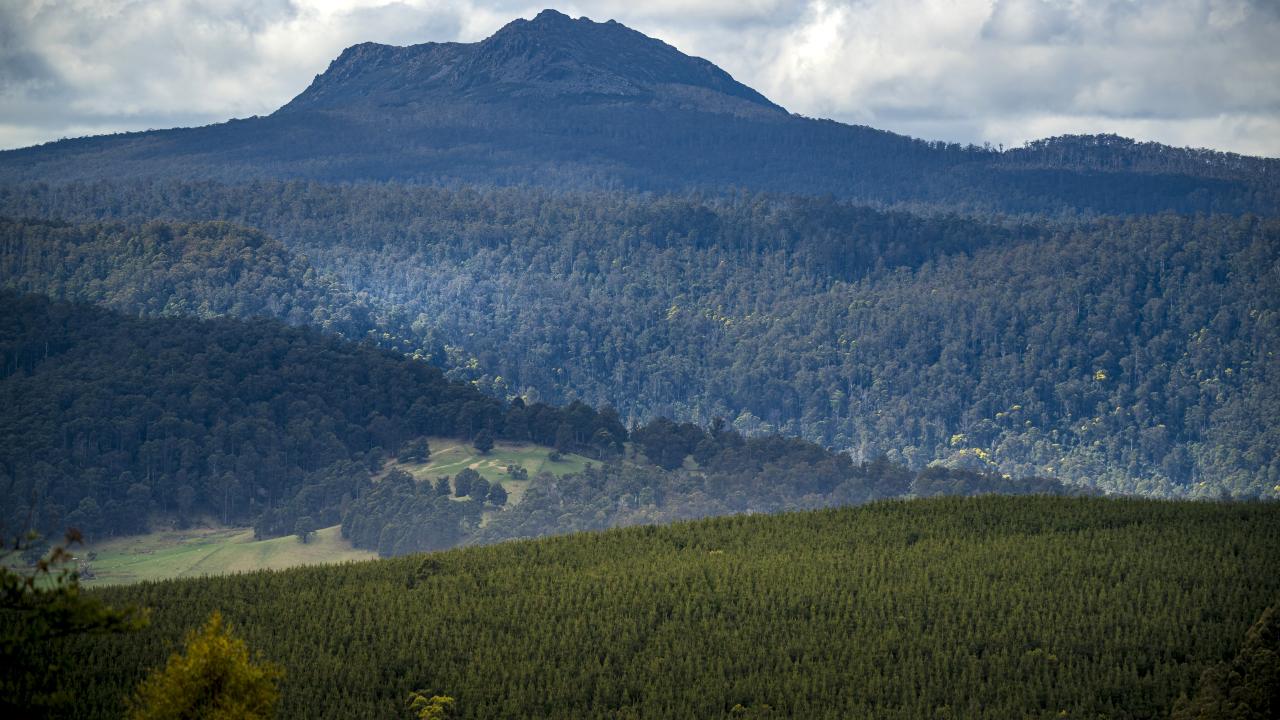
The state’s largest private forest management and plantation company has released its fifth Natural Capital Report, covering the past two financial years and showcasing its work across both operation and conservation activities.
Managing about 173,000ha of land across Tasmania, including 89,000ha of plantation forest grown for timber and wood fibre, Forico also maintains around 77,000ha of natural vegetation for conservation, biodiversity and cultural values.
The report highlights a ‘decade of discovery’ in the 10-year program undertaken with leading Tasmanian ecologists, safeguarding the natural values of the landscape Forico manages and achieving significant outcomes for threatened species, preserving grasslands and ecosystems of international importance.
While sustainability reporting is mandatory as part of Australia’s compliance with the Sustainable Development Goals identified by the United Nations, Forico Chair Matt Crapp, said “This report is not a compliance exercise”.
“It is a reflection of our values and our unwavering commitment to responsible stewardship of the 172,000 hectares entrusted to us,” he said.
Ecologist Mark Wapstra of ECOtas and ecological consultant Kerri Spicer have worked with Forico for more than 10 years, monitoring the natural values of the estate and assisting the company in setting priorities for maintaining and enhancing them.
Of the many parts of the Forico estate that are locally, nationally and globally significant, the standout is the Surrey Hills estate, south of Burnie, which includes some of the best examples of montane native grasslands in Tasmania and the threatened ptunarra brown butterfly (Oreixenica ptunarra) and other threatened species like the crowded leek-orchid (Paraprasophyllum crebriflorum), which occur nowhere else.
“Monitoring of the crowded leek-orchid (Paraprasophyllum crebriflorum) on Surrey Hills has been a major project and a highlight, building on the decade of monitoring by Phil Collier and Threatened Plants Tasmania, during which baselines were established,” Mr Wapstra said.
“We have undertaken extension surveys and monitored key populations, finding several new sites.
“The success of the program is due largely to collaboration, such as the partnership between the Landscape Recovery Foundation and Tasmanian Orchid Conservation Research Program, Forico staff and volunteers in collecting seed.
“Plants have now been grown in the laboratory at the Tasmanian Seed Conservation Centre, a milestone in the conservation of the species.”
Ms Spicer said that monitoring right across the estate and including lower priority sites has resulted in identifying wider impacts.
Armitstead estate, one of the state’s historic large pastoral farming properties, at Kimberley, was sold to Gunns Ltd in 2003 and transitioned into a eucalyptus and pine plantation that a decade later was taken over by Forico when Gunns collapsed and went into administration.
“The Armitstead property in the central north is a centre for the Eucalyptus viminalis (white gum) wet forest with the patches varying from heavily impacted by cattle to those that are in very good condition,” Mr Spicer said.
“Monitoring there enabled us to pick up on the occurrence of ginger tree syndrome, the dying back of eucalypts caused by heatwave and climate change.”
“In Surrey Hills, we discovered riverbed wintercress (Barbarea australis) which was first found in the 1800s in the Hampshire Hills to the north.
“Its discovery in the headwaters of the Hellyer River in Surrey Hills extends its range and makes it potentially the source population of the other specimens downstream.”
While threatened fauna has not been a particular focus, an exciting discovery was made of what Forica staff call a “devil hotel”, a series of Tasmanian Devil dens and sandstone floors in a cliff system in the hills behind Mangalore.
“The ecological monitoring and management of threatened species we have carried out is not necessarily required for certification and is above and beyond what the company is obliged to do,’ Mr Spicer said.
“There is an underlying belief at Forico that we’re doing it because it’s the right thing to do. The longevity of the program and the coordinated, committed approach has allowed us to add to the knowledge of threatened species in this region of Tasmania exponentially.”



Add new comment