
New fertiliser technology trialled at Longford property
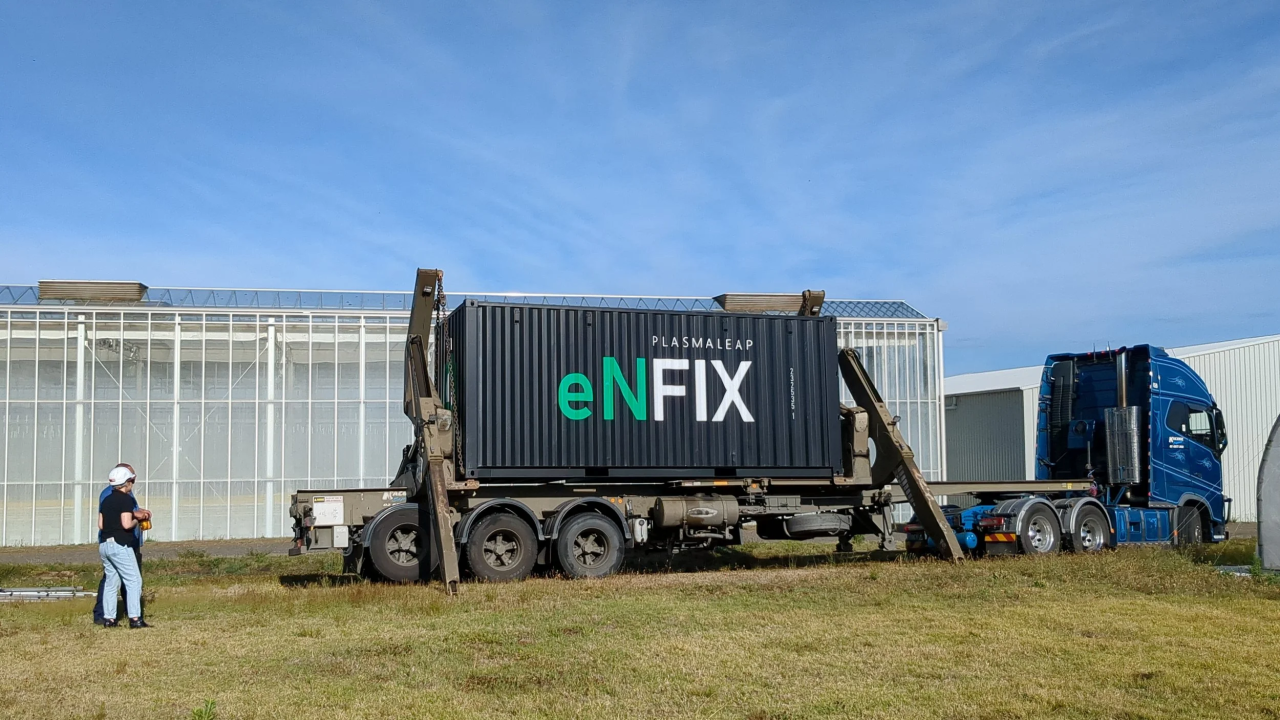
NEW fertiliser technology capable of producing nitrogen from air, water and renewable electricity will be trialled on a farm near Longford in northern Tasmania from August.
At a time when traditional fertiliser supplies have been disrupted, Sydney-based PlasmaLeap Technologies is preparing to deploy its containerised Enfix system, understood to be one of the first paddock-scale fertiliser production units of its kind in Australia.
The system is designed to allow farmers to produce their own liquid nitrogen fertiliser on-site, reducing reliance on imported urea and global supply chains.
A single demonstration unit, about the size of a shipping container, is expected to produce enough nitrogen to service thousands of hectares of crops during the pilot phase.
Backed by major agribusiness investment, the technology has attracted support from GrainCorp and the Grains Research and Development Corporation, with close to $30 million committed to advancing the system from development to field deployment.
The company was spun out of the University of Sydney and has developed patented plasma reactor technology, with backing from major global investors including the Gates Foundation and fertiliser giant Yara International, positioning it among the more advanced players in emerging low-emissions fertiliser production.
PlasmaLeap Technologies CEO Frere Byrne said the investment was enabling the shift from trials to real-world deployment.
“This funding allows us to move from successful trials into real-world deployment, demonstrating how clean, decentralised fertiliser and chemical production can transform agriculture, reduce emissions and guarantee sovereign security of critical resources like food and fuel.”
The Enfix system uses a patented plasma reactor to convert nitrogen from the air into plant-available forms, including nitrate and ammonia, using electricity rather than natural gas.
Unlike traditional fertiliser production, which relies on large-scale industrial plants and fossil fuels through the Haber-Bosch process, the Enfix approach uses air, water and renewable electricity, significantly reducing emissions when powered by clean energy.
Housed in modular units comparable to shipping containers, the system is designed for deployment on individual farms or at regional hubs closer to where fertiliser is used.
The units produce liquid nitrogen fertiliser that can be applied directly, with the potential to reduce freight costs, storage requirements and supply risk.
The technology reflects a broader shift away from centralised fertiliser manufacturing toward decentralised, farm or regional-scale production.
Importantly, the system can operate flexibly, allowing production to align with available renewable energy supply, including solar generation in farming regions.
GrainCorp said pilot hubs would be critical in determining how the technology integrates into real farming systems.
“These pilot hubs will play an important role in testing how the technology fits into existing farming systems and what operational model could work best for growers.”
PlasmaLeap is also seeking expressions of interest from farmers to participate in future deployments, as the technology moves from early trials toward broader on-farm adoption.
While the technology represents a significant shift, it remains in the early stages of commercial deployment.
The company is targeting cost competitiveness when freight, volatility and supply risk are factored in, particularly for remote and high-cost regions.
A second unit is planned for New South Wales later in 2026 as part of a broader rollout.
Tasmania has been identified as a key testing ground, reflecting its intensive agricultural systems and strong focus on improving nitrogen efficiency.




Add new comment