
Pasture 365 pasture mixes trial progressing
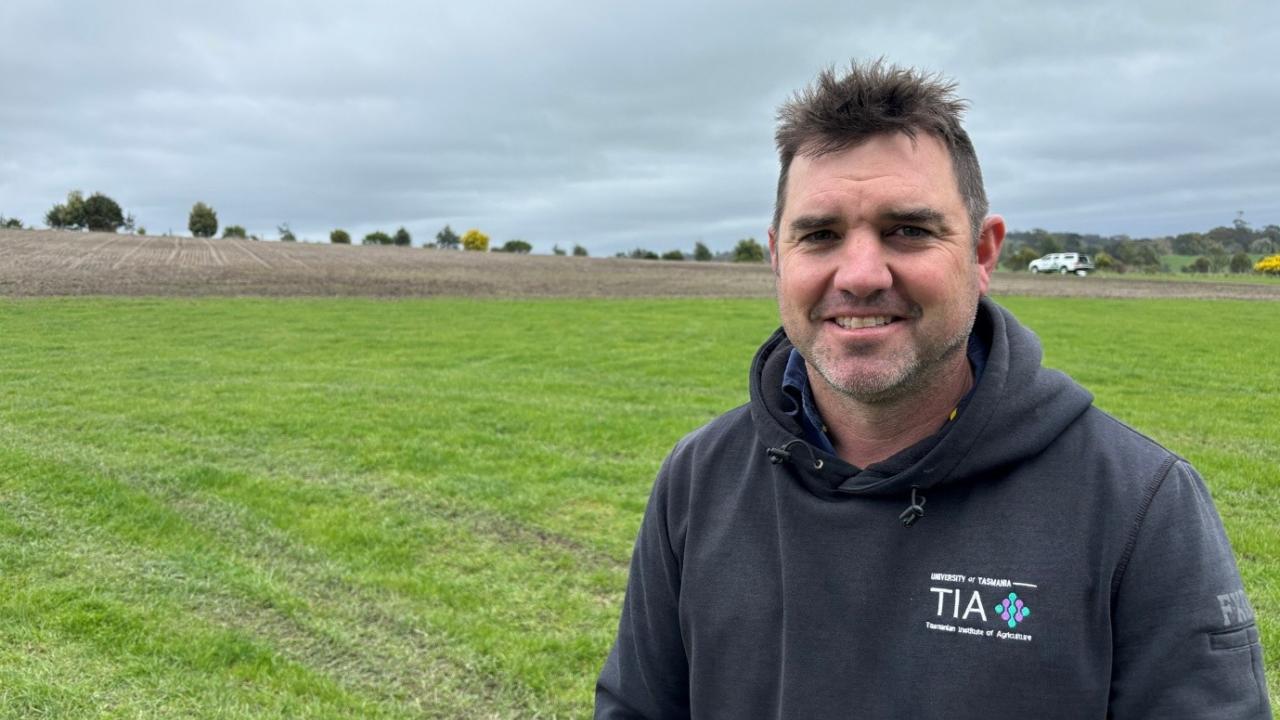
The progress of the Pasture 365 pasture mixes trial at Hagley Farm School has been outlined to local and interstate stakeholders by Tasmanian Institute of Agriculture Senior Research Fellow in Pasture and Forage Science Dr Rowan Smith.
The project is examining whether some pasture species mixes can be more resilient to extended and more regular periods of dry times and during a field day last week Dr Smith outlined key observations including differences in species establishment, weed competition and summer growth.
Pinion Advisory and the Southern Australia Livestock Research Council (SALRC) were also on site to give presentations and take part in the Pasture 365 demonstration.
The Tasmanian Institute of Agriculture is part of a project to address the impact climate change is having on the pasture feedbase for livestock production in Australia.
Pasture 365 will determine whether growing a large number of diverse pasture species in a single paddock can result in drought resilient pastures and enable a feedbase that can provide year-round feed for livestock.
There are nine experimental focal sites in low and high rainfall regions across Australia, including two in Tasmania. These are supported by producer satellite sites demonstrating best-bet mixes.
“The impacts of climate change and sustained periods of dry conditions in Australia is putting stress on the pasture feedbase for livestock production on farms throughout the country,” Dr Smith said.
“The Tasmanian Institute of Agriculture (TIA) is one of the partners in a project that’s trying to address the problem by examining whether some pasture species mixes can be more resilient to extended and more regular periods of dry times.
“In many regions, livestock producers rely on just a small number of pasture species for their grazing livestock with it more common for farmers to focus on two of three species.
“More recently in cover cropping and regenerative practises it’s become more popular to sow a much bigger and wider range of species. Researchers want to see whether that will work in a perennial pasture system.”
High rainfall pastures in Tasmania are heavily reliant on perennial ryegrass, but if it becomes moisture stressed in rainfed systems it struggles to remain productive and plant death is common.
Dr Smith and his team is looking at whether farmers can successfully include a large range of species including grasses, legumes and herbs in a pasture and does that diversity help during those dry times.
There are nine experimental sites in high and low rainfall regions across Australia that will evaluate a range of pasture mixes. In Tasmania, TIA has established two focal sites at Campbell Town and Pipers River.
The trial site at Pipers River in the State’s north-east has medium to high rainfall. In the high rainfall zone at Pipers River, it’s common to sow perennial ryegrass and white clover. The team is trialling diverse mixes and altering the amounts of legume species, grass species and herbs in those mixes.
The other site at Campbell Town is representative of a low rainfall environment. A common nix here is phalaris and subterranean clover and a different range of species has been sown there, known for their drought resilience. The experiments are being conducted on commercial farms and involve a high level of experimentation, measurement and monitoring.
The five-year series of experiments and demonstrations will evaluate both simple and complex pasture mixes and assess productivity. It’s hoped the project will address shortages in summer feed for livestock and increase the resilience of grazing enterprises to cope with droughts and climate change.


Add new comment