
Rust fugus released to tackle boxthorn
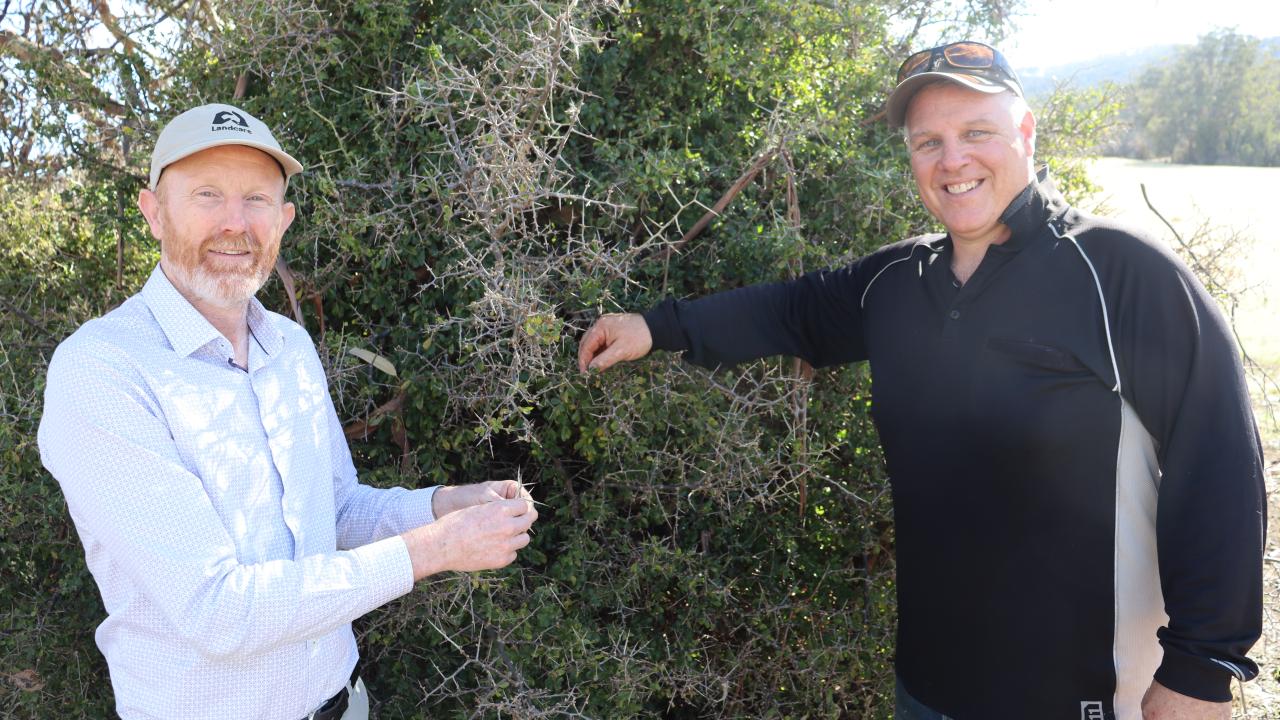
A RUST fungus will be released in Tasmania as a bio-control agent to fight the invasive weed African boxthorn.
The new nationwide initiative will tackle one of Australia’s most challenging invasive weeds, African boxthorn (Lycium ferocissimum), powered by collaboration between CSIRO scientists, community groups, landholders, First Nations partners and Landcare peak bodies.
African boxthorn is a highly invasive, drought-tolerant Weed of National Significance that forms dense thorny thickets, reducing biodiversity, hindering agricultural productivity and increasing long-term management costs.
The project involves releasing a rust fungus, Puccinia rapipes, that can reduce boxthorn growth, fruit production and re-invasion pressure.
Rigorous testing has shown the rust fungus is safe for release in Australia, with no risk of damage to native plant species.
The project invites farmers, First Nations communities, Landcare members and other stakeholders to participate in coordinated mass releases across Australia, supporting long-term drought resilience and sustainable weed management.
Participants who register will receive free biocontrol kits from CSIRO with clear instructions for releasing and monitoring the fungus.
Training and support will be provided through webinars, field days, workshops and national monitoring platforms.
Landcare Tasmania CEO Peter Stronach said the project demonstrated the strength of community-led approaches to sustainable land management.
“African boxthorn has significant impacts on landscapes, livelihoods and ecosystems,” Mr Stronach said.
“By working together with our community groups, made up of farmers, traditional owners, Landcarers and researchers, we can build lasting solutions that strengthen drought resilience while supporting biodiversity and productive land use.”
CSIRO’s principal research scientist Dr Ben Gooden said introducing a weed biocontrol agent to manage African boxthorn was an important national project.
“We are excited to be releasing this safe and highly host-specific biocontrol agent at a national scale for the first time,” he said.
“Puccinia rapipes represents a significant step forward in tackling African boxthorn, which has long posed challenges for land managers across Australia.
This marks the first biocontrol agent of its kind for African boxthorn, and scaling up its release through a coordinated national program will give communities a powerful new tool to reduce the weed’s long-term impacts.




Add new comment