
State's truffle farms unearth new opportunities
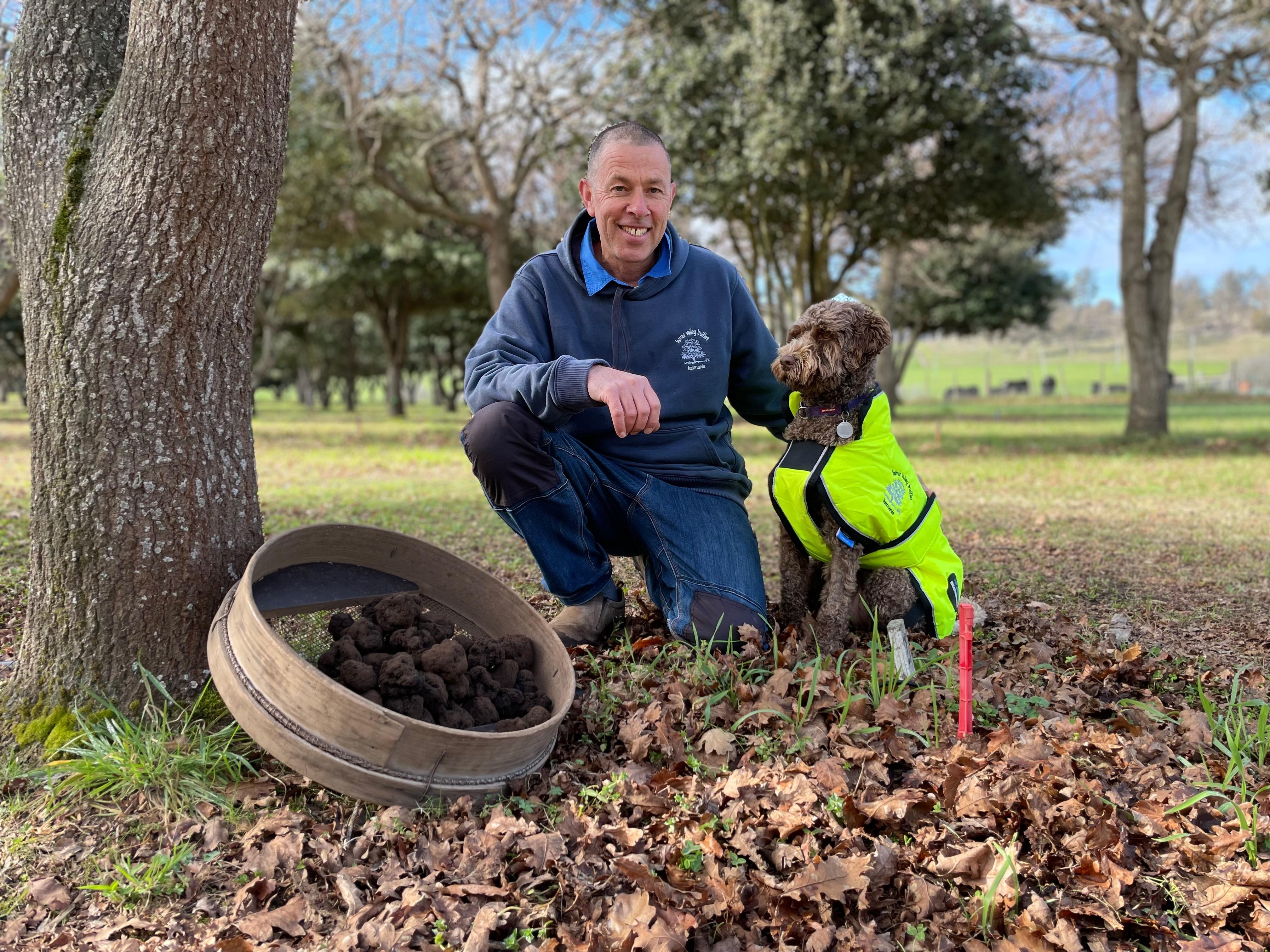
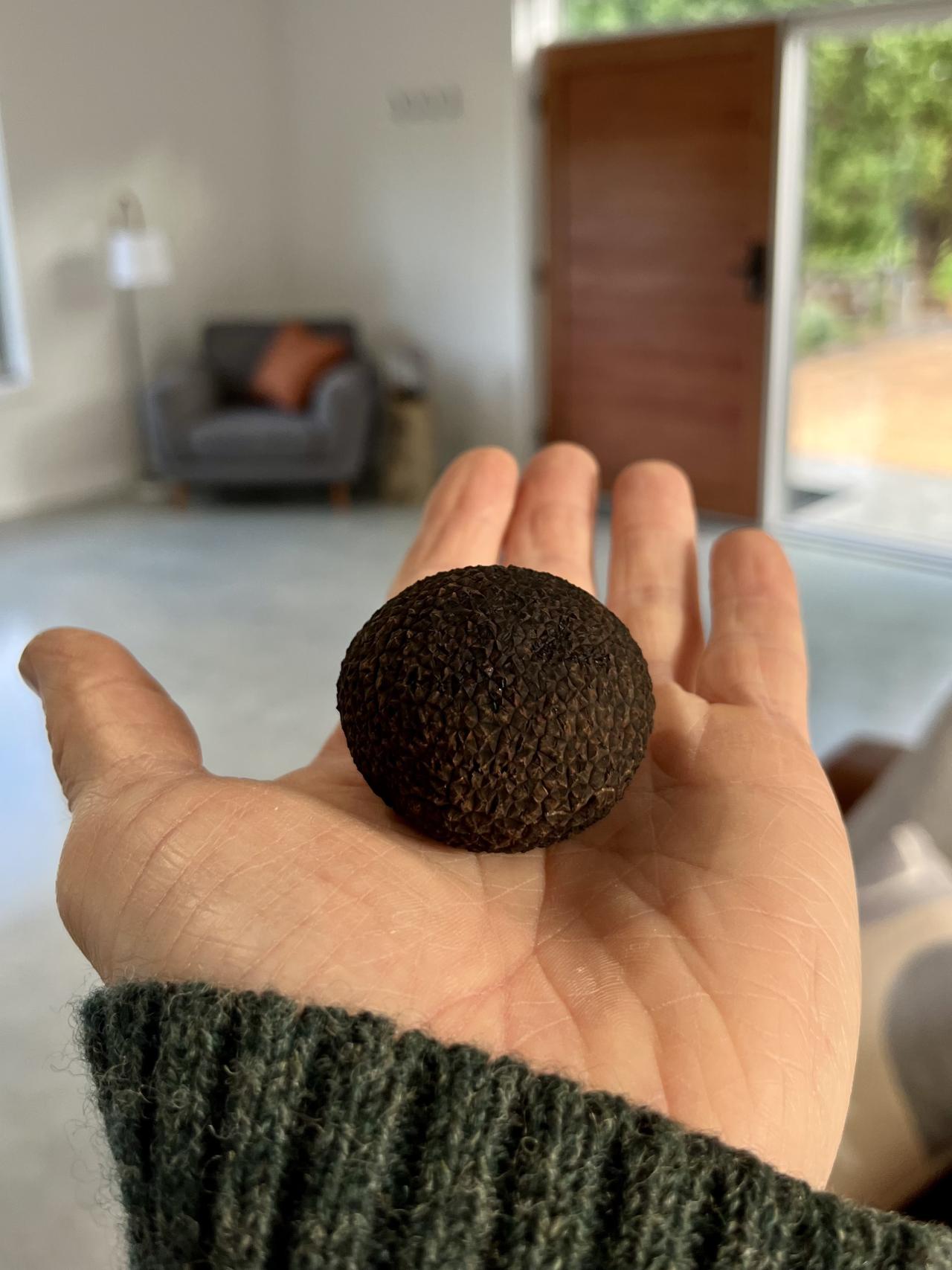
In the truffle world some things never change. For instance, you can’t find them without the super sensitive nose of a good dog.
While the experienced eye will spot the early fungus pushing up mounds in the ground around early June, most are buried much lower, growing in a symbiotic relationship with the roots of oak trees.
Another sign that truffles are successfully growing is the “brule”, clear patches under the tree canopy due to the fungus having its own natural herbicide that kills competing grass.
But what has changed in Tasmania is the number of productive trees, the amount of truffles harvested and the price paid for the aromatic delicacy.
In recent years thousands of mature oak trees have been pulled out of some of the biggest original farms, mainly in the Deloraine area.
No-one knew how long they would keep producing, with 25 years seeming to be the turning point when production slows significantly.
Less trees, a late start to the season and an early finish has made for a quiet truffle harvest this winter, but truffle farmers old and new agree that even in a cost of living crisis, demand for truffles outstrips supply.
Once fetching up to $3500 per kilo, huge truffle farms in Western Australia came online in recent years and flooded the market, contributing to a significant price drop for Tasmanian produce.
More than 60,000 trees were planted by mining and agriculture magnate Gina Rinehart in 2020, producing more than 1.5 tonnes of truffles which will continue to scale up further over time.
At Tamar Valley Truffles, on the outskirts of Launceston, farm manager Marcus Jessup said he’ll finish up digging this week, with the yield well down on previous years.
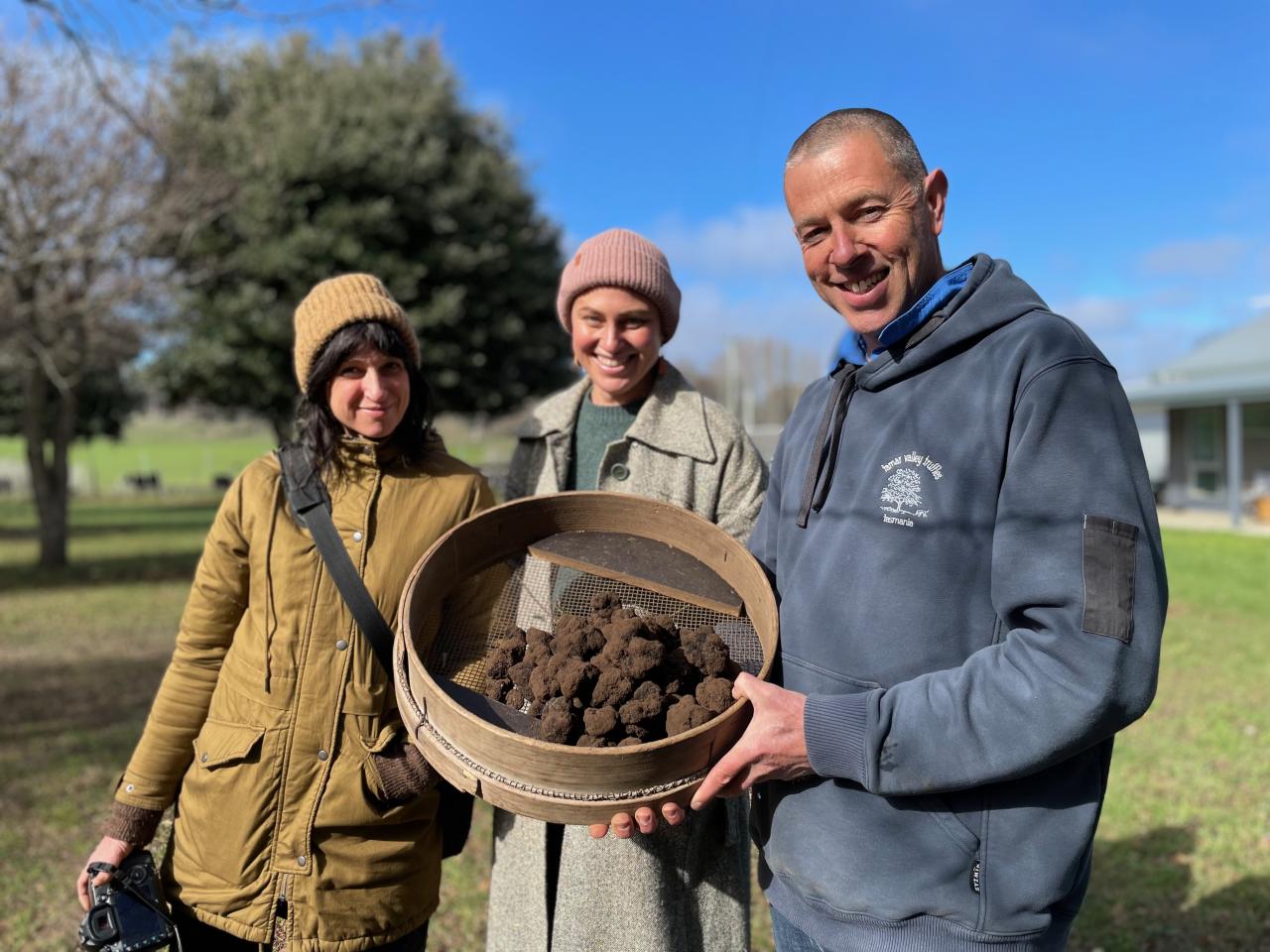
However there’s still enough to keep the local chefs happy, and last week he hosted the Launceston City Council team involved in promoting the UNESCO City of Gastronomy, where the quality of the local produce is key.
Like the grapes and the olives, the weather has had an impact,” Marcus said.
“Truffles are growing all year under the ground and it might have been the cooler, wetter spring or the warm winter that’s slowed things down.
“There’s still a lot of mystery around growing truffles 30 years on, but overall we are far more savvy around inoculating trees, the preferred soil types and the regime of inputs and pruning and irrigation that help keep production going.”
Tamar Valley Truffles concentrates on supplying local restaurants these days after years of selling to various northern hemisphere countries in their off-season, particularly Hong Kong.
Chile has become a major producer selling into America and other markets at prices half that of
Tasmanian truffles which are renowned for their aroma and preferred round shap[e.
“We’re usually around the $1200 per mark and they are selling for around $550 per kilo,” Marcus said.
“Of the roughly 50 tonnes a year produced by Australia the country only consumed about five tonnes so that’s a lot of truffles that need to be exported at the lower prices.
“Anyone going into truffles these days would have to view it as a hobby or interest to complement another income stream - it’s not the kind of return on investment that it used to be.”
That is exactly what the state’s newest truffle farm has done, with Pipers Brook Truffles in the north-east taking an agri-tourism approach with owners Ian and Katherine St Jack considering it a lifestyle choice as well as a business venture for their family.
“We dug up our first truffle in 2022 and as a new trufferie we expect the yield to increase each year going forward,” Ian said.
“We’re in a region that is known for high-yielding produce and while we have made some mistakes we’re happy and every year has been positive.
“We were officially up and running as an agri-tourism venture in February last year and visitor attendance has grown since then, especially for the hunting with the dogs experience combined with a three-course truffle lunch in the Lodge on Saturdays and Sundays.”
Ian said he gets a lot of international visitors and works closely with nearby House of Arras for a truffle hunt, lunch and wine master class with only one more available this season.
He delivers fresh truffles nationwide and sells direct into select restaurants and delicatessens.
“We have a lower than expected yield this season from our 620 trees but while demand outstrips supply and there is consumer confidence in the quality of our truffles it’s all very positive,” he said.
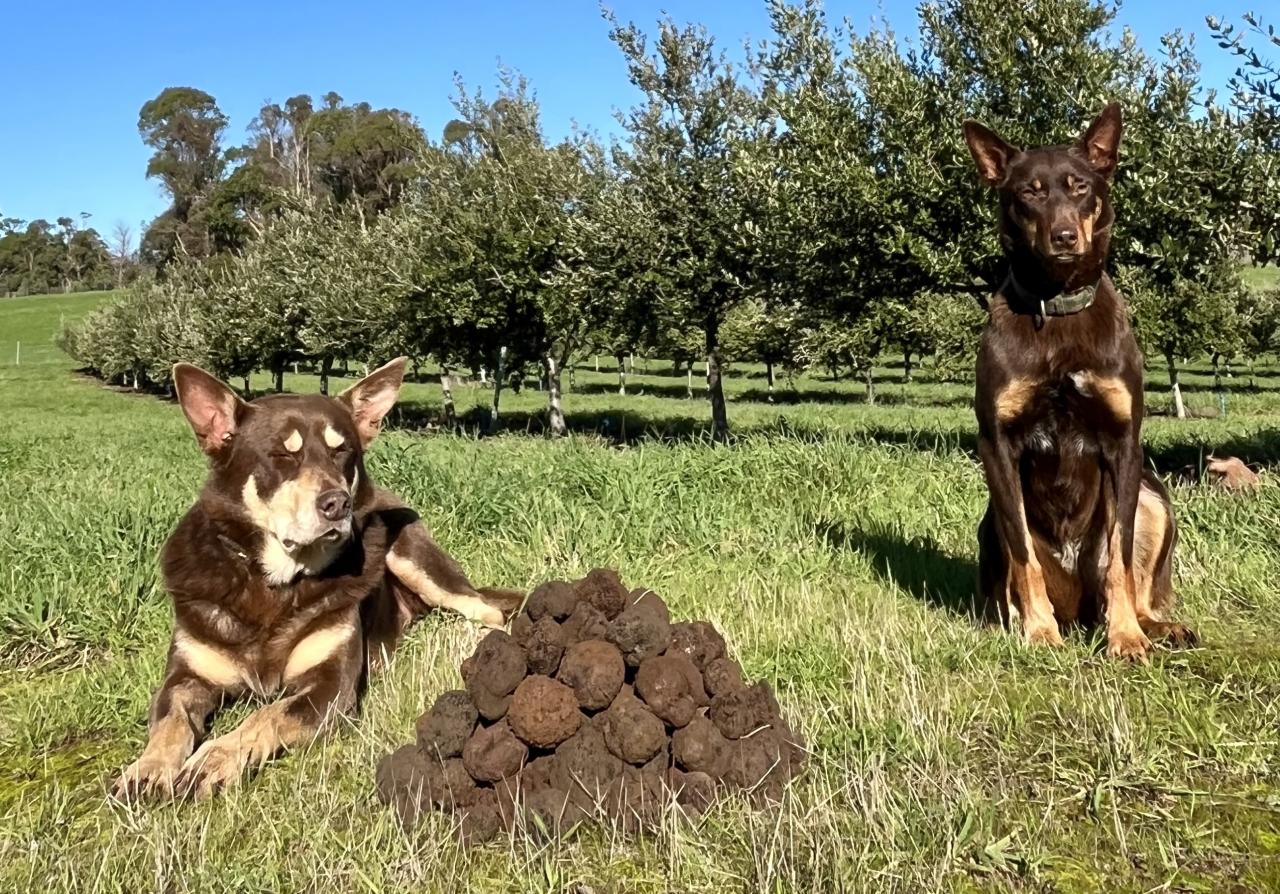
Ian uses kelpies, Maple, Diego and soon young Pedro to hunt for truffles - a break from the food-driven labradors that have traditionally been used for hunting.
“There’s been more failed trufferies than healthy ones grown in Tasmania and it’s been a bit of a unicorn industry of the likes of saffron and emus - but we’ve done a lot of hard work and research and we’re confident that we can grow our business,” Ian said.
“There’s many years to go until we reach peak production but like all agriculture nature can throw you a curve ball like it did this year.”
The children of Tasmania’s first truffle grower Tim Terry continue to make the most of a relatively much smaller trufferie near Deloraine.
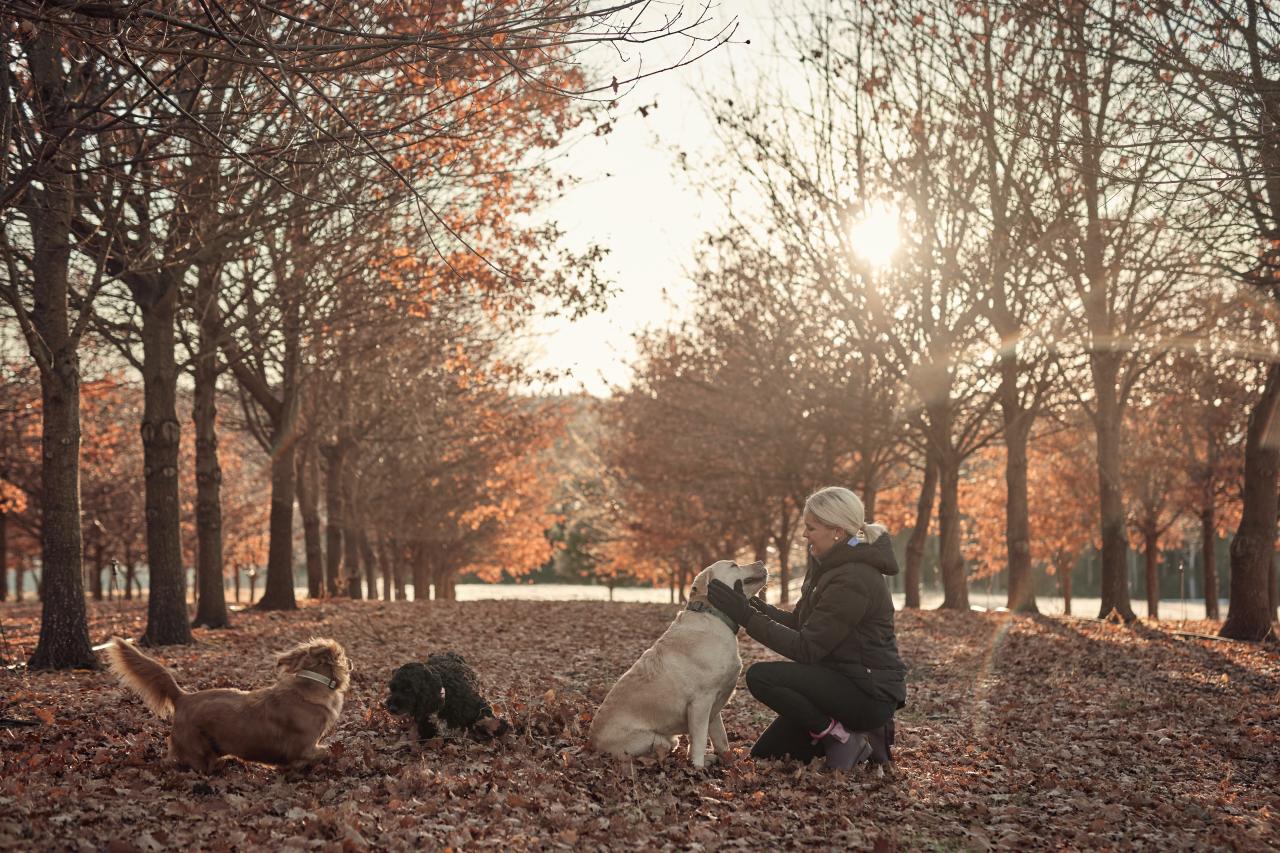
Anna Terry oversees a growing tourism venture under The Truffle Farm brand while brother Henry continues to deal with fresh truffle sales under the enduring Tasmanian Truffles venture and is a regular at Hobart’s Farmgate market during winter.
Anna said that a “horrible spring” last year has impacted the current season.
“We’re harvesting right now but it’s definitely a lower yield than anticipated,” she said.
“We had the warmest May on record when we really wanted frost - we’re finding truffles but it’s much harder work for our hunters and their dogs.”
The Truffle Farm takes advantage of the popular Mole Creek Road tourist route and sells fresh Perigord black truffles (Tuber melanosporum) and summer truffles (Tuber aestivum), pantry items, farm produce, and fresh-baked ready-to-eat treats at its farmgate shop as well as hosting truffle tours.
Value-adding with truffle based balsamic vinegar, creme, honey, oil and salt and truffle hunts with food experiences is their mainstay, leading to plans to start construction of a bigger and better shop and function room as well as trialling truffle-flavoured chocolate.
The Truffledore in Lower Barrington, owned by Ina Ansmann and Timothy Noonan, has also reported it is currently managing a shorter-than-expected winter harvest season.
However the couple said they have recently "bitten the bullet" and completed a year-long project to plant 345 new baby truffle trees designed to massively boost their future production capacity, with the new paddocks expected to start yielding truffles in the next three to five years.
With the season coming to a close nearly a month early, lovers of truffles are scrambling to get the last of the pungent fungus while growers are hoping for a better season next year.



Add new comment