
World Bee Day celebrated by Tasmanian industry
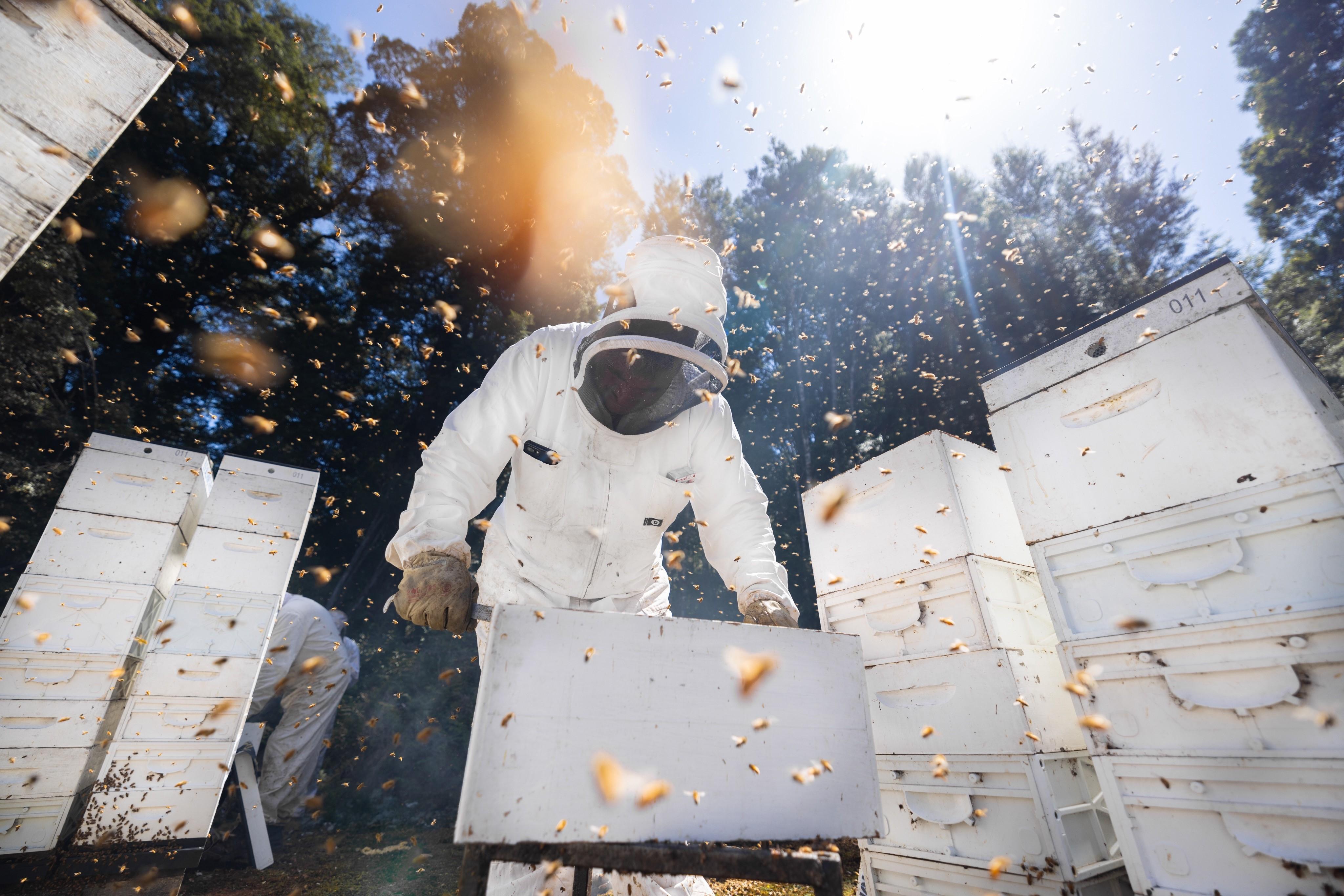
May 20 was World Bee Day, with the local industry using the celebration to highlight the essential role bees and other pollinators play in food security, biodiversity, and ecosystem health.
Tasmanian Beekeepers Association President Lindsay Bourke said World Bee Day was a chance to recognise both bees and the beekeepers who care for them.
“Most people love honey, but not everyone realises just how much we rely on bees,” Mr Bourke said.
“Bees help pollinate many of the foods we enjoy every day, they support biodiversity, and they play a vital role in healthy ecosystems.
“Here in Tasmania, beekeeping also supports some of our most distinctive natural products, including our world-renowned Leatherwood honey, as well as pollination services for important agricultural industries.”
Mr Bourke urged people to buy local Tasmanian honey; plant bee-friendly flowers, herbs, and trees; avoid unnecessary pesticide use, especially when plants are in flower; provide water sources for pollinators in hot or dry weather; talk to children and communities about why bees matter; and support strong biosecurity to help keep Tasmania free from major bee pests and diseases.
“World Bee Day is a celebration, but it is also a reminder that bees are under pressure.
“Beekeepers are dealing with rising costs, changing seasons, biosecurity risks, and the ongoing challenge of protecting hive health.
“At the same time, bees and other pollinators face threats from pests and diseases, habitat loss and reduced floral resources.”
Compared to other parts of the country, Mr Bourke said Tasmania was in a fortunate position.
“We remain free of varroa mite, a destructive honey bee parasite now established across much of mainland Australia.
“But that freedom cannot be taken for granted.
“World Bee Day is a timely reminder that biosecurity is not just a government issue or an industry issue — it is something that protects our food production, our honey industry, our home gardens, and our natural environment.
“Keeping Tasmania varroa-free for as long as possible will require ongoing vigilance, strong border protections, regular hive monitoring, early reporting and practical support for beekeepers.”




Add new comment