
Lindsay White and Peter Hazell hit out at FPA and land clearing regulations
LINDSAY WHITE:
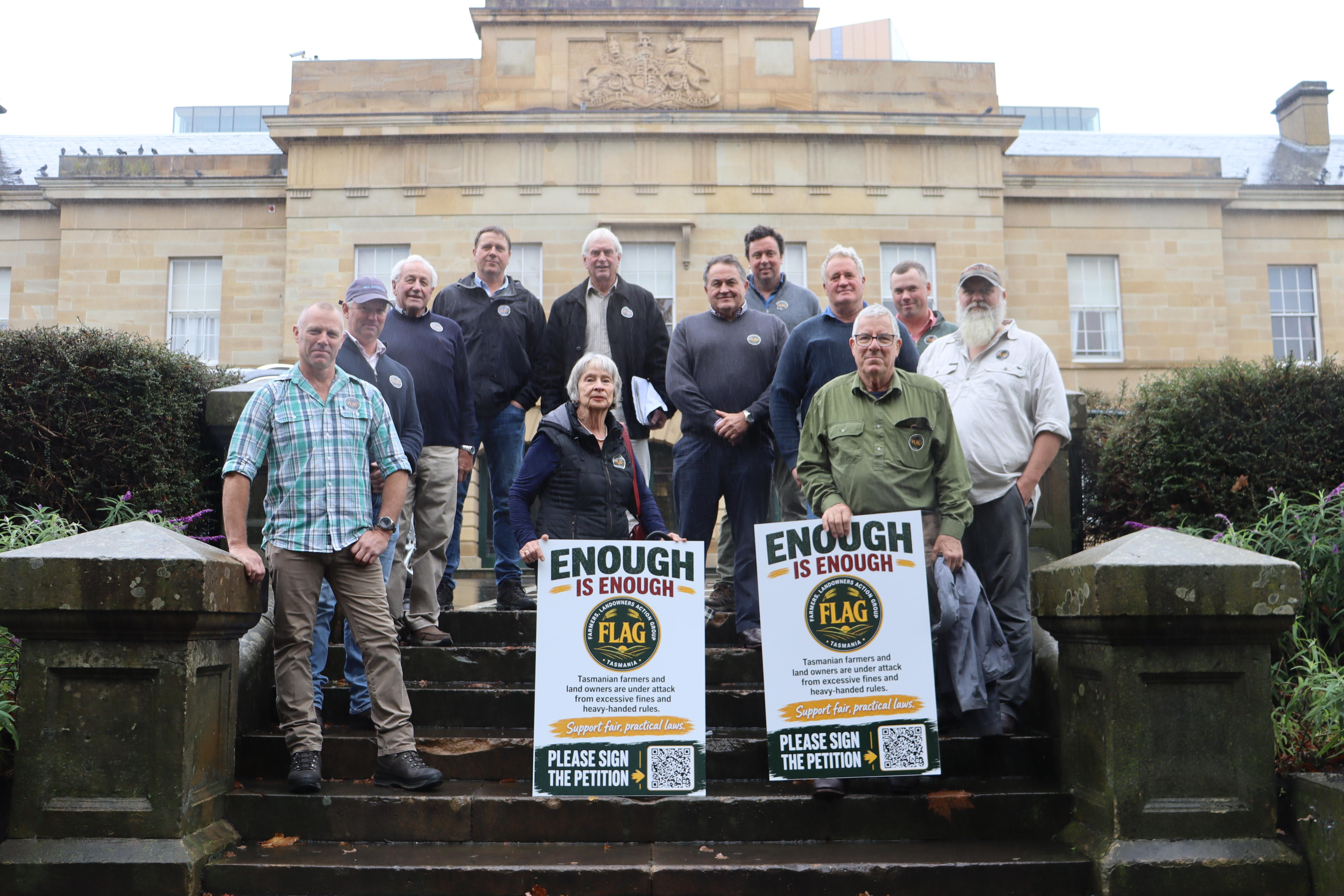
Tom Dunbabin and Peter McGlone (Tas Country July 17, 2026) have misunderstood, or chosen to misrepresent, the concerns being raised by the Farmers and Landowners Action Group.
FLAG is not saying farmers should be allowed to clear native vegetation without rules. We are not saying landowners should be able to ignore the law.
There are real and documented concerns about the treatment of farmers and landowners, the practices of the FPA, the conduct of its staff and decision-making of its Board.
This cannot simply be dismissed as opposition to regulation.
FLAG has received an unprecedented level of support from farmers, landowners and politicians from across the political spectrum. That support shows these concerns are widespread.
We are saying the current system is not fit for purpose.
It is complicated, heavily focused on enforcement and does not properly recognise the realities of farming. Farmers have to balance animal welfare, staff safety, drought, fire risk, weeds, irrigation, infrastructure, biosecurity, environmental management and financial pressure every day.
These are not excuses. They are the practical realities of running a farm.
It is easy to say every landowner should know the Forest Practices Act. The Act, regulations, exemptions and vegetation classifications are difficult to understand. Farmers often need to pay for professional advice just to work out what they can and cannot do on their own land. Even the FPA’s own self-assessment tool Check before you Chop warns users not to rely on it and recommends seeking independent professional and legal advice.
The suggestion that farmers who get caught by these rules do not care about their land is offensive and wrong. Many farming families have cared for their properties for generations. They protect native vegetation, control weeds and pests, reduce fire risk, look after waterways and invest heavily in the long-term health of their land.
The Fergusson case was not about someone deliberately clearing bush for commercial gain. No timber was sold. The work was connected with animal welfare, workplace safety, irrigation and farm infrastructure.
The Fergussons admitted they had not obtained approval, apologised, cooperated with the FPA and offered substantial remediation. Their proposal involved about 27 hectares of fencing, revegetation and protection work to address approximately 6.6 hectares identified by the FPA’s ecologist as threatened vegetation.
Despite this, the FPA chose to take the matter to court.
That is exactly why the system needs to be reviewed.
FLAG wants a genuine remediation option before prosecution or heavy fines, particularly where a farmer has made an honest mistake, cooperated with the FPA and is willing to undertake meaningful environmental work.
We also want transparency around how fines are calculated, whether similar cases are treated consistently.
There should be a clear separation between investigating a matter, recommending a penalty and making the final decision. At present, the FPA is investigator, prosecutor, decision-maker and financial beneficiary. That does not give farmers confidence in the system.
The review announced by Minister Felix Ellis must not be limited to minor changes to the regulations. The Forest Practices Act, enforcement powers, exemptions, penalties, appeal rights, Board structure and governance arrangements all need to be examined.
Private farming land should also be treated differently from commercial forestry operations. A forestry-based system is being used to regulate everyday farming work involving fences, laneways, stockyards, irrigation, weed control, fire access and animal welfare.
Farmers also deserve basic fairness.
FPA officers entering private farms should give reasonable notice, explain why they are there, follow farm biosecurity requirements and complete any necessary farm induction.
Farmers must have a support person or adviser present at meetings. There should also be an agreed record of what was said.
There must be independent oversight of FPA investigations and enforcement decisions, including Board processes, delays, communications, fine recommendations and the treatment of landowners.
FLAG supports sensible rules, but those rules must also allow farms to remain productive, safe and financially viable. Farmers need to be able to maintain fences, improve stockyards, manage weeds and fire risk, install irrigation and make practical decisions for livestock and staff without being trapped in a costly and confusing process.
Tasmania needs agriculture as well as sensible regulation. A system that delays essential work, discourages investment and puts productive land at risk is not serving farmers, rural communities or the State.
Protecting the environment and treating farmers fairly are not opposing ideas.
Tasmania can and must do both.
PETER HAZELL:
I wish to acknowledge my support for Lindsay White, convener of FLAG.
I have followed his facebook posts and what he has uncovered as the result of breaches of the forest practices code and the resulting actions by officers acting on its behalf.
Frankly speaking it has sickened me to hear what these people have experienced and the fines that have been imposed.
I knew my fellow farmer who ended his life, in part as the result of receiving a hefty fine. He was like most family farmers, worked hard all his life, his farming practices and animal husbandry exhibited top management.
He had just installed a new dam and centre pivot irrigation at great cost for continued prosperity for his family farm and to provide food and fibre for our country and for other countries overseas.
It seems to me you’re damned if you do, damned if you don't.
Mr McGlone (letter published 17.4.26) is correct, some people would consider fines imposed as a cost of doing business. The most recent example would be the hefty $150 million fine given to Fortescue Metals.
Anyone can call themselves a farmer. Farmers come from all walks of life. Some treat farming as a business, others a lifestyle. I have farmed all my life and have interacted with many fellow farmers from all over Australia. It is a hard and somewhat thankless lifestyle with little monetary reward.
The majority of farmers would have a passion for what they do and wish to leave their farm better for future generations, not to wreck or plunder.
The majority of Tasmania's farmland was formed by clearance of native vegetation, I agree we do need some regulations and guidelines. The current regulations relating to the FPA are not fit for purpose and need review.
I consider the future of family farms is in jeopardy. We are already seeing many Tasmanian farms being acquired by corporate and overseas companies.
The new EPBC Act in my opinion will only hasten the decline of family farming. This new Act along with the FPA are unfair, unjust and do not recognise the economic and social importance of agriculture to Australia.




Add new comment