
Concerns over structural integrity of new Bridgewater Bridge
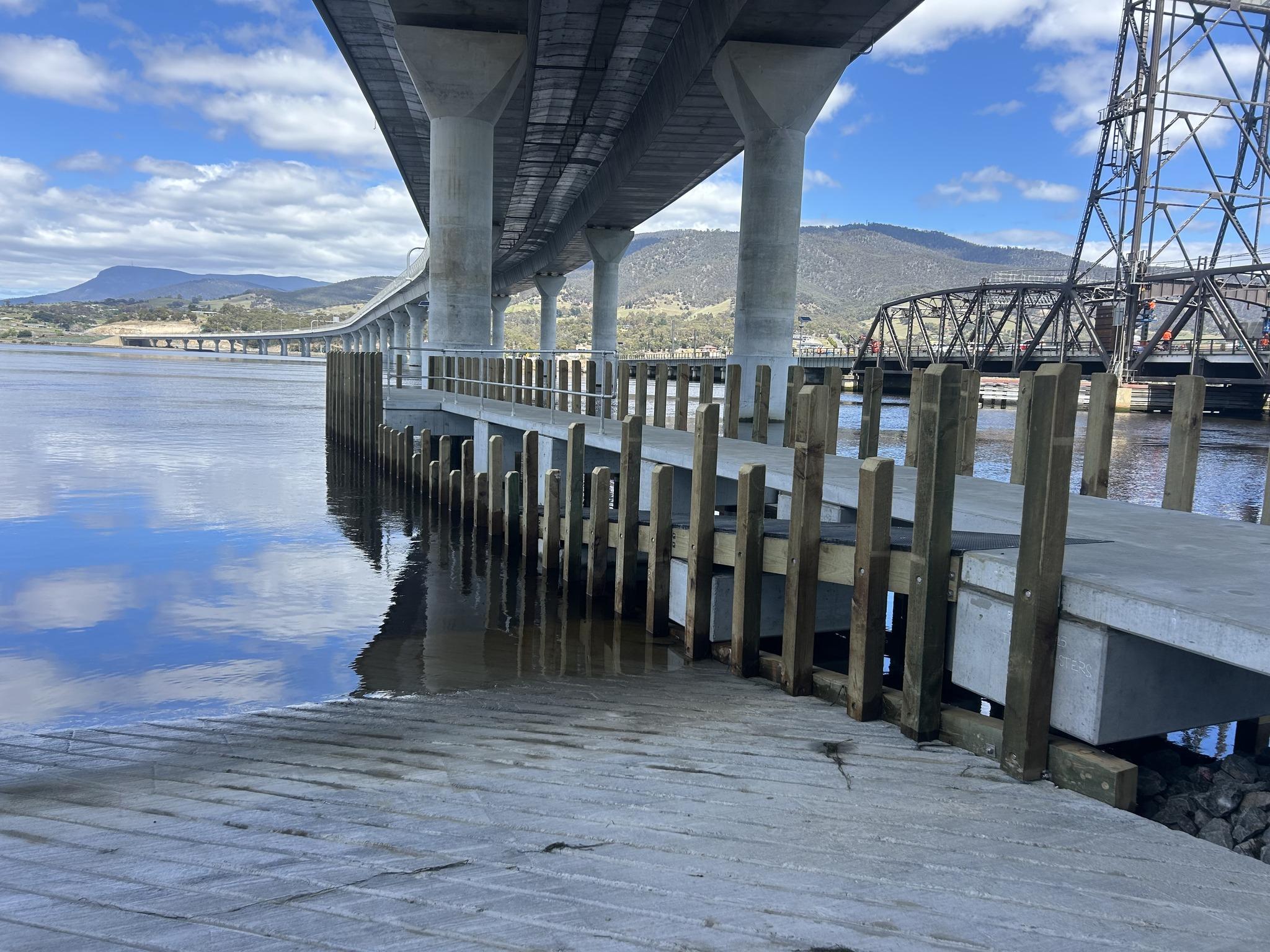
The structural integrity of the new $786 million Bridgewater Bridge is a talking point again, with concerns that the bridge could need reduced traffic loads and speed limits in the future.
The warning comes on the back of a dispute over the design of the concrete support piles that form the bridge's foundation and the unstable "soft" riverbed that supports it.
It's been mentioned that those in charge had different opinions about the potential seriousness of the bridge's support design issues, with one of the engineers said to have described the potential problems as "intolerable".
Concerns were raised by the Technical Advisory Team, which the Department of State Growth employed to verify that the bridge was built in accordance with the contract by designer and builder McConnell Dowell (MCD), one of a few companies also seeking to be part of the Mac Point stadium project.
A State Growth spokesperson said "the structural designs were reviewed and checked by a proof engineer and the overall process was reviewed and verified by an independent verifier”.
"The proof engineer and the independent verifier all certified the final structural designs as being compliant and fit-for-purpose, including the pile designs," the spokesperson said.
Geotechnical specialist Derek Pennington said his technical advisory team were concerned that the design of the bridge's piles could not adequately support all 42 of its piers.
One reason was that they believed the unstable, soft riverbed in some stretches was unsuitable for the single-pile design used.
"So that was another issue with the single mono-pile, is that it had to be vertical and the ground conditions were such that in certain parts of the crossing, there was 40, 50 metres of ground you would call very soft and not able to provide much lateral support," Dr Pennington said.
Dr Pennington said bridges could also use multiple piles set at different angles, which was "more conventional" for those conditions, to provide more lateral support.
He also said his advisory team was let go by the Tasmanian government in 2024 due to the standstill between the team and MCD over the piles — in his belief, to avoid project delays.
"In our opinions, we felt that they [the piles] introduced such risks to the structure performing as required under the contract, that the risk of it failing to perform as required was intolerable to us," Dr Pennington said.
Fast forward to June 2025, and large cracks were found in a support pier and plinth just before the bridge was officially opened.
Dr Pennington says he does not have fears for any sudden, significant damage to the bridge, but there may be a need for more management of loads on the bridge, such as through reduced speed limits and traffic.
The department has said that survey markers were attached to the bridge piers to help monitor any movement.
"The bridge is safe, and it has not experienced any unanticipated movement," the department spokesperson said.




Add new comment
Comments
Bridge
It should have been designed for 100 k speed let’s get them to build the stadium because I don’t think we will ever fill it with people