
Dairy farm up for national recognition
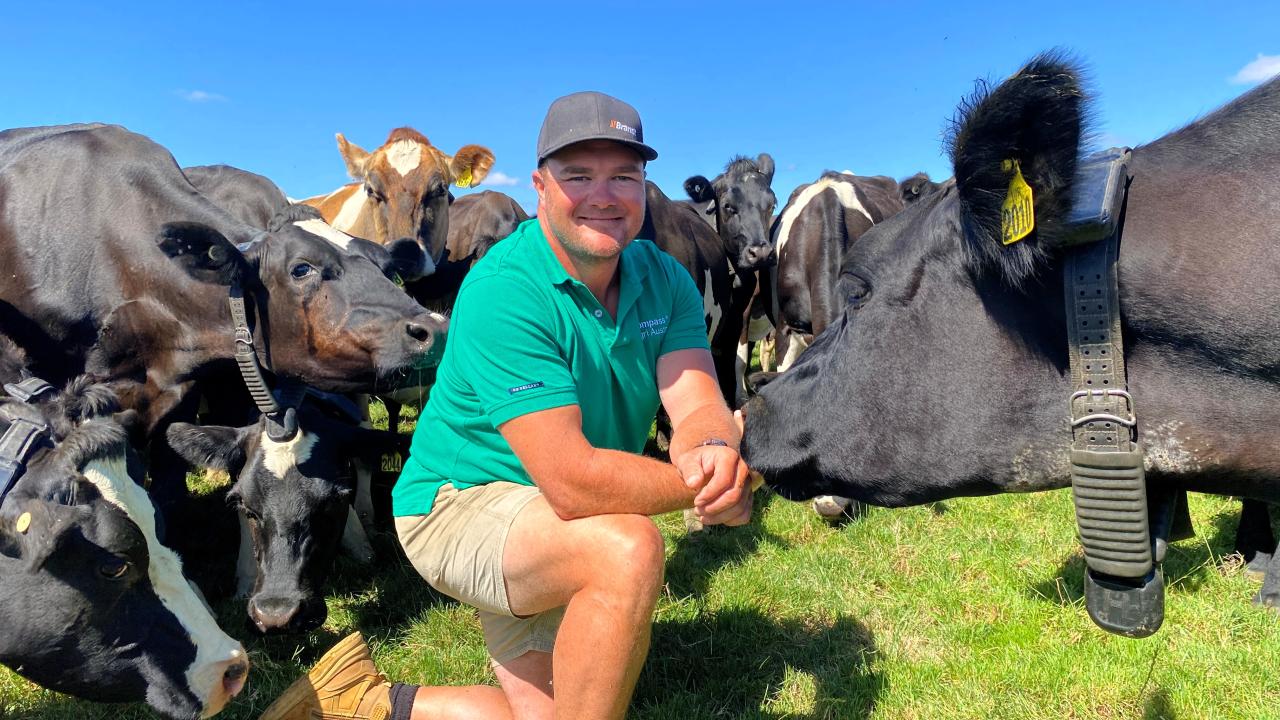
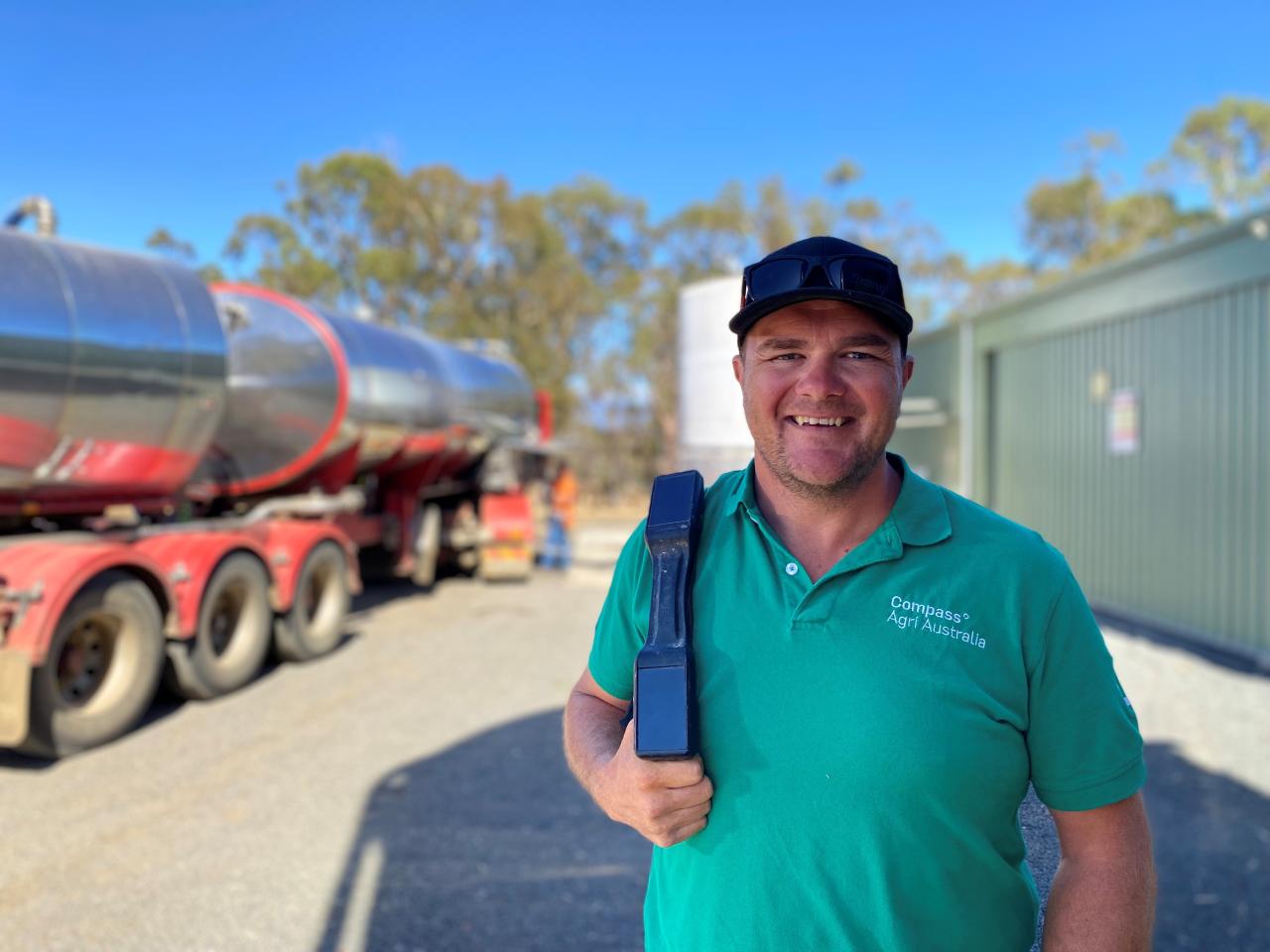
- Troy Ainslie with his dairy cows which are contained by virtual fencing and Halter cow collars.
Woodrising dairy farm is surrounded by traditional Northern Midlands mixed cropping and livestock properties - yet it’s finding a way to stand out in its field.
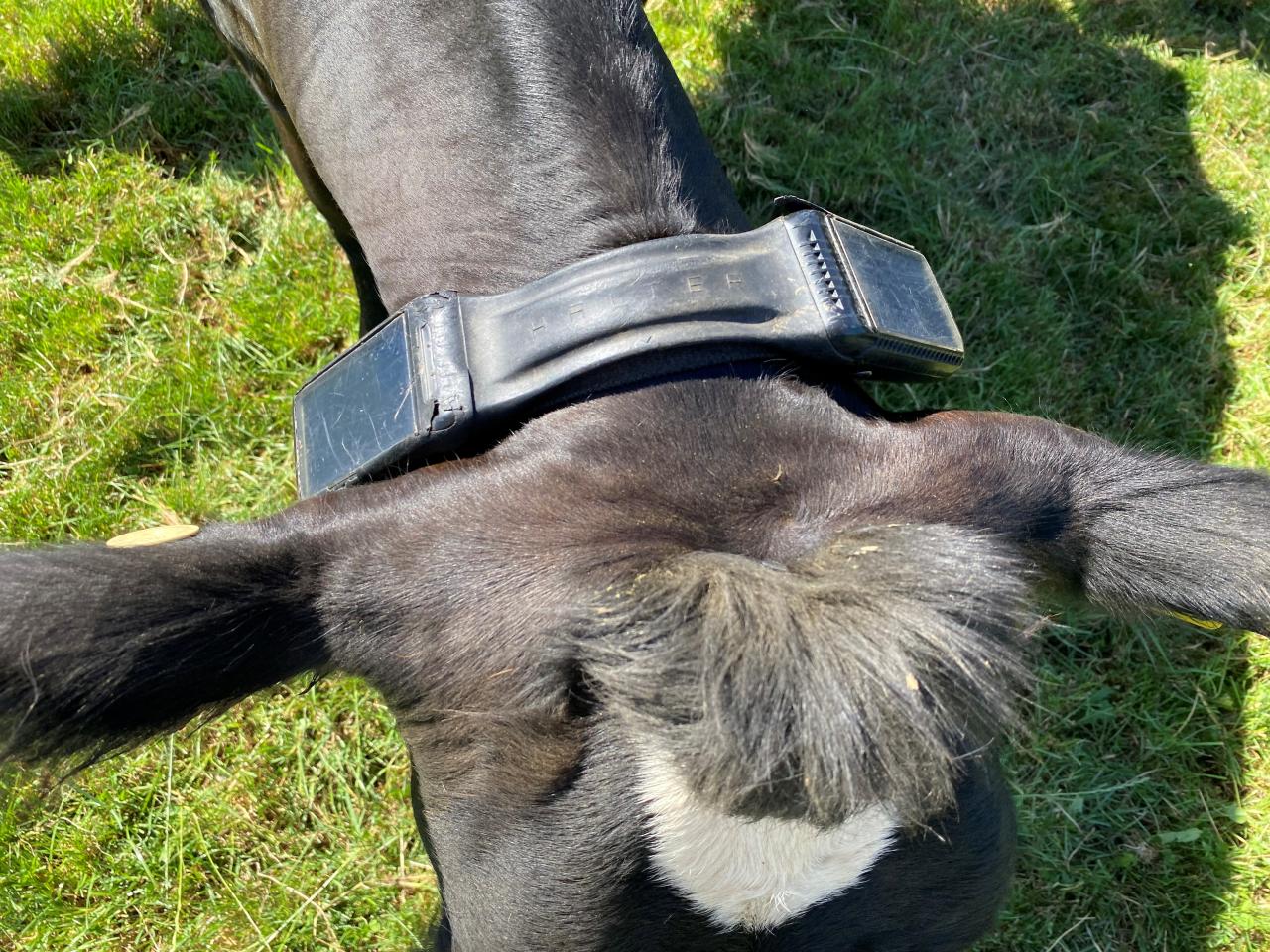
Under the management of Troy Ainslie for the past seven-and-a-half years, it has leveraged the Halter smart collars on its herd of 540 dairy cows to do away with traditional strip grazing techniques and use the data collected to make incremental changes that have widespread positive effects.
Featuring in the Tasmanian Dairy Awards in recent years, winning in 2023, the dairy is a finalist in The Weekly Times Coles 2025 Farmer of the Year awards which will announce its winners in six categories on February 13 at the Melbourne Cricket Ground.
Troy and his team were nominated and selected in the top three nationally in the dairy industry for their achievements in productivity, innovation and sustainability – all of which have been supercharged since the collars began collecting 1200 data points per cow every minute.
In 2018 Troy, who grew up on north-west dairy farms, moved from Elizabeth Town to Cressy with his wife Toni and four children to take over the management of the 180ha Woodrising dairy.
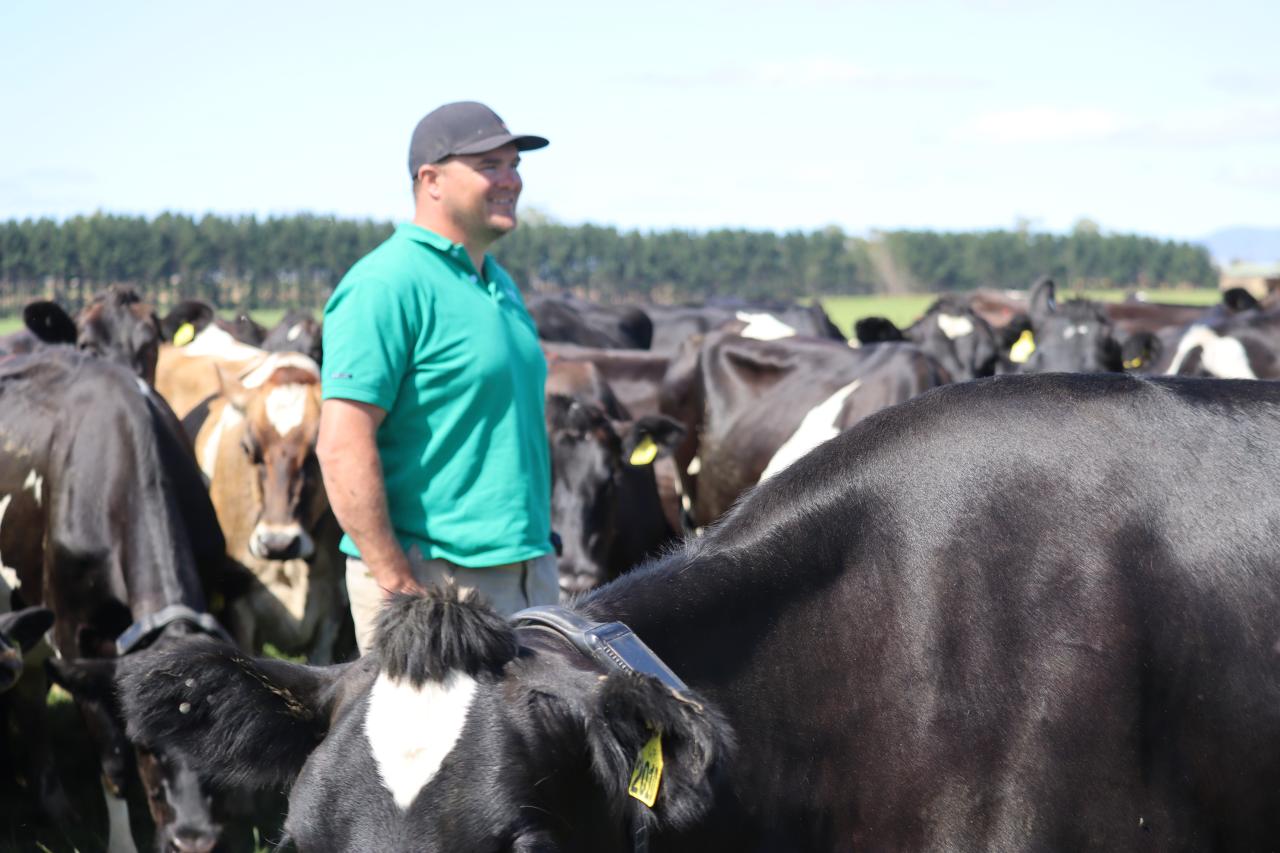
The picturesque farm with sweeping views of the Great Western Tiers is owned by Compass Agri Australia, which also has six dairies in the Derwent Valley.
Each cow produces on average 490kg of milk solids during the milking season which is sold to Saputo Dairy Australia.
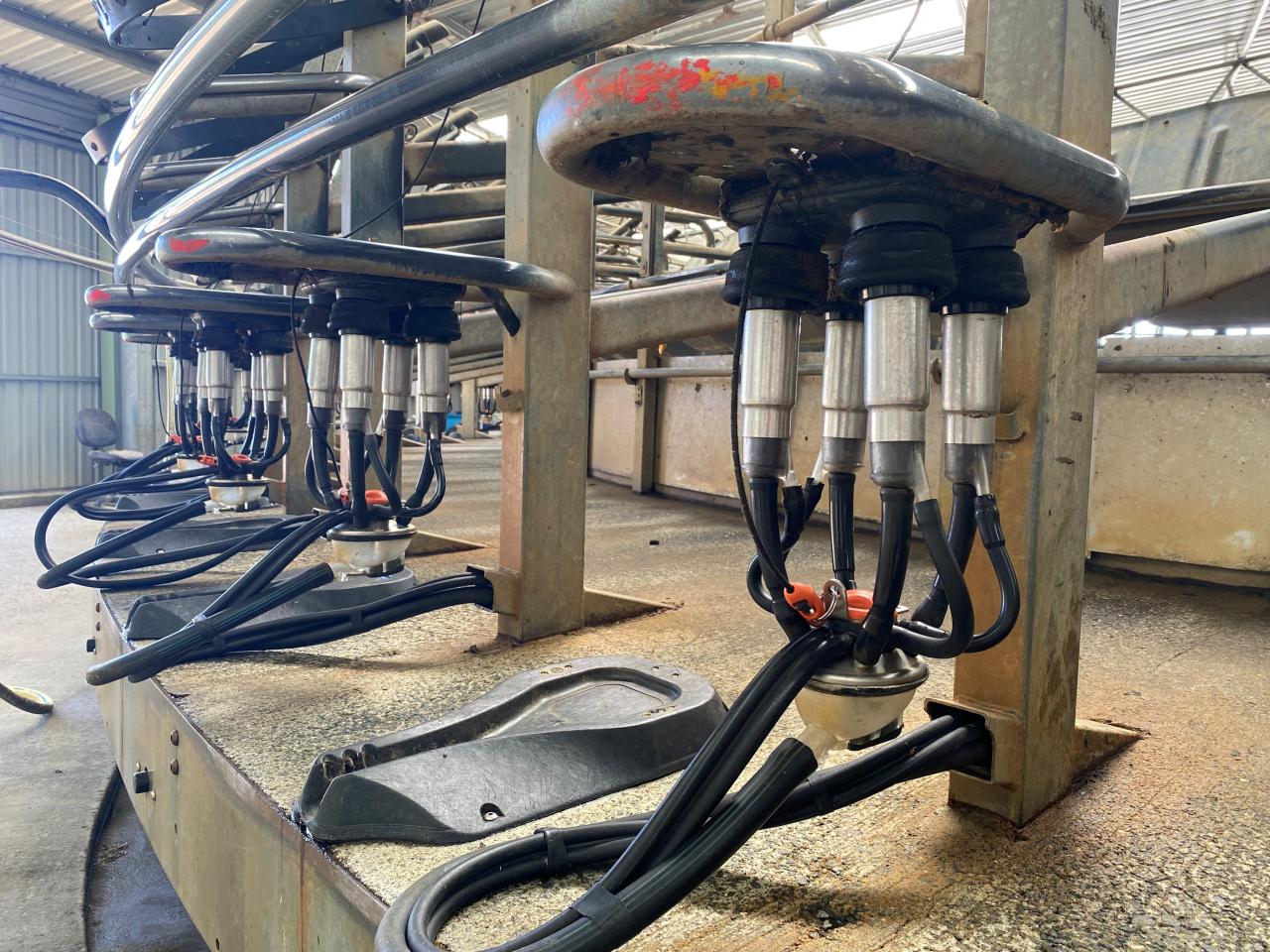
“The farm was already set up, with the 60-unit GEA dairy with auto draft having been converted in 2015, making it essentially a one-person operation,” Troy said.
“That ratio means it doesn’t take long to milk, but I’m always chasing the little one-percenters, the little things that add up to a better operation and happier people and cows.”
The addition of halters and virtual fencing has improved every facet.
“PCE equals SP – Looking after our People, Cows and Environment makes us Sustainable and Profitable,” Troy said.
“We focus on doing things properly and doing it once, and the new technology has helped us greatly with that.”
Toni, who works in the office at TasHerd, also works on the farm and wrangles four children aged from eight to 18.
She has been able to dramatically cut her hours on the farm and Troy said her observation that he was always stressed and grumpy was a catalyst to finding better ways to run a dairy business.
Being able to sleep for an extra hour each day and having happier staff was an immediate mood booster.
Instead of having to fetch three mobs of cows with quad bikes in the dark at 4.30am and again in the afternoon the cows bring themselves up to the dairy for milking.
Instead of running out electric fencing every day to promote even grazing the cows are manoeuvred through their collars to only graze where there is optimum feed – no fence required.
The hours saved are then spent in other areas to improve the farm.
Ramping up irrigation has also paid dividends – changing from hard hose irrigation to pivot with some laterals in the corners means Troy can get the most effective value from the water rights and reduce power usage.
“Pasture is our cheapest form of feed so its all-important – really I’m a grass farmer not a dairy farmer!” he said.
“The introduction of the collars has taken the pressure off – it’s been phenomenal.
“We can’t monitor anything if we can’t measure it. Instead of farming herds we now farm individual cows.
“From an app on our phone we can see what each cow is doing and there’s no going out in the frost and rain anymore or putting fence reels up and down all day.
“That alone makes it a safer place to work – the bikes are in the shed and the fence reels are hanging on the grain silo, that’s how little they’re used.”
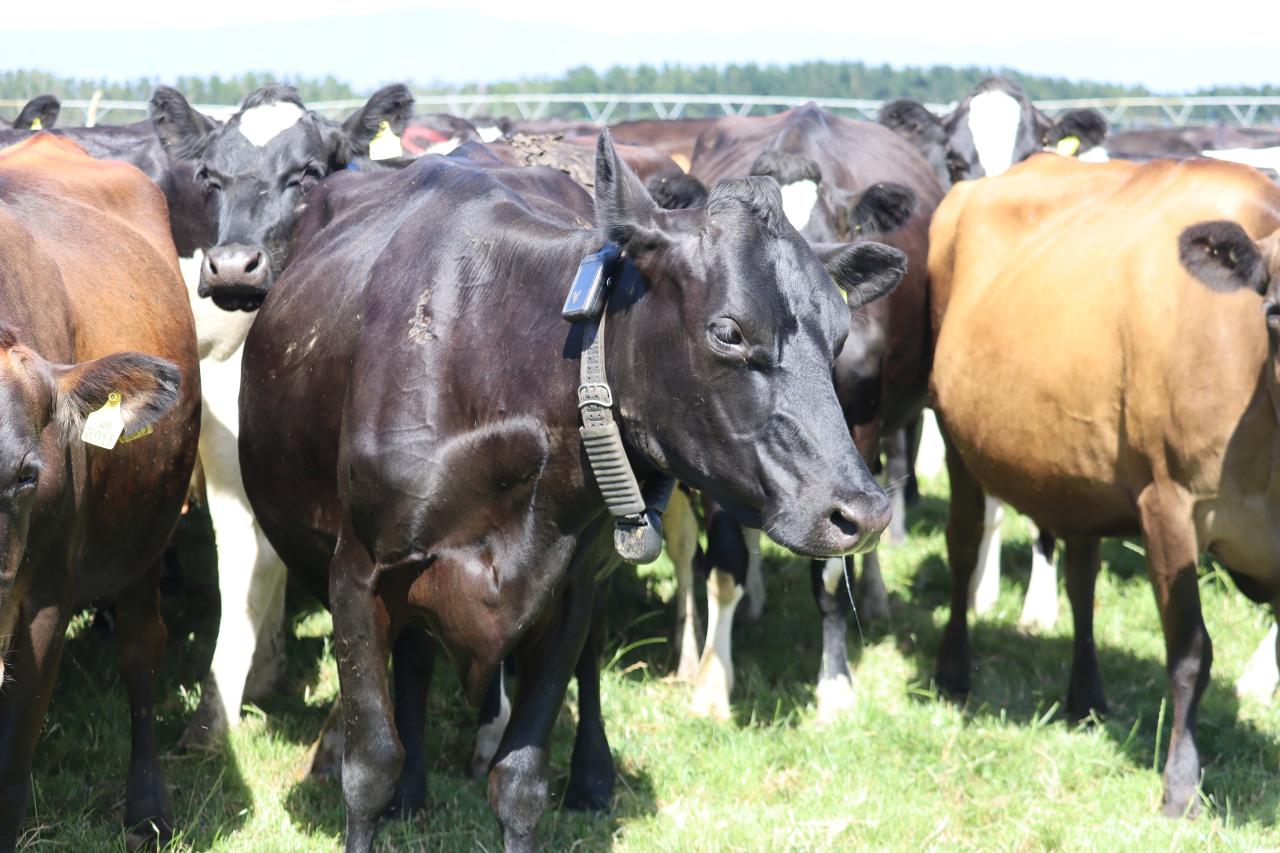
Each collar is programmed to give an audio queue when the cows get close to a “virtual fence”.
The cleverest cows work as “testers” – entering a new area and walking up to the invisible fenceline in several places so that they know their boundary and then they pass the knowledge onto the rest of the herd.
Troy separates the cattle into mobs of young, old and in-between and uses the halter data to look after them better, such as grazing the older cattle closer so they don’t have as far to walk.
They all spend less than half the time they used to on the concrete pad, with the milking timing tweaked to allow seamless arrival of the second and third herd to the dairy with no waiting around for farmhands to get paddocks sorted.
Just knowing where and how they are grazing and ruminating allows for better pasture management, less fertiliser usage and strategic feed crop planning.
“These things and having the time to tweak other aspects of herd management has led to improved pasture utilisation, cow reproduction rates and increased milk production,” Troy said.
“Everything has changed rapidly in the dairy industry, from the old walk-through dairy to robotic dairies, everything has been upgraded with technology, and this is another step.
“We’re so much more aware of what we’re doing, and we can make the numbers stack up.
“The dairy industry has never been a better place to work.”
More information on The Weekly Times Coles 2025 Farmer of the Year finalists can be found at theweeklytimes.com.au


Add new comment
Comments
Yes I have seen a lot of change
Yes its good to see dairy farming still going ahead in leaps and bounds keep the good work up and encourage the younger generation to take it on for there family's its a good business to be in .. I milked my 1st cow at 8years old in my father's 4 bail double up that was 71+ years ago and guess what I am still milking cows and still enjoying ... regards Rod Rocket..