
Dead little penguins return "some weak positives" for bird flu
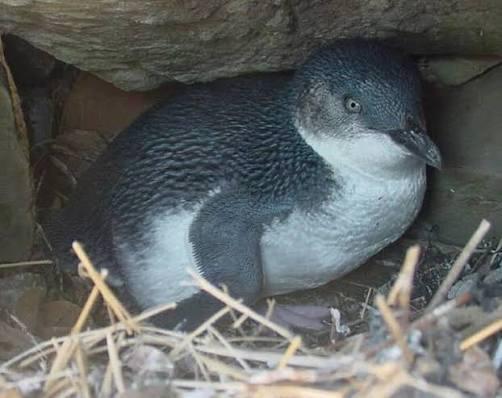
Laboratory testing results on the dozens of little penguins that died on King Island has returned “some weak positives” for bird flu.
Around 51 little penguins were found dead on the island, but the condition of most of the animals meant they were not able to be tested.
Federal Agriculture Minister Julie Collins said testing would continue on the little penguins.
“The state laboratory testing had some weak positives and we continue to work and wait for the CSIRO lab to do its important work in terms of confirmatory testing in relation to the penguins,” Ms Collins said.
“Some of the testing, it depends on the quality of the sample, so sometimes there’s degraded samples that can take longer,” she said.
“Some samples come back in a few hours, some of them take many, many hours.”
More funding is also available to combat and control bird flu.
$125 million will be available to support immediate national emergency biosecurity response activities for H5 bird flu, cost-shared equally by the Commonwealth, states, and territories.
An additional $20 million will extend on-ground action for key native wildlife species and locations, emergency response activities for native wildlife, including in Commonwealth-managed national parks, and support citizen science work.
Ms Collins said her government would be seeking matched contributions from states and territories for the Commonwealth’s new funding.
“Our Government continues to take the detection of H5 bird flu seriously, which is why we’re delivering this additional funding to ensure Australia’s bird flu response continues to be swift and coordinated.
“We’re working around the clock with states and territories, our agriculture industries, our wildlife and technical experts, and communities to respond to detections quickly, and to help manage the risks this virus brings.
“We know that strong biosecurity is our strongest line of defence, which is why our Government has not only invested early, but continues to provide support to industry to boost their preparedness.
“While Australia has not detected H5 bird flu in poultry or the wider agriculture sector at this stage, we are taking a proactive approach to ensure we remain prepared and ready to respond.”
Environment Minister Murray Watt said it is not possible to stop the spread of H5 bird flu in wild birds and mammals, but that Australia could learn from outbreaks in other parts of the world.
“For several years now, the Albanese Government has been working with states and territories, conservation groups, and wildlife health and other experts to invest in projects across the country to prepare for a H5 bird flu outbreak,” Mr Watt said.
“As a result, our most at-risk species are in a better position to withstand and recover from the impacts of this virus.
“From supporting Kangaroo Island’s Australian sea lions to the Christmas Island frigatebird, close to 70 on-ground projects are well underway across the country to boost species’ resilience by tackling other threats.”
Mr Watt said a further 31 threatened species are better protected with boosted biosecurity for captive breeding populations.
“This additional funding will support the expansion and extension of bird flu preparedness and response measures for H5 bird flu in wildlife across Australia, including Commonwealth-managed national parks.
“We will continue to work with all jurisdictions to ensure we’re taking sensible actions to protect our at-risk bird and mammal species, informed by best available evidence.”



Add new comment