
Lambing season starting on many farms around Tasmania
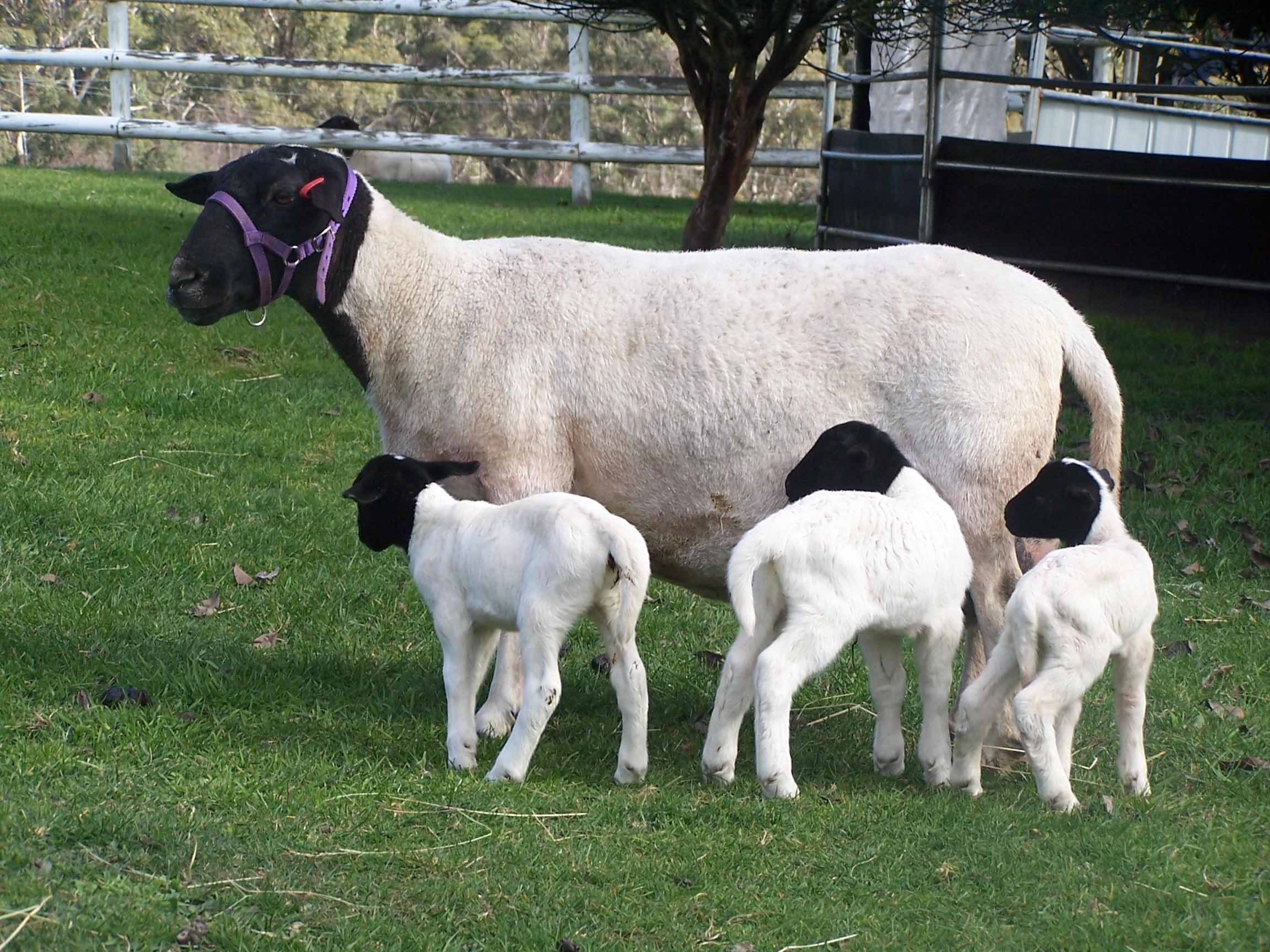
Chatwood Downs Dorper Stud is in the middle of lambing, with the stud’s Janet Ainscow saying they even had two sets of triplets born in one day.
“My lambing percentage rates are currently at 200 per cent,” she said.
“It’s usually pretty high because I have Dorpers and they usually have twins.”
Ms Ainscow said her stud was on the smaller side with only 14 ewes.
“We’ll keep lambing until the end of the month.”
Tasmanian lamb producers are heading into the new season with prices at historically strong levels and processors already looking ahead to securing supplies from the spring lamb crop.
Lambing is under way across much of the state and will peak over the next month, with the first of the new-season suckers expected to begin reaching processors from late December.
For producers, the timing could be significant.
Market analysts differ on what that will mean for prices, while producers themselves face the more immediate decision of whether to sell lambs earlier or chase additional weight.
National sheep and lamb supplies have tightened sharply this year after several years of heavy turn-off, helping underpin lamb prices at levels well above longer-term averages.
At Powranna on Tuesday, prime lambs were firm to slightly dearer, with processors paying $252-$326 for trade-weight lambs.
Restockers paid $160-$212 for light trade lambs, although competition was weaker on the lighter end of the yarding.
The latest results continue what has been an exceptionally strong year for lamb values.
The national Trade Lamb Indicator reached a record 1252c/kg carcase weight in July before easing as processor maintenance and changing restocker demand affected competition.
Meat & Livestock Australia’s latest weekly market report shows supply remains constrained.
National lamb yardings fell another 10 per cent in the week to August 14 to 121,036 head, while sheep yardings dropped 40 per cent.
Apart from restocker lambs, all major sheep indicators strengthened, with the Light Lamb Indicator climbing 4 per cent to 1087c/kg.
MLA estimates Australia’s sheep flock has fallen 2.7 per cent to 67.1 million head after several difficult seasons and heavy turn-off, including reductions in breeding ewe numbers.
National lamb slaughter is forecast to fall 11 per cent this year to 21.86 million head, while mutton slaughter is expected to drop 30 per cent.
That puts considerable value on the lambs now being born in Tasmanian paddocks and particularly on producers’ ability to grow them quickly to processor specifications.
Tasmanian Quality Meats managing director Jake Oliver said they would prefer to see the lamb crop spread over a wider period.
“Ideally, we don’t want everyone to be lambing at the same time because that would mean that they would want to process those lambs at the same time, which creates a backlog,” Mr Oliver said.
“The more spread out we can get lambing and getting more people to lamb earlier would help.
“There used to be guys that would lamb in June, so you’d have those early lambs, but we’re not seeing as many of those people anymore.
“They’ve gone back to traditional spring lambing, which is not ideal for us, but obviously they’ve done their numbers and don’t think it’s worthwhile lambing in those tougher conditions when it’s cold and there’s no feed.
“Most people are lambing in August and September.”
That concentration means pasture growth and finishing conditions through spring will have a major influence on when lamb numbers begin building.
Mr Oliver said a dry finish could bring lambs forward as producers looked to move stock, while a favourable season could allow them to hold lambs longer and add weight.
“If it is a bit drier, the farmers might send the lambs a bit earlier,” he said.
“And if we’re having a good season and it’s hanging on for a bit, we won’t see many lambs until after Christmas.”
The strong market also gives producers choices about how far to take lambs.
Current industry analysis suggests trade and heavy lamb values could ease from winter highs as supply increases, making weight gain, timing and meeting processor specifications important considerations for producers deciding when to sell.
For TQM, predicting that flow is also critical to maintaining processing capacity.
“We need to have staff numbers at the right levels for when those lambs are ready to be processed,” Mr Oliver said.
“We need to structure our business around what the farmers are doing and what the season is looking like.
“At the moment it’s quiet, so we don’t have as many employed, but we are currently requiring staff around Christmas time for when the new-season lambs will start to run.”




Add new comment