
Senate Inquiry recommends overhaul of the hemp industry
A senate inquiry has called for a national overhaul of industrial-hemp regulation, procurement and building standards after finding that Australia’s industry remains constrained by laws and systems still shaped by the crop’s association with drug cannabis.
The Rural and Regional Affairs and Transport References Committee made 14 recommendations covering licensing, exports, construction standards, research, government purchasing and the treatment of hemp businesses by banks, payment providers, advertisers and online platforms.
The report recommends the Commonwealth consider a national legislative definition of industrial hemp as Cannabis sativa containing less than 1 per cent tetrahydrocannabinol, or THC, and work through National Cabinet to recognise state and territory licences across jurisdictions.
It also calls for a national hemp taskforce, simplified licensing and export rules, a fresh AgriFutures research and development plan, and a clear pathway for hemp products to be considered in government procurement.
Construction received particular attention. The committee wants hemp-based materials recognised through the Building Code of Australia and National Construction Code, supported by formal fire testing, measurement of their carbon-storage capacity and national best-practice standards.
Tasmanian Liberal Senator Richard Colbeck, a committee member and one of the Tasmanians who heard evidence at Longford in February, said the inquiry confirmed hemp’s potential to support farming, manufacturing and regional employment.
“The inquiry has confirmed what many Tasmanian farmers, researchers and businesses have known for years: hemp presents a major opportunity for Australia,” Senator Colbeck said.
He said hemp could improve soil health, diversify farm income, support exports and regional jobs, and contribute to domestic manufacturing, but inconsistent regulation and investment uncertainty were holding the sector back.
Tasmania has a longer association with the modern hemp industry than most states. Trial plantings began in the early 1990s, initially examining fibre as a paper-pulp alternative, and Tasmania became the first state to permit industrial-hemp production in the mid-1990s.
The industry is now regulated under the Industrial Hemp Act 2015. It expanded rapidly after low-THC hemp seed was approved for human consumption nationally in 2017, with Tasmanian plantings peaking at about 1500ha in 2019-20. At that point Tasmania produced about 30 per cent of Australia’s crop, with an estimated farmgate value of $5 million.
Much of the early commercial growth was driven by seed and food markets. The next challenge has been finding higher-value uses for the stalk left after grain harvest.
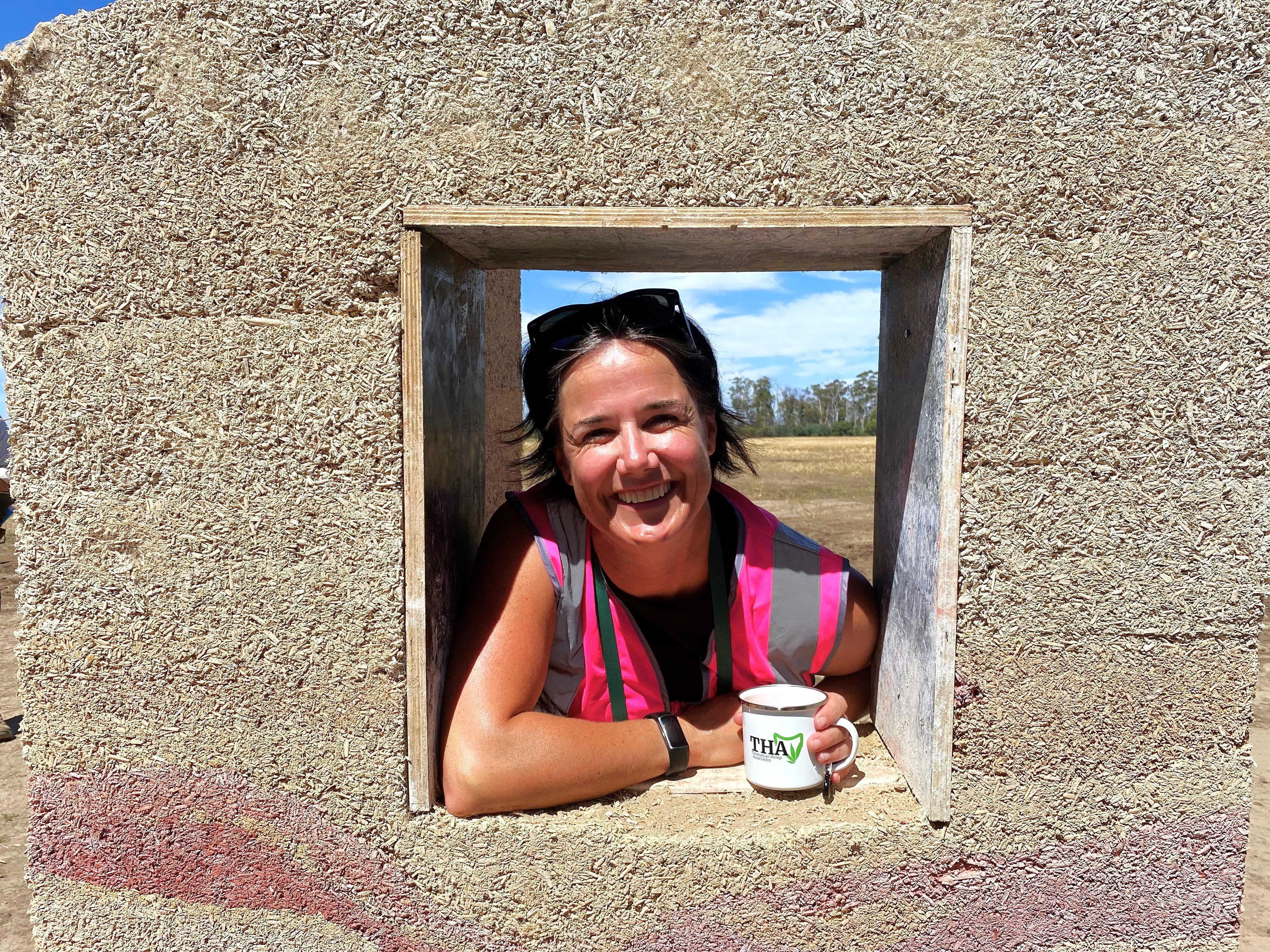
That is the gap being targeted by X-Hemp, a Cressy-based business founded by Tasmanian Hemp Association president Andi Lucas, that operates Tasmania’s only dedicated hemp-fibre processing facility. It buys or receives stalk material from licensed growers and mechanically separates and grades it into fibre and the woody inner core known as hurd.
The hurd is used in hemp-lime building material commonly called hempcrete, while fibre and other fractions have potential applications in insulation, composites, panels, biochar and other manufactured products.
X-Hemp has supplied Tasmanian-grown material to housing projects and the University of Tasmania’s forestry redevelopment in Hobart.
Ms Lucas told the inquiry that the sector was not asking for special treatment, but for rules suited to a lawful agricultural crop with negligible drug value.
She has previously said X-Hemp has faced practical consequences from the cannabis stigma, including difficulty with payment systems, investors and institutions that do not distinguish industrial hemp from marijuana.
“For me personally, with my X-Hemp hat on, the government procurement recommendation is the first thing that I’d like to see action on,” Ms Lucas said after the report was tabled.
“That would be a game-changer for us if we could have certain amounts of hemp biocomposite material used in government contracts for construction and road building.”
Government procurement could provide the dependable volume needed to justify more processing equipment, contracted crops and product testing. The inquiry heard that schools, social housing, regional health facilities, road projects and public buildings could become early demonstration markets.
The report also tackles a less visible barrier: hemp businesses being blocked or treated as high-risk by banks, advertising platforms and payment providers.
Ms Lucas has previously described being treated as though she was dealing in narcotics despite processing a crop with effectively no intoxicating value. She has said that stigma discourages finance and keeps hemp framed as a boutique environmental product rather than a potential source of mainstream building materials and regional manufacturing.
The committee’s recommendations do not themselves change the law, and the Federal Government must now decide which reforms it will accept and fund.
Ms Lucas said the report was an important step, but the industry’s attention had shifted to implementation.
“We understand that we’re not quite there yet, but we are grateful to see some steps forward,” she said.
The immediate test will be whether governments move beyond recognising hemp’s potential and create the standards, purchasing demand and consistent rules needed to turn Tasmanian crops into a dependable manufacturing supply chain.



Add new comment