
Ex-Tasmanians Anna Falkiner and Andrew Hannon start ag tech company Cropify
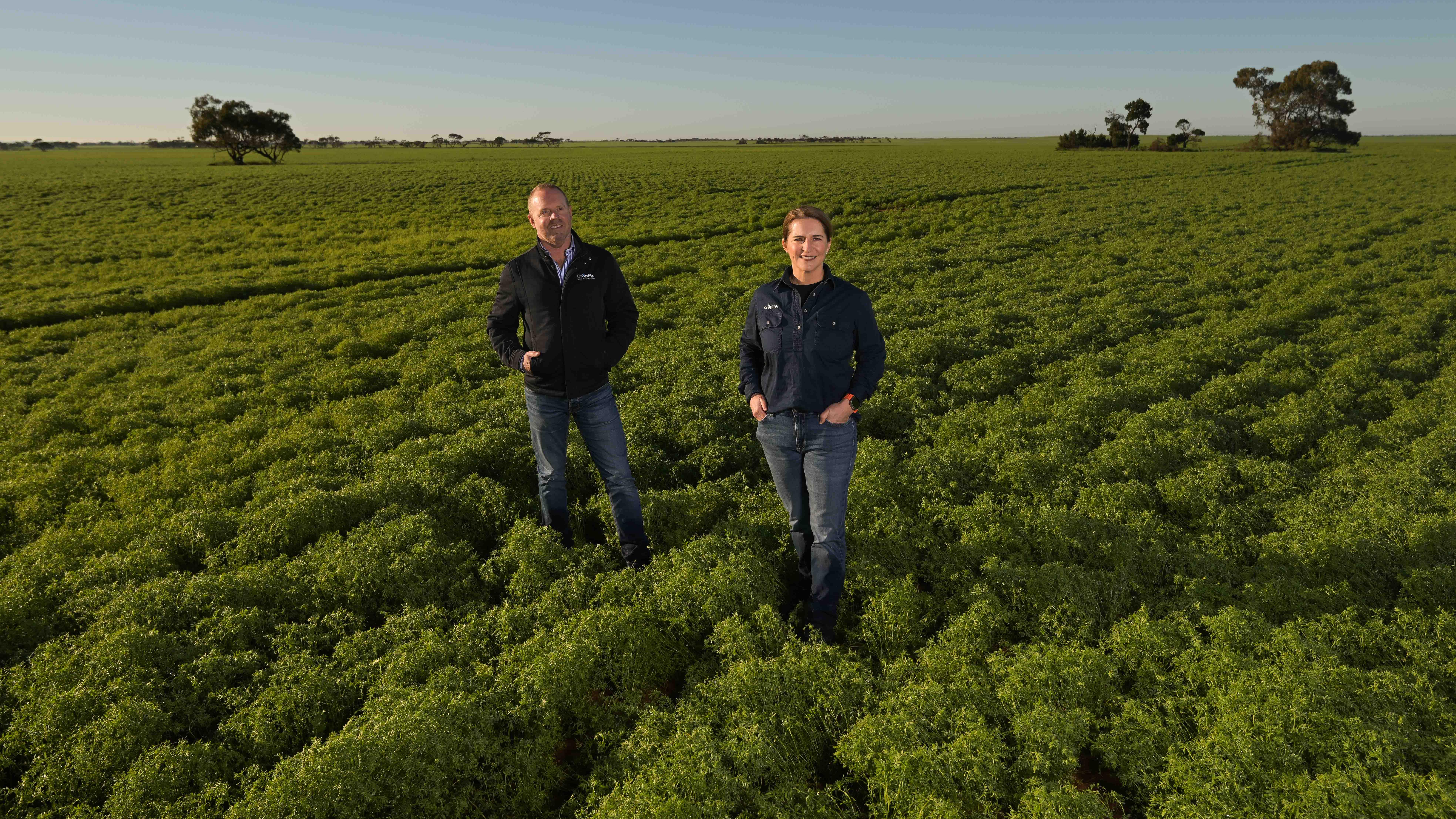
Two former Tasmanians are changing the way grain is graded and the new method will soon be used overseas as well and in their home state.
Anna Falkiner, who grew up in Longford and comes from a farming family, and her husband Andrew Hannon, who grew up in Hobart, are now based in Adelaide, where they founded ag tech company Cropify.
The couple have developed an AI-powered machine that can grade grain samples in around five minutes, compared with up to 45 minutes for a difficult sample assessed visually.
The technology is already being used commercially for lentils and is rolling out for chickpeas, with customers including GrainCorp, Louis Dreyfus Company, ETG Wimpak and Shannon Bros.
Cropify is now developing the technology for more pulses and cereals, which Anna and Andrew believe could make Tasmania a potential market over the next 18 months, particularly as the platform moves into crops grown in the state.
They’ve also just launched a $2.5 million capital raising to accelerate the rollout in Australia and take the technology into international markets including Canada and the US.
Anna attended Longford Primary School, Launceston Grammar and initially studied viticulture and started a career in the wine industry in marketing and product development before going back to university to do a business degree.
Andrew moved off farms to work for GrainCorp and Viterra before coming up with the idea for the grain grading startup.
“It’s a big risk and high pressure starting a business but it’s starting to pay off,” Anna said. “We hope to be working with cereals and beans in coming years which are grown in Tasmania.
“The bulk grain handlers do all the testing to determine the grade and value of commodities and we can speed that process up.
“We believe we’re the first in Australia to take this method to commercialisation and we’ll be doing trials in Canada soon which are the world’s biggest supplier of lentils.”
Grading Australian lentils and chickpeas commercially for the first time this harvest is a significant milestone for an industry that has relied on human assessment for generations.
Every year, lentils and chickpeas are assessed by grain graders who inspect samples for defects, contamination and quality. Those assessments determine how grain is graded and ultimately how much growers are paid.
Cropify was founded to modernise one of the most important steps in the supply chain by replacing the subjective visual grading with artificial intelligence and computer vision.
The company’s technology analyses samples in minutes, delivering fast, consistent grading while creating a digital record of every load.
Anna said the GTA Trading Standards Committee’s endorsement of the technology was an important step towards bringing the benefits of AI grading to more growers, grain handlers and exporters across Australia.
“Every truckload of lentils or chickpeas delivered at harvest represents a season’s work and a year’s income for a grower. The grade it receives determines its value, so sellers need confidence that every assessment is accurate, consistent and objective.
“The GTA Trading Standards Committee’s endorsement gives the industry confidence that AI is maturing and is a credible option for the grading of grain. Grain supply chain participants can consider the adoption of the technology, delivering the same consistent standard of assessment every single time.”
The company launched a chickpea grading solution this year and expects to deploy up to 25 of its Opal units during this harvest.
In the last 12 months, Cropify has expanded from South Australia and Victoria into northern New South Wales and Queensland.
Alongside its commercial rollout, Cropify has launched a real-time quality management dashboard that gives grain businesses visibility of grading results across multiple sites and secured research support from the Grains Research and Development Corporation (GRDC) to further develop its AI grading technology.




Add new comment