
Uncertainty around how Tasmanian government will get return from G6M Dolphin Tungsten Mine investment
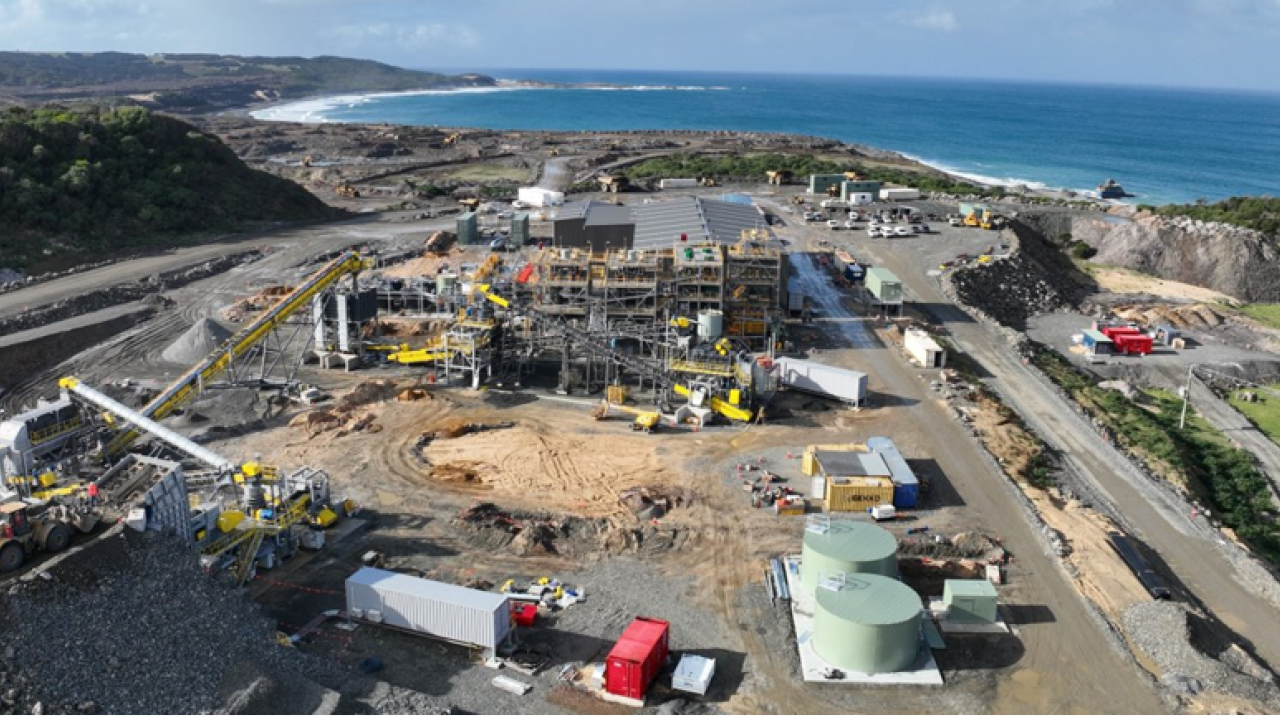
Questions remain over when the Tasmanian government will be able to realise the value of its investment in the Dolphin Tungsten Mine and how it intends to sell millions of shares in a company with relatively low trading volumes.
Premier Jeremy Rockliff announced during his visit to King Island last week that proceeds from the government’s investment in Group 6 Metals, which operates the mine, would be used to establish a $20 million Recovery Fund for Regional Resilience.
The fund is intended to assist regional communities facing major industry changes, employer closures and other economic disruption, rather than provide disaster relief.
Although financed from the government’s investment in the King Island mine, no specific allocation from the fund has been announced for the island.
However, the government has separately committed $5 million to upgrade King Island District High School, with further proceeds from its investment intended to reduce state debt.
The value of the government’s shareholding on the Australian Securities Exchange does not necessarily represent the amount it could realise through a sale.
The government holds about 26.23 million shares in Group 6 Metals, representing about 10.6 per cent of the company, following the conversion of its loan to the mining company into equity.
At the September share price of about $3.35, the holding was worth almost $88 million on paper. By Friday, October 16, shares had closed at $2.76, reducing the theoretical value of the government’s holding to about $72.4 million.
The share price slipped further on Monday, October 19, closing at $2.74 and reducing the holding’s theoretical value to about $71.9 million.
The more significant issue may be the relatively small number of shares traded each day.
On Friday, October 16, just 2817 Group 6 Metals shares changed hands, compared with 13,904 on Thursday, 1,104 on Wednesday and 17,528 on Tuesday. On Monday, October 19, trading volume was 6376 shares.
At Monday’s closing price, the government would need to sell about 7.3 million shares to raise $20 million, assuming every share could be sold at that price. That represents more than 1100 times the total number traded on Monday.
There is no general ASX rule limiting the number of shares an ordinary shareholder can sell in a day. However, selling a large parcel into a market with limited buyers can put downward pressure on the share price, potentially reducing the amount realised.
Alternatively, the government could negotiate a sale to an institutional or strategic investor, allowing a large parcel to change hands without relying on normal daily trading volumes. Such transactions may be negotiated at a discount to the prevailing market price.
The government’s holding is also subject to substantial shareholder disclosure requirements, meaning significant changes in its ownership would generally need to be reported to the ASX.
Mr Rockliff has indicated that the government intends to sell its holding progressively rather than immediately, but neither the timetable nor the method of sale has been detailed.
In response to questions from the Courier, a government spokesperson said: “As a shareholder, the government is subject to legal and regulatory obligations around trading activity, and is unable to provide further details about the process.”
However, the government reaffirmed both funding commitments.
“The government will deliver on its commitments to the King Island District School and the Recovery Fund for Regional Resilience.”
The Courier had asked whether shares would be sold progressively through normal ASX trading, through a negotiated transaction with institutional investors or through another arrangement.
Questions also covered the timetable, valuation assumptions and whether the government intended to retain any shares.
Of particular relevance is whether the $20 million regional fund will be established and financed before proceeds from share sales are received, or whether its establishment depends on sufficient funds being realised.
The government did not clarify these arrangements or identify alternative funding sources should the proceeds from the share sales prove insufficient to meet its commitments.
Group 6 Metals, meanwhile, said a change in ownership of the government’s shareholding would not, in itself, alter the company’s operating strategy or plans for the Dolphin Tungsten Mine.
The company confirmed underground operations had commenced and remained central to its development strategy. It also expressed confidence that capital market support would be strong if further funding was required.
G6M said the timing and arrangements for any sale were matters for the government as shareholder and declined to speculate on the potential effects on its share price or shareholder confidence.
The company acknowledged the Tasmanian government’s support during a critical period in the mine’s redevelopment and reiterated its commitment to King Island and the mine’s long-term contribution to the local and Tasmanian economies.
For King Island, the issue is particularly relevant because the investment originated in support for the Dolphin Tungsten Mine, one of the island’s major employers, while the proposed regional fund is intended to assist Tasmanian communities facing economic disruption.


Add new comment