
First Rushy Lagoon sale inquiry takes place in Scottsdale
TasFarmers CEO Nathan Calman said the federal government repeatedly told him it would not be involved in the sale of Rushy Lagoon when he first raised the topic last year.
The first of four hearings for the state government’s inquiry into the sale of Rushy Lagoon was held on Wednesday at Scottsdale.
TasFarmers COO Neil Grose and Mr Calman, along with former president Ian Sauer, were among the first to give evidence before the Select Committee at the Scottsdale Mechanic Institute.
Dorset Mayor Rhys Beattie and Melaythenner Teeackana Warrana Aboriginal Corporation chair Nic Cameron also gave evidence.
Liberal MP Michael Ferguson is the chair of the Select Committee, and it includes Labor’s Shane Broad, the Greens’ Cecily Rosol, and Shooters, Fishers and Farmers MP Carlo Di Falco.
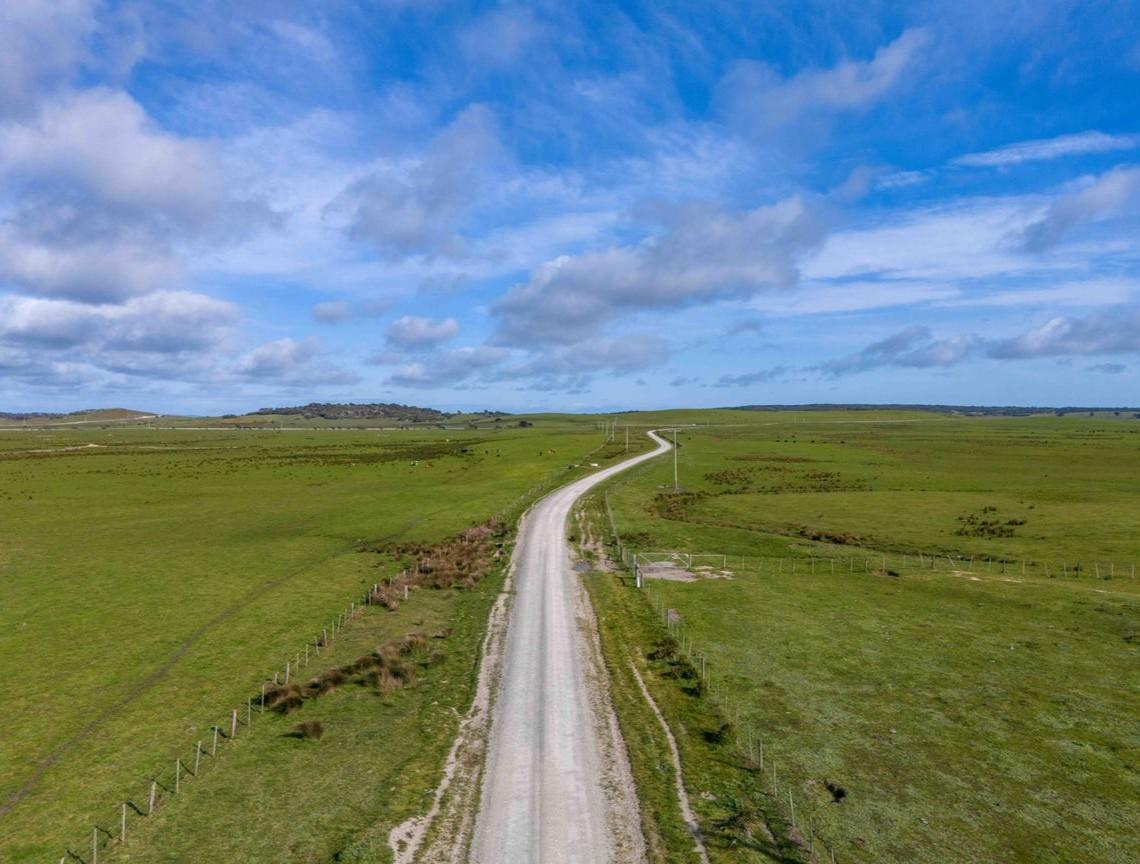
The sale of Rushy Lagoon, a 22,000-hectare property in north-east Tasmania and the state's largest farm, has sparked significant controversy over its $69 million federal government-backed purchase by UK-based firm Gresham House.
The firm plans to convert much of the dairy and cattle farm into a pine plantation to generate carbon credits.
Gresham House also received an $8.8 million federal government pine plantation grant.
The Tasmanian Liberal minority government’s push to establish an inquiry into the sale passed the state’s lower house, despite Labor and the Greens voting against it.
Mr Calman said the Rushy Lagoon saga had been one of the most significant issues TasFarmers had been involved with in recent history.
“In the middle of 2025 we were consistently hearing reports from members of the northeast community that Rushy Lagoon’s sale looked like it was going to have some involvement,” he said.
“We were repeatedly told that the federal government had no role to play at that point in time.”
Mr Calman said he met with Federal Agricultural Minister Julie Collins in Canberra late last year and was told the Commonwealth could not provide any more information about the sale.
“As things progressed into the new year, it became more and more clear that the government did have a role to play.
“And as details of that came to light, the deep market-distorting behaviour of the federal government was what I think most people in this district have major issues with.
“There definitely were local purchasers that had an interest in purchasing Rushy Lagoon.
“We organised meetings for them with federal members just to make sure that it was known they were credible.”
While giving evidence to the committee, Mr Sauer said that while he supported farm forestry and landowners' right to do what they want with their property, the Commonwealth’s subsidising of the Rushy Lagoon sale was one of the worst government decisions he had ever seen.
“It will deliver negative economic, social and environmental outcomes, and distort agricultural land prices, particularly in the northeast.
“The sale’s flawed in both process and outcome, driven by ideology and with complete disregard for the community, research and science.
“Consultation was absolutely non-existent.”
Citing data from the Australian Bureau of Agricultural and Resource Economics and Sciences, Mr Sauer said that the country already had enough structural timber supplies to last until 2050.
“The best way to sequester carbon is to have farmers with sequestration and normal farming practices on the same farm.”
He said the manner in which the sale was completed was “absolutely appalling behaviour”.
Mr Sauer told the committee that converting Rushy Lagoon to a plantation would create fewer jobs and generate less than half the wealth it did as a fully-fledged dairy and livestock operation.
The remaining three committee hearings will take place in Hobart on October 30 and November 6, and in Launceston on November 5, with venues yet to be announced.

Add new comment