
Fishing - Be wary of algae blooms at popular fishing spots
Back in mid-August, good mate Joe Hooker and I fished a weekend up at Lake Sorell. The weather was calm and bright most of the time, and we didn't catch a fish for reference, but we saw a couple of campers who had. On Sunday, when we were out on the water, we noticed what looked like a potential algae bloom of some sort. We fished most of the day on Saturday and didn't see anything, so we were confused and concerned about what we saw on Sunday. Mate Joe took a water sample, and I took a picture back at Dago Point boat ramp, with old mate trying to get through to the IFS on his phone on the way out. When I got home, I sent the picture through to the IFS, and a few days later they contacted me. I was told the Department of Natural Resources and Environment Tasmania (NRE Tas) had visited Lake Sorell and had collected water samples for analysis. Tests confirmed the bloom was blue-green algae, and further testing by the CSIRO also confirmed it's non-toxic.
As part of a statement released late last week, which confirmed the algae bloom, the IFS said, "There are no public access restrictions on Lake Sorell and anglers can still catch and eat trout from the Lake and Lake Crescent. Precautions have been put in place, and all trout caught and taken should be washed in clean water, gilled and gutted. All internal organs must be disposed of, along with all fish waste, and should not be fed to animals. As for the lake water, don't drink it, avoid direct contact with areas of dense algae, and wash and dry all your clothes and equipment after your trip. At the moment, the BGA bloom is only in Lake Sorell, not in Lake Crescent, but water has been flowing from Lake Sorell into Lake Crescent since June 2026. Water releases will continue to support water levels in Lake Crescent and downstream releases into the Clyde River as part of Water Management Plans. NRE Tas and the IFS will continue to monitor Lake Sorell over the coming months through satellite imagery and regular water quality testing, with updates provided when necessary".
September is always looked forward to by trout anglers who specifically target sea trout because it's usually the best month of the year to target these great fish. Last year in the Derwent and other tidal run rivers around the State, flooding ruined fishing through September and October, so hopefully conditions stay settled for a good go at them this season. I'm a bit concerned though because for a few years now seals have been harassing and eating a lot of trout and other fish. Seals aren't only eating a lot of fish; they're also becoming more of a risk to the general public. It's time to consider proactive protective measures, such as catching, tagging, and relocating these seals and tracking and studying their movements to see if they return.
It wasn't good news to see the Tungatinah Power Station at Tarraleah go up in flames last week, and let's hope the Tas Hydro station will be rebuilt in the future. The flow-on effect will bring higher water levels and better trout fishing in many of our lakes and lagoons, which is a good thing to come out of a bad situation.
Tip Of The Week- Lake Meadowbank(26) and Craigbourne Lake (25) both received some hefty Rainbow trout from the IFS last week, weighing around 3kg each. Some rainbows reportedly weigh up to 5 kg, with all fish sourced from the Salmon Ponds.
Send in your fishing reports, pics and tips to valleyfishes@gmail.com
Tight Lines until next week.
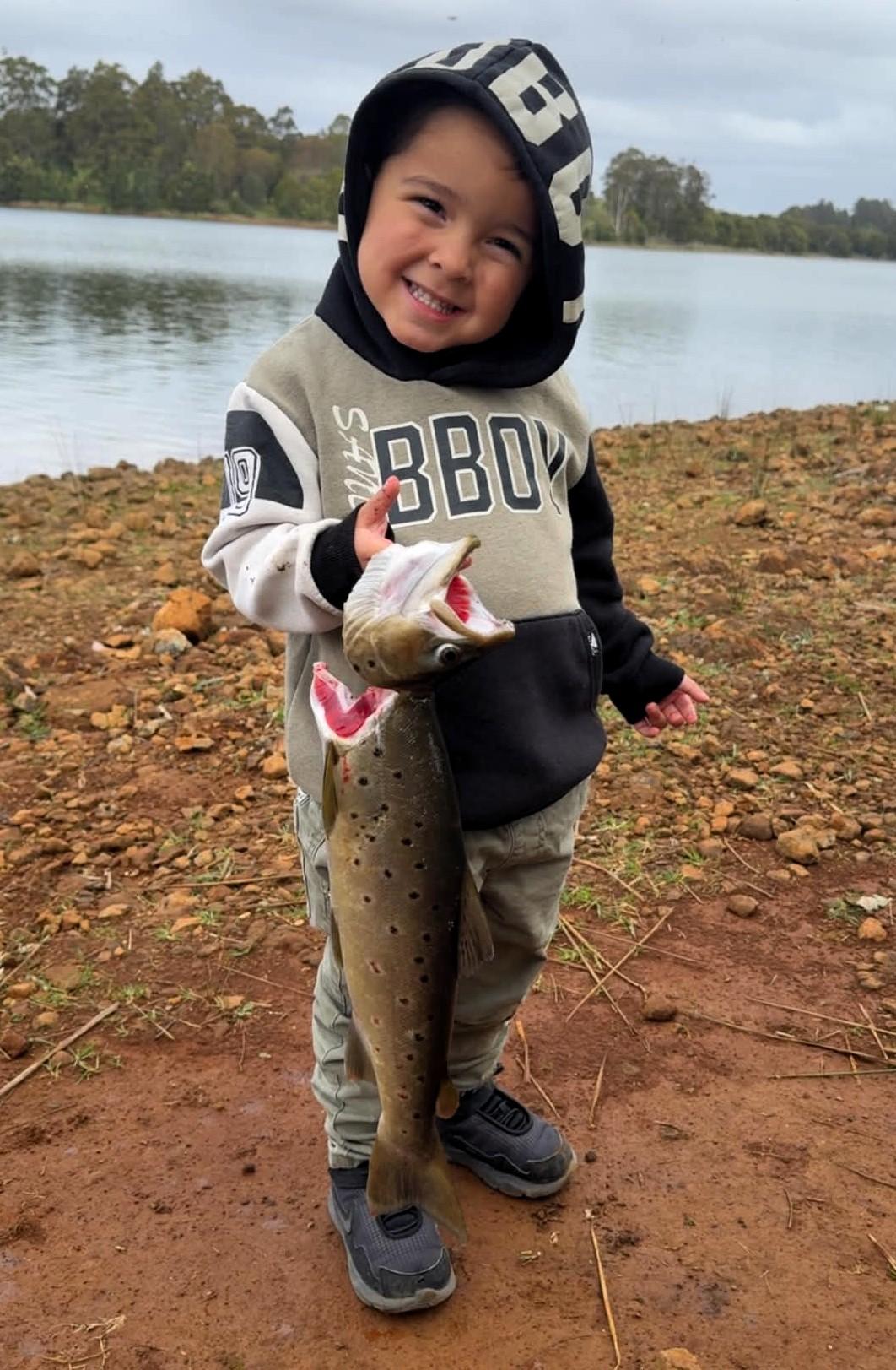
The pic is of 3.5-year-old Kyat Scott, who was excited to catch this great-sized brown trout from Pet Dam recently. Kyat has caught some good trout from the dam since the start of the 2026/27 season.




Add new comment