
Speak up, get banned: the law that could bar councillors from running for office
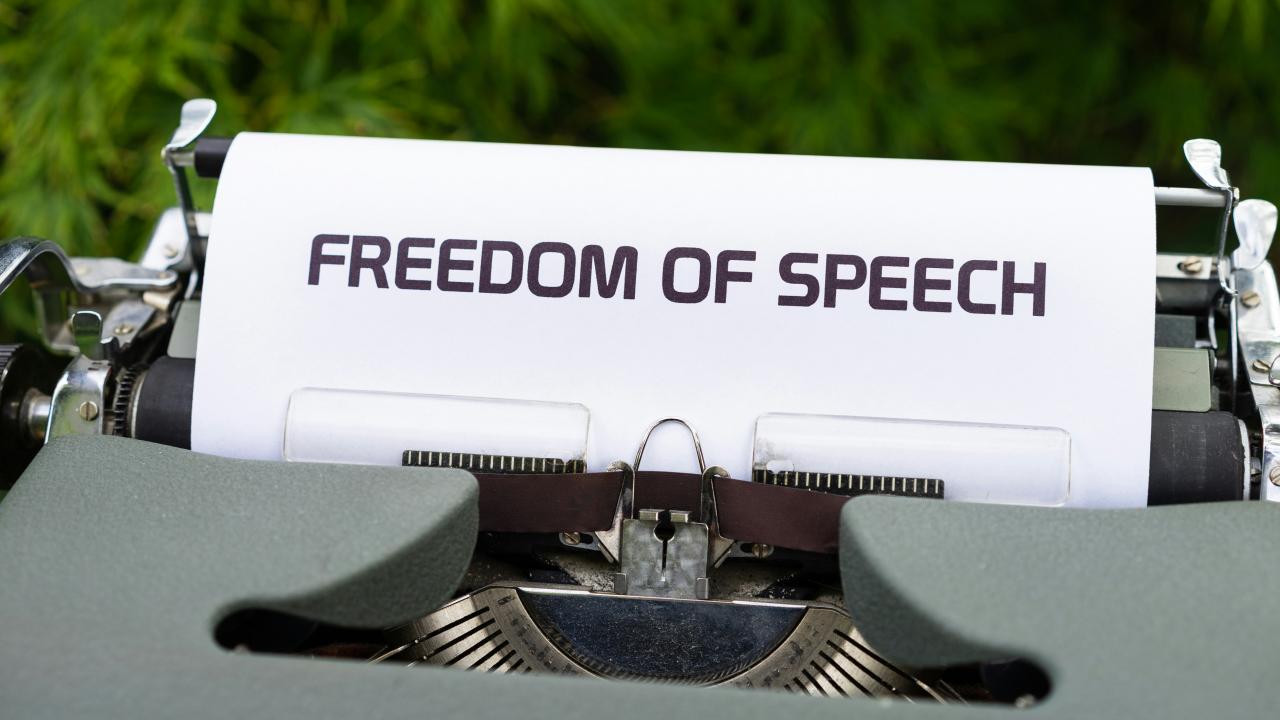
Think that free speech exists in Tasmania? Think again if you’re one of Tasmania’s 263 (soon to be 203) Councillors elected to represent and speak on behalf of your local community.
Unlike the rest of us, as an elected Councillor you are subject to the Local Government Code of Conduct, a perhaps well-intentioned document that is increasingly being weaponised by Councillors seeking to gain partisan political advantage against their fellow members of Council.
Since its introduction in 2018 and until February this year, 355 Code of Conduct complaints have been dealt with, costing ratepayers at least $581,000 in assessment and adjudication fees.
Nice work if you can get it for one of the 20 or so unelected, part-time bureaucrats contracted to pass binding findings on the complaints in a pseudo-judicial setting.
Don’t get me wrong, I don’t have any issue with a Code of Conduct which polices issues such as conflicts of interests, misuse of information, or gifts and benefits.
The problem is, these type of complaints comprise only a little over half of the total complaints made to date. In fact, around 40 per cent of complaints are Councillors making complaints against other Councillors. And of these, nearly two thirds allege misconduct against Section 7 1) of the Code of Conduct which in part states that a Councillor must “not cause a reasonable person offence or embarrassment.”
In the pseudo-judicial setting that assess these complaints, this is an unavoidably subjective concept (there are nearly as many definitions of “reasonable person” as there are claims assessed), a concept which for very good reason is not included in the Code of Conduct for either Members of Tasmania’s Parliament, or indeed in the Ministerial Code of Conduct.
Mostly, these claims are not so much about face-to-face debate within the Council chamber, but over statements that are made on social media. Even statements made by third parties on Councillors’ Facebook pages are being weaponised against them.
As a consequence of “guilty” findings made through this process, Councillors have been sent to do compulsory training (“re-education”), made to apologise for hurting the feelings of other Councillors, and even been suspended from Council for a period of time.
Make no bones about it, in practice this section is, often in conjunction with Section 8 5b) of the Code about “bringing Council into disrepute”, proving to be an anti-free speech clause.
Simply, it is an anti-democratic abomination which should be scrapped.
Ultimately, it should be the voters who arbitrate whether or not views and statements of particular Councillors are acceptable, not an unelected panel of pseudo-bureaucrats adjudicating a politically weaponised Code of Conduct.
Yet extraordinarily, rather than scrapping this anti-free speech provision, the Minister for Local Government, Kerry Vincent, is seeking to beef it up, with a Bill currently before the Legislative Council to establish a new, ill-defined offence of “serious misconduct”, which apparently involves a serious contravention of the Local Government Code of Conduct.
Exactly what constitutes “serious misconduct” is not defined, rather it will be ultimately decided by an unelected bureaucrat - the Director of Local Government - and another unelected quasi-judicial panel, TASCAT. What we do know is that while “unlawfulness” is a consideration, an action or statement does not necessarily have to be unlawful in order to meet the proposed new “serious misconduct” charge.
Worst of all, this unelected panel will have the power not only to suspend or sack Councillors for “serious misconduct”, but also to prohibit them from nominating for election for a period of up to seven years.
If you thought that preventing people from running for election because of their political utterances was the type of thing only practiced in non-democratic countries, you’d be right.
By comparison, the closest disqualifying features to be a member of the Tasmanian Parliament are to have been convicted and sentenced of an offence punishable by imprisonment for one year or longer. Which means, under these news laws it is possible a person could be barred from nominating for local government, but still nominate for and be elected to the State or even Federal Parliament. Logical much?
So, where has this new anti-democratic push come from? Well, not from the Minister it seems. He only works there.
It’s come from the vested interests inside the local government sector, the senior Council bureaucrats, the Mayors, the Local Government Association who all see benefit from cracking down on free speech, and muzzling those pesky Councillors who go against the flow within the local government sector.
To the detriment of local government, and of Tasmania more broadly.
Several years ago, I warned that the introduction of compulsory voting to local government would politicise local government, and so this has proven correct with this explosion in complaint numbers and the weaponisation of code of conduct since 2022, as Councillors seek to gain whatever political advantage they can.
The Tasmanian Government has made the bed, it’s time for them to accept that the nature of local government has forever changed as a result of those changes, and to stop trying to suppress the political culture that they themselves created.
And it’s time for the Legislative Council to stand up for democracy and freedom of speech, and put a stop to the proposed draconian changes to the Code of Conduct.
Finally, much has been said of late about the pressures on elected Councillors and Mayors brought about by being subjected to direct feedback from their constituents via social media. No doubt, much of this feedback is over the top, even hateful.
It is, however, misguided to think that this type of feedback can somehow be reduced or mitigated by muzzling the free speech of those who participate in Tasmania’s electoral system as elected members.
The best advice I can give to deal with this problem? Don’t feed the social media trolls.
- BRAD STANSFIELD was Chief of Staff to Premier Will Hodgman from 2010-18 and is a co-owner of this newspaper.
- Photo by Markus Winkler on Unsplash




Add new comment