
TasFarmers Matters - Wild deer at tipping point
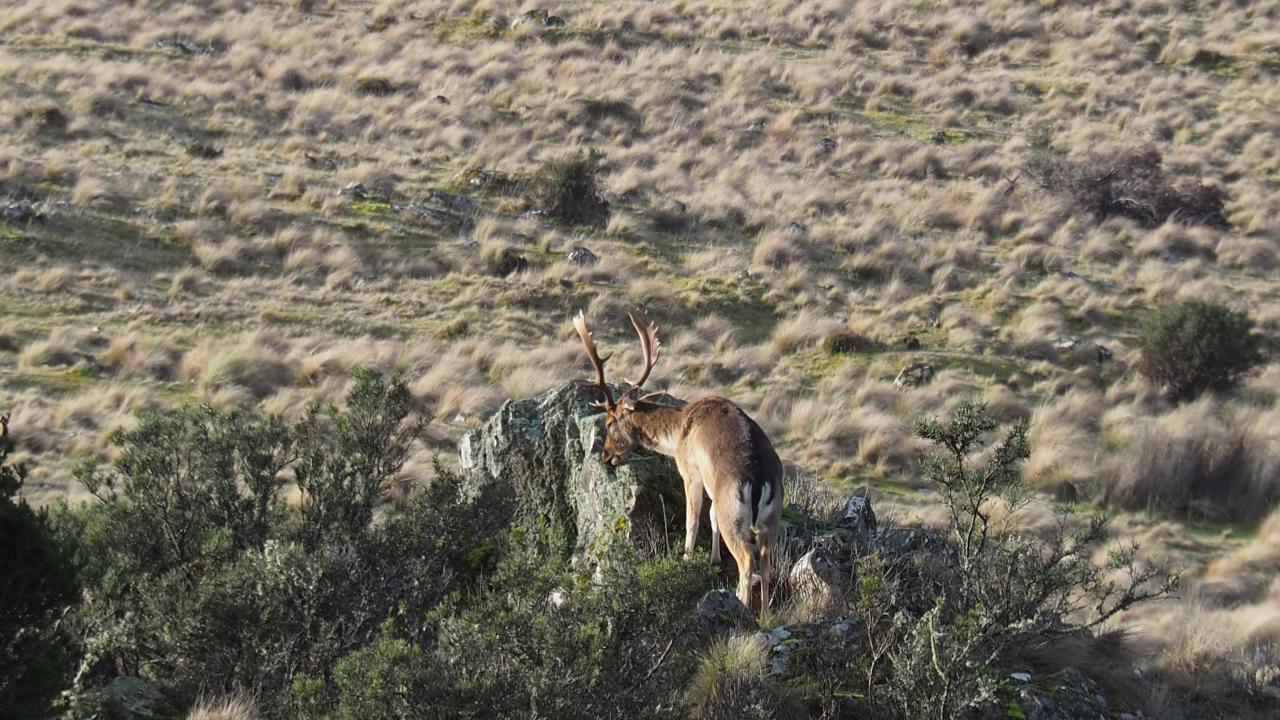
During January this year the state government will finish receiving submissions into its 2025 feral deer policy review discussion paper.
This important discussion paper puts forward the government’s proposed response to the recent 2024 feral deer population survey.
This survey confirmed what many primary producers had been saying for some time, which is that feral deer are not only increasing their numbers, they are also increasing their range.
The survey also confirms that the current management controls are not effective. In fact, TasFarmers’ most recent annual members survey found that the impact of feral and browsing wildlife was their single biggest concern for the year ahead.
For the state’s primary producers, the proposed changes cannot some soon enough. The recent population survey found that the population had grown from 53,660 in 2019 to 71,655 in 2024, a rise of some 20,000 animals in just five years. This growing feral deer population has a direct impact on farmers’ bottom line, reducing pasture available for grazing. The current feral deer population has a direct farmgate value impact to the state’s producers of $41m annually.
However, the costs for producers don’t stop there when considering the huge costs associated with infrastructure, population control, environmental damage, and in peri-urban areas, public safety.
The discussion paper put forward a range of improvements to address the current strategies failings with a focus on two areas. Firstly, to streamline Zone 1 permits, and secondly to make Zone 3 a complete eradication zone. TasFarmers has worked closely with members to develop a submission around the proposed changes. TasFarmers is supportive of the government’s proposed changes, however it has strongly advocated that several further improvements be made in 2026.
Firstly, TasFarmers has put forward that the boundary area of Zone 1 should be reduced. This would put pressure on the spread of feral deer from their traditional range, which was an observation of the most recent government aerial survey.
Secondly, within Zone 1, permit holders should not be restricted by quotas of any kind. While the current proposed changes will allow for the removal of female feral deer on a year-round basis, it will continue quotas for the number of male feral deer which can be removed and still requires that male feral deer be tagged.
Primary producers in this zone who hold a permit for the sole reason of reducing the impact of feral deer on their farming operation should be supported to remove all feral deer present within that landscape, free of restrictive and wasteful red tape measures, such as the continued and pointless requirement to tag.
Thirdly, to support the government’s intention to eradicate feral deer from Zone 3, TasFarmers has advocated that this be able to occur without any need to hold a permit.
With fewer feral deer present in this zone, producers need to be encouraged to remove feral deer on first sighting without first having to go through the process of applying for a permit.
Finally, TasFarmers recognises the important role that recreational hunters play in helping primary producers remove feral deer from the landscape.
It is also important however, that all tools be available to producers in the management of feral deer numbers, and for that reason, TasFarmers strongly advocates for commercial hunting to be increased, acknowledging the greater impact that harvesting this resource on a commercial sale can have on reducing total feral deer numbers.
Tasmania is quickly approaching the population tipping point for feral deer. If the management settings aren’t correct right now, we risk further population growth and spread, resulting in an uncontrollable future population. Primary producers and the state’s unique biodiverse ecosystems must be protected from this feral species impact.
Without action, the population’s further growth will make the species as difficult to manage tomorrow as the problematic feral rabbit is today.




Add new comment
Comments
Deer survey
In the past I drove for 11hours around the state asking property owners for permission to hunt on their property,I visited 22 properties,out of the 22 I was successful in gaining access to only 1,all the rest either said no,or see our manager in charge,who only let his mates on,so no.the other response was a hunting fee up to $1000,in my opinion the Tas farmers have only their self to blame for the problem they face, LET HUNTERS ON TO CONTROL YOUR PROBLEM
Fallowdeer
Why can't we bring in a five year deer session in paid for extra tags for stags and open it all up for all deer spikes does and stags what you get the tags for the stags if it work keep doing it if it doesn't least it was tried something else
Deer management
I would like to give a quick mention there's a lot of hunters with no or limited access to hunting property's I no it's a tricky subject if I myself had a deer problem I would have concerns on who I was letting on my property
Deer control
The Tasmanian wild deer population is easy to bring back under control.
Firstly we need a third party governing body that that has the ability to train, register and licence recreational hunters to safely and respectfully harvest feral deer on private property. This giving us a recreational pool of hunters that are well trained and know how to hunt on an operational farm.
Secondly the primary producers need to admit they have a wild deer problem that they can’t control with there current hunting outfit thus needing assistance from the third party to implement the right hunters to the right areas at the rights time.
Tasmanian recreational hunters are all saying the same thing we would love to help but we cant get the permission to hunt on private land, it’s all stitched up.
Fallow Deer
What is happening here is like every other time people complain about the Deer population in this state.farmers charge hunters.hunters pay cash. This has been going on for years. Then hunters cull roo possums and do what ever they need to do to stay on the farmers land to hunt. Why farmers dictate the rules. This is why many hunters hunt sambar in Victoria and hunt over seas .let the farmers cull these so called over population deer herds. And stop giving handouts to them . They have caused this problem no one else.
This Tasmanian deer plan is…
This Tasmanian deer plan is bullshit, all smoke and mirrors. The claimed "explosion" in the deer population is fanciful. Deer have existed in Tasmania since 1830 and culling permits have been available to landowners for in excess of 30 years. Those cull permits have removed 000's of deer but have never achieved the take quota - why, if indeed there are so many deer. And, why after all the culling has there been the 'claimed' population explosion. The claims of farmers and NRE simply do not stack up. If indeed the cry of farmers was valid then they need to allow access to more responsible recreational hunters and not by charging unreasonable access fees. Recreational hunters are pitentially providing these farmers a 'free' on farm service by controlling browsing animals. It's time to offer recreational hunters a Fair Go, particularly those seeking property access. It's not unreasonable to suggest that many of these farmers, those claiming to have a deer problem, perpetuate their own on farm issues.
However, what has occurred in Tasmania is an expansion of the deer range - why? - because the government failed in it's responsibility to manage deer farms. They approved deer farms outside the 'traditional' deer range - eg: NW, NE, E COAST, the Peninsular, Huonville, Southport, Berriedale & many other locations. Most of those farms were hobby farms with little to no commercial value. Farm fences and tagging of farm deer were inadequately managed, government checks & balances and their own compliance regime and management oversight was allowed to fail. The government has never been honest in acknowledging their level of responsibility for these failures. They call themselves environmental managers, game managers and wildlife biologists but they have failed in every respect when it comes to managing the deer - No responsibility, No accountability -typical beaurocrats. The deer issues were resolved in 1993-1997 when the TDAC employed a bonafide U.S game biologist Brian Murphy. Science based solutions applied then were achieved in just 4 years. Fundamental elements underpinning that success included true understanding and experience managing deer, qualifications & experience working with deer, education, honesty, communication and open transparency. NRE have rarely demonstrated competence in these areas. And then, in the years following the TDAC project success government failed again = negligence, gross incompetence and a lack of transparency and truth.
It's well time that these incompete bureaucrats were moved into retirement and/or sacked and we again engage some competent , qualified wildlife (game) managers.
And, stop referring to our Fallow deer as feral. They are wild game animals, an 'introduced' species. They are not by the 'traditional' and true definition of 'feral' domestic animals gone wild, such as horses, goats, pigs, dogs, cats, buffalo.