
TasFarmers Matters - Challenges of dealing with introduced species
Nothing frustrates primary producers more than red tape that works against a business owner’s ability to achieve a profit while providing a benefit to others who don’t pay for the privilege.
Red tape can, however, be hard to see, and unless viewed from a different perspective, it is difficult to identify.
Doing so can highlight the ridiculous nature of our regulatory environment and the burning platform for change.
Take, for example, the following situation: Scott, a recent immigrant from Scotland, decides that during the next season he will plant a crop of scotch thistles as a pollination source for his beehives and to make his property feel a bit closer to home, full of beautiful purple flowers.
This new venture is a raging success for him, with the invasive species quickly taking over his property.
Due to windy conditions in late summer, the seed quickly spreads to neighbouring properties and then across the district.
Before the region knows it, this invasive introduced species is spreading broadly and out of control.
Some neighbours work hard to control the spread on their properties, but without all landholders making a concerted effort, the problem is difficult to manage.
For Scott, this situation is wonderful; his region now feels more and more like home.
As a hobby, Scott is also a member of the state recreational thistle society.
This group of thistle lovers gathers regularly and sees the establishment of this pest species as something that should be promoted and protected.
This, in their view, will allow everyone to enjoy their cultural ritual of driving into the countryside on weekends to harvest the plants’ pretty purple flowers.
This small but vocal group is so passionate about this that they lobby the state government for scotch thistle to be classed as a partially protected species, and they are successful.
As a result, primary producers and recreational thistle lovers now need to purchase an annual permit from the government to pick thistles each summer, and at other times of the year the thistles are largely protected from being removed or damaged.
To further protect the species, permit holders are only issued a small number of tags each year, which they must apply to each plant when removing it to ensure the thistle population is not significantly impacted....
I will stop this story here, as by now I’m sure you will be starting to think about what a ridiculous situation this is.
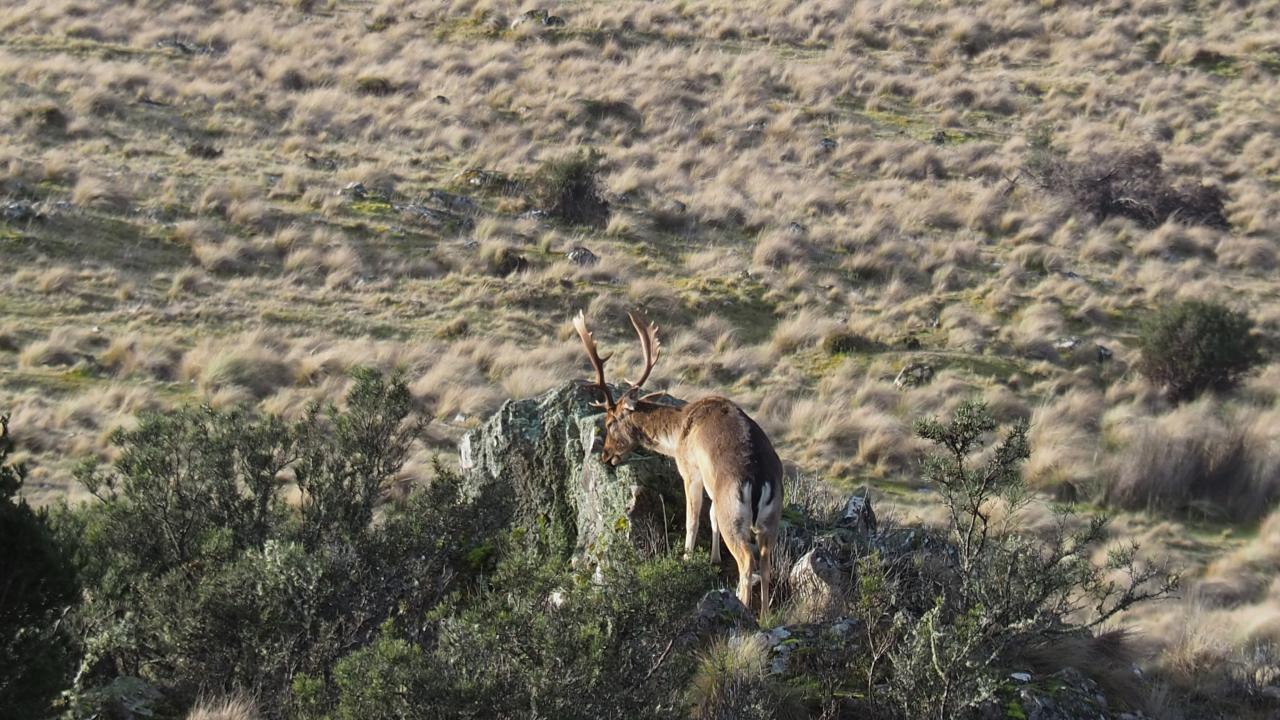
However, unbelievably, this exact situation exists in Tasmania today, with feral introduced deer enjoying partial protection status.
The current regulatory environment for the species, which has allowed the growth and protection of the population so recreational hunters have the opportunity to hunt each year, is completely out of step with any pragmatic form of common sense.
Farmers whose profitability is impacted are not compensated for their loss, are not able to harvest the species for meat at scale, and are often frustrated by poaching conducted by recreational hunters.
The result of this government decision, which supports the interests of recreational hunters, is significant.
The invasive species spreads further, taking over our National Parks and World Heritage Areas, and has a substantial impact on native flora.
The impact on primary producers is also severe, with farmers’ productivity constantly undermined by the species, which spreads rapidly, outcompetes pasture, and contaminates high-value irrigated crops.
Despite this, the government maintains the partially protected status for the species, costing the state’s producers tens of millions of dollars each year and causing frustration in the rural sector to reach a breaking point.
Primary producers cannot understand how their profitability must be undermined to protect the presence of an invasive species, so those living mainly in cities then have the opportunity to harvest, without any financial return to the affected producer.
Strong action is needed now by government to create meaningful reforms that control this species and protect the state’s primary producers’ right to farm.
Our producers cannot continue to bear the damage bill associated with deer reducing their profitability and damaging important infrastructure such as fences. Today, the tail definitely seems to be wagging the stag.



Add new comment
Comments
Fallow Deer
The recent article by Nathan Calman is a clear and deliberate distortion of the truth. Fallow deer are not feral, a term that refers to domestic gone wild such as cats, goats, horses, pigs. Deer are a wild animal, an introduced species, but by true definition they are not feral.
Many farmers are reimbursed in numerous ways by recreational hunters, such as significant access fees, free on farm labour and free control of other invasive 'native' species such as wallaby, wombats and possum. Wombats do significant damage to fences and 'feral' cats are a more significant environmental threat in Tasmania, however they receive dis-proportional attention by government. Significant culling of deer has been occurring for years and it is a fact that the cull tags issued to farmers have been undersubscibed in regards to kill rate. If (and it's a big if) the problem is so great then the harvest would (should) have equalled tags issued. The seasonal limit on does harvested has now been lifted and the season extended to nine months with no tagging of does (no tags = inaccurate reporting = zero management). Add aerial culling, opening of reserves to recreational hunting and it is inconceivable that the deer population is continuing to increase.
The commercial harvest of wild Fallow deer (John Kelly, Lenah Game Meats) is now occurring however it should be understood and reported that as with all meat supply the commercial harvest must be regulated in accordance with meat hygeine and food safe guidelines.
Nathan's claim that wild Fallow deer are "costing the state's producers tens of millions of dollars" is unsubstantiated - where is his evidence of this?
Not all landowners are against the presence of our deer, I am one of those landowners who support a regulated, sustainable and well managed herd, properly managed in balance with the habitat. Our deer actually contribute substantially to our economy and in a diverse way. It's not all about the farmers. If we were open to learning, considering alternatives and recognising the benefits that deer, indeed all game, provide across the wider community we would be in a much better position.
There are opportunities to maintain our deer as a partly protected, well regulated and managed species whilst benefiting a wide cross section of our community and our economy. Look and learn from other countries, for example the U.S. Integral to this learning and management is the role and benefits that properly educated and trained "game biologists" contribute. The Tasmanian Fallow Deer Project, facilitated by the Tasmanian Deer Advisory Committee Inc in the mid 1990s, is clear proof of what proper science can and then did achieve.
The wider distribution of deer in Tasmania has occurred not because of some mysterious population explosion but rather due to the incompetence of beaurocrats who approved deer farms outside the 'traditional' deer range and then failed to administer and manage their own policies.
Just like our forestry industry the Tasmanian government has failed to appreciate, understand and properly manage these resources to the benefit of all stakeholders and the economy. However, these issues are not restricted to Tasmania indeed they represent systemic failures by governments Australia wide.
Deer
Well said!
Dear me!
I can appreciate the Tasmanian Farmers position as i am one myself. This is not the whole story. There are farmers that charge large ammounts of money for deerhunters to have access to hunt on their properties. I dont have any issue with this but they exclude many other licenced and insured hunter for harvesting themselves. That is their parogative of course but you can see were this is going. The farmers then receive a handy cash flow which is tax free. Still no problems with that. I do have a problem with farmers that complain about productivity lose, yet profit from charging hunters to access their property but the Government interfering with quota numbers only allowing hunters to take a couple for meat and allowing the population too replenish the following year. Farmers can apply for a destruction permit to reduce numbers but dont have enough time to do it themselves and dont want to pay anyone to do it.
Suggestion: why dont the Government implement the USA approach to this problem. It works very well over there and most farmers allow trespass on their properties if hunters are licenced and insured. The answer is the Government dont want to pay for Game Wardens that police this method and prevent poachers with the money they gain from selling deer hunting licences. There are very good solutions in Europe and America that work were farmers are happy, get compensated for damage when the population get too high and collect handsome fees allowing access in season to hunt their properties. I know how it works because i hunt for deer in the US. Millons of dollars are generated with hunting tourism.
Introduced fallow deer
I personally think your views on fallow deer are very much blown out of contense, I've hunted deer for over 55 years,I have studied their habbits and their impact on the land, I have had 12 to 14 deer feeding on a 12 acre paddock for over a long period of time ,it is hard to see any damage done by their grazing,yes may be a couple of holes dug in the dirt but no other damage,as for damaging waterways no worse than sheep,as for damage to fences no worse than roo and Wallaby,which by the way creat the holes in fences,I feel you view is to condemn our deer for a political stunt and to help farmers and graziers extract more assistance from the government,the more preasure you place on deer the greater they will spread into safer areas,Brian Murphy came out here to organise a game management program and it started to have some real success,the deer were more or less contained in their normal areas of the state,but then in the governments wisdom it all changed so blame the people in Government departments for the situation we face now