
Chinese herbs an emerging player in Tasmania's agricultural sector
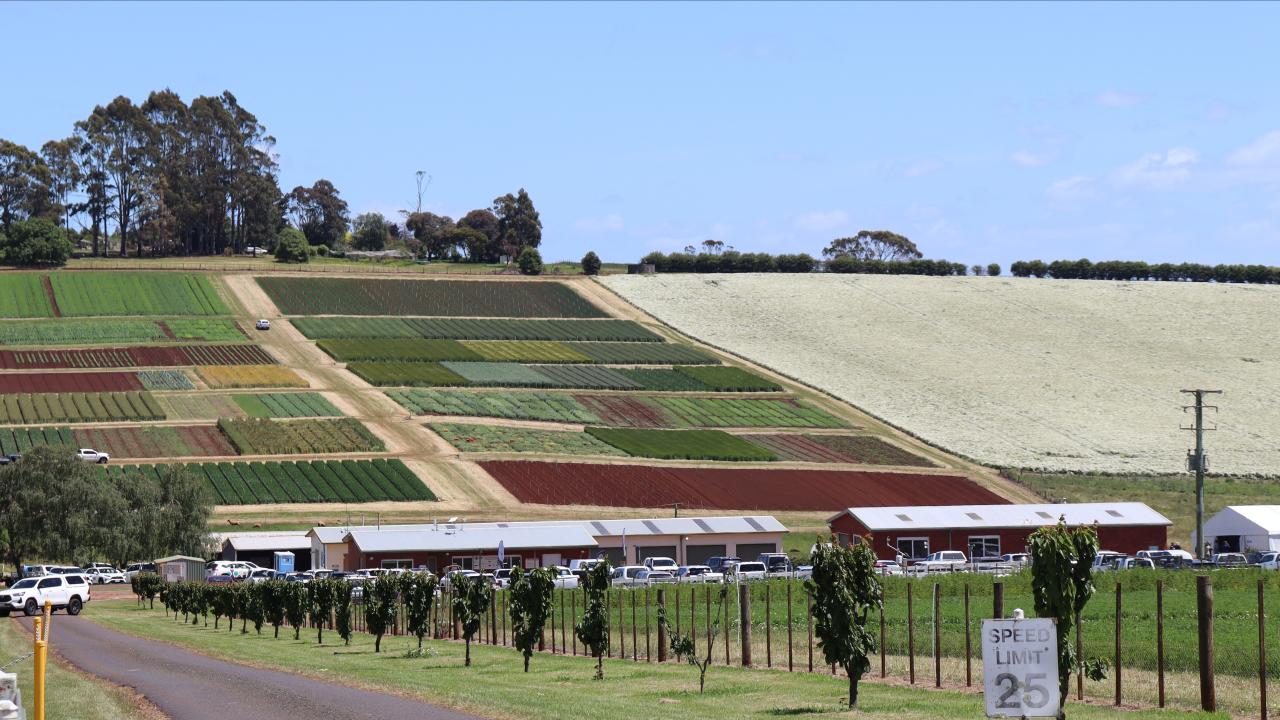
Traditional Chinese herbs are shaping up to be a new horticulture industry for Tasmania, with trials at the Tasmanian Institute of Agriculture Forthside Vegetable Research Facility demonstrating that a pristine environment, suitable soils and market demand align to create enormous potential.
The University of Tasmania’s Research Hub for Traditional Chinese Herbs focuses on growing herbs like Astragalus membranaceus (Milkvetch) and Codonopsis pilosula (Bellflower) to Chinese pharmacopoeia standards, adapting them to Tasmania's cool climate and exploring new value-added opportunities for crops like peonies for medicinal use.
TIA Director Professor Mike Rose said he thinks everyone who visits the Forthside research facility is surprised about the variety of crops growing there, from broadacre crops to cereals to vegetables, pyrethrum, poppies and more.
However he is particularly excited about the future for traditional Chinese herbs in Tasmania, with the industry currently worth an estimated $130 billion a year and expected to double in the next 10 years.
“Chinese medicinal herbs are about to go commercial and we’re gathering farmers to grow them for export to China and that’s an exciting opportunity and there’s a massive, highly valuable export market for those,” he said.
Mongolian Milkvetch shows strong promise as a hardy, two-season legume while Paeonia lactiflora (Peony) could provide medicinal root compounds for the Asian market, aside from its value as flowers.
TIA Professor Dugald Close said Mongolian Milkvetch is fairly slow growing but the second season is really important for building up the bioactives that give it the health benefits that the market is looking for.
“We’re now looking at some very practical questions, like the density of planting, we’re looking at irrigation, nutrition, pest and disease management, soil preparation and just trying to get a reasonable grip on the margins and costs to see how it might stack up for farmers in the future,” Professor Close said.
The economic viability of large-scale production in Australia could be challenging due to higher labour costs compared to Southeast Asia, where many crops are traditionally harvested by hand.




Add new comment