
GO.FARM enters the vineyard game
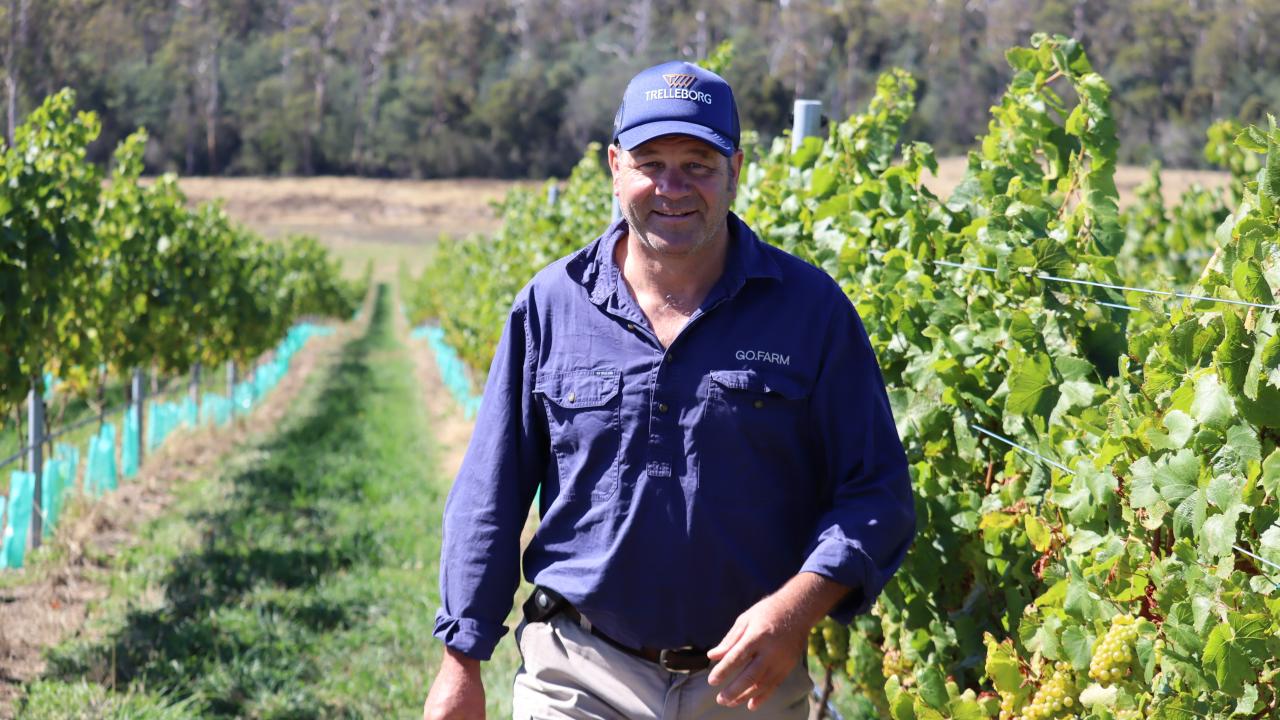
The first vintage is ready at a northern Tasmania vineyard that has been set up as an investment project utilising precision GPS machinery, mapping and mechanisation technology at a level never before seen in the state.
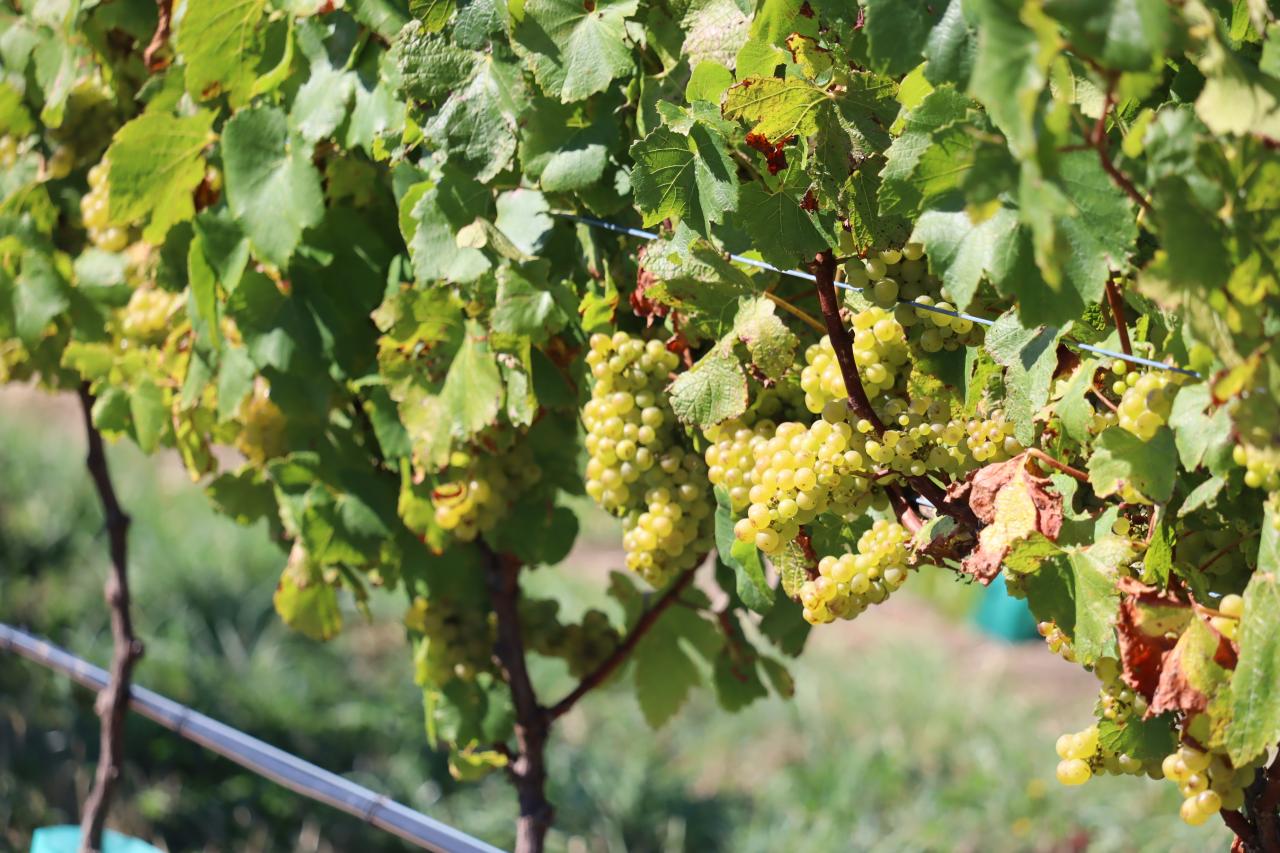
Two-and-a-half-year-old vines laden with pinot noir and chardonnay grapes are on track to yield beyond expectations when harvest begins this month, marking the final stage of an incredible land transformation of a former pine plantation.
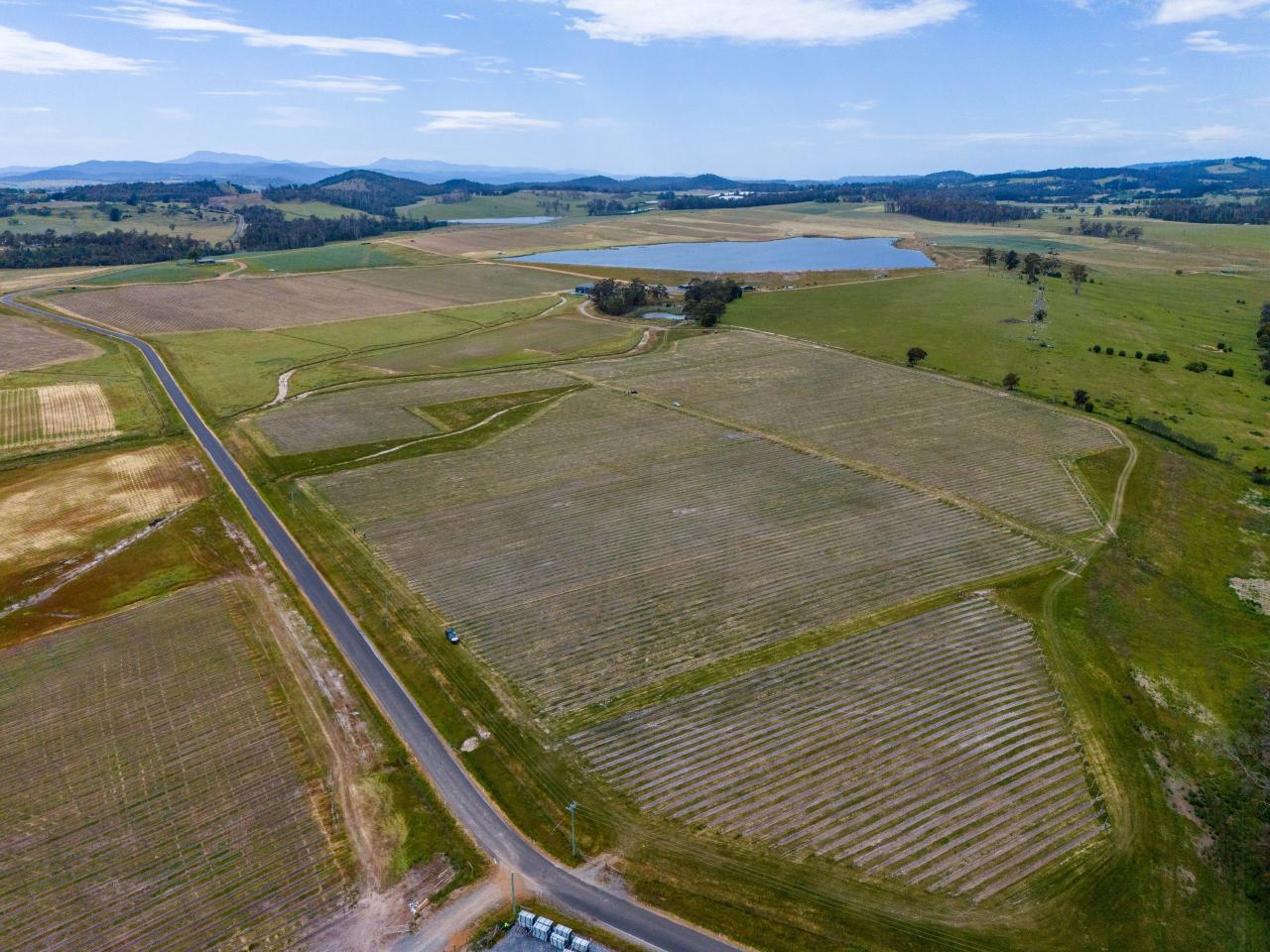
The 500ha property, near Beaconsfield in the Tamar Valley, has been a typically challenging project for agriculture investment specialist GO.FARM, which hones in on underutilised and undercapitalised Australian and international agricultural assets and transforms them into high use, profitable ventures.
GO.FARM has stewardship over 96,000ha of land and 112,000ml of water, employs more than 200 people and is closing in on $2.5 billion in assets.
With its tentacles in almonds, olives, tomatoes, citrus and broadacre cropping, the vineyard known as Middle Arm is its latest bold venture.
It has taken the experience of former Kiwi Allan Barr to make the project stack up physically and financially as investors wait patiently for the first fruit to be sold to winemakers around the country.
In recent years he has managed more than 150,000ha of rural properties across three states for AAAW Group, including orchards on the West Tamar, and presided over Tasmanian operations for Ruralco.
His agribusiness career spans nearly 40 years in Australia and New Zealand, including agronomy, meat processing, retail management, senior and general management roles.
Mr Barr said he could not be more excited to realise five years of hard work from his team as the grape harvesters move into the vineyard.
Testing of the grapes by Launceston’s new contract winemaking facility, Wineworks, has indicated perfect sugar levels, pH, acidity and other analytes to make a top drop.
“GO.FARM saw an opportunity to invest in cool climate viticulture, with Tasmania being identified as the ideal location to develop vineyards to tap into the growing demand for Pinot Noir, Chardonnay and sparkling wines,” Mr Barr said.
“It’s been my job to make sure that this project is well executed and money from our investors gets a value uplift – but transitioning plantation forestry to vines is not for the faint hearted.”
When GO.FARM took over the Auburn Rd property in mid-2022 there was still 106ha in pine plantation and 65ha of regrowth to deal with across the undulating, mainly north-east facing land.
The balance had been roughly cleaned up with the trees removed, but residue was still present both above and below ground.
The site was chosen because of its location, aspect and low frost risk.
“It takes a fair while to remediate from forestry - we needed to remove not just the top but the bottom root structure and improve the soil ready to plant vines,” Mr Barr said.
“Unlike when simply planting pasture we needed good soil at depth, so we started by farming wheat and canola to ameliorate the soil and get it to a condition where we were comfortable transitioning to vines.
“More than 100km of subsurface drainage was installed, ensuring good ground conditions to move people and equipment over the farm all year round.”
Mr Barr chose grafted root stock, doubling the normal cost of vines to around $19,000 per hectare but simultaneously future-proofing the vineyard against phylloxera, an insect pest that feeds on the roots and leaves of grapevines.
Found worldwide, it hasn’t yet thwarted Tasmania’s biosecurity, but it’s considered in the industry to be inevitable.
Mr Barr’s secret weapon was in new German technology and machinery used to plant 3205 vines per hectare mechanically rather than by hand.
“Every post, every vine has a GPS location and is planted millimetre perfect,” he said.
“That gives us perfectly straight rows that will allow us to use specialised mapping and adopt robotics and autonomous vehicles for harvest and maintenance in the future to make it the most efficient operation possible.”
The machine was able to plant 12,000 plants a day using five people and cover 140ha in eight weeks with neat rows of vines.
By hand, the same amount of people could only hope to plant out 3000 plants per day.
Another German machine was able to put in 900 posts per day using Global Positioning System (GPS) and Real-Time Kinematic (RTK) technology.
The first planting in 2024 fell short of the intended 100 hectares due to a shortage of vines available from nurseries but the 30ha shortfall was made up the following year with pressure on to get it all done in a short window of fine weather.
“There were many who said we couldn’t possibly do it, but it’s pretty special technology and it was so fast it really bought the cost base down and made it so much faster and more accurate,” Mr Barr said.
“In the future that will mean more savings, and it makes us commercially competitive in developing such a difficult site.
“While we will use contract harvesters this season, in the future when there are more hectares online we’ll be able to invest in our own machinery to do that job faster and more economically too.
“We like to do our research and use what we think is right and best in class – it’s not about being frugal so much as being prudent with spending other people’s money and looking for a return while looking after the land.”
Despite a reliance on mechanical processes, Mr Barr is the first to admit that the vineyard also needs to invest in people.
He said that at the peak work times up to 60 Pacific Australia Labour Mobility (PALM) scheme workers have been needed and around 10 people work on site year-round.
GO.FARM expects to bring in 10.5 tonnes of grapes per hectare when the vineyard reaches maturity in four years.
“We’ll pull off a good crop this year but we’re also managing for next year’s crop with about 90ha to harvest next year, the full 230ha in 2028 and then ramp up to full production in 2030-2031 where we should be able to achieve 2500 tonnes in total,” Mr Barr said.
“We have some great partners lined up to buy our grapes at an agreed price and quality and we’ve been sampling twice a week to make sure we achieve that quality.
“Each winemaker is looking for something different.”
For Mr Barr, who lives not far from work at Hillwood, lending his expertise to a new venture, watching baby vines grow to maturity and building a team of people who take pride in their work has been rewarding and exciting.
“In the end it’s the winemakers and consumers who will judge how good our grapes are based on the wine they make and I can’t wait to drink that wine.”


Add new comment