
The Hughes family to swap out imported turkey and ham for beef this Christmas
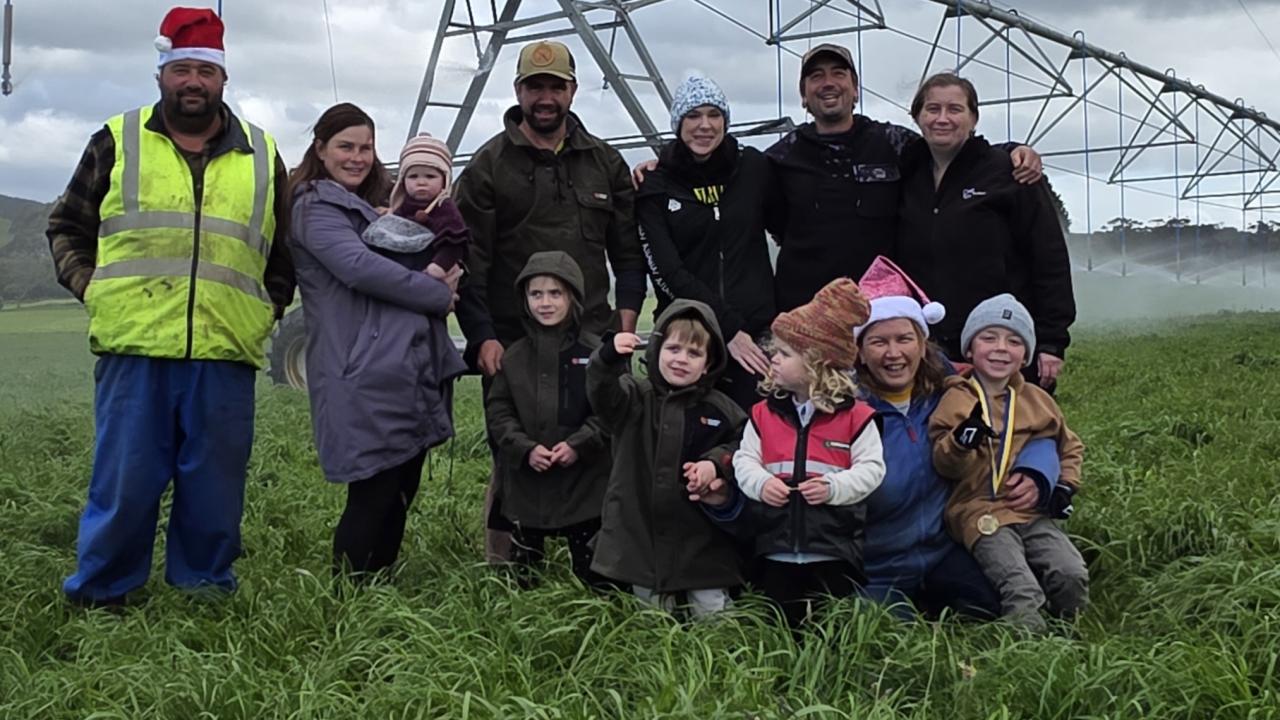
The Hughes family at Circular Head will be eating Cape Grim beef steaks for lunch and possibly a beef roast for dinner on Christmas Day.
Michael, his wife Cheryl, their three children and their partners, and five grandchildren have joined the Tas Irrigation buy local campaign and are more than happy to ditch the imported turkey and ham and throw a beautiful Tasmanian steak on the barbecue.
After selling their 420-cow dairy two years ago, the Hughes family’s farming focus diversified from milk to beef.
They now run up to 500 head of cattle on their 140-hectare Glenfiddich farm near Irishtown, selling their Never Ever accredited cattle to Greenham to be marketed predominantly under the Cape Grim Beef label.
“Everyone should get in and support local farmers and buy good quality Tasmanian beef for their Christmas lunch and dinner,” Michael said.
Central to their beef operation is 120 megalitres of high-surety irrigation water from the Duck Irrigation Scheme.
“When the scheme was being talked about and the governments committed their funding, alongside farmers, we decided it was a once-in-a-lifetime opportunity to access secure water,” Michael said.
“We would have liked to purchase a bit more but all we could afford at the time was 120 megalitres for the dairy, which has now been sold, and 120 megalitres for our beef block.
“We see Tasmanian Irrigation water as insurance – it allows us to grow more grass during the drier summer period and potentially have a higher stocking rate than average.”
Michael and Cheryl have installed two pivots over 140 acres, under sown their rye grass and clover, and heavily stocked when prices allowed.
They purchased about 500 head when prices were low, relied on supplement feed and irrigation water to get through summer, and then sold their cattle when prices were high.
They are currently running about 130 head and making 1400 bales of silage.
“We will sell about 1000 bales between January and March, and then when it gets dry and hopefully prices drop back, I will purchase cattle that are four to five months older,” Michael said.
“We will be able to sell our supplement feed to those impacted by the drier months, as well as have sufficient supplement for our cattle.
“For us it’s all about lifestyle, enjoying what we do and making sure we eat plenty of premium grass-fed beef from our highly productive region – even at Christmas!”

Add new comment