
Meander mates go for gold
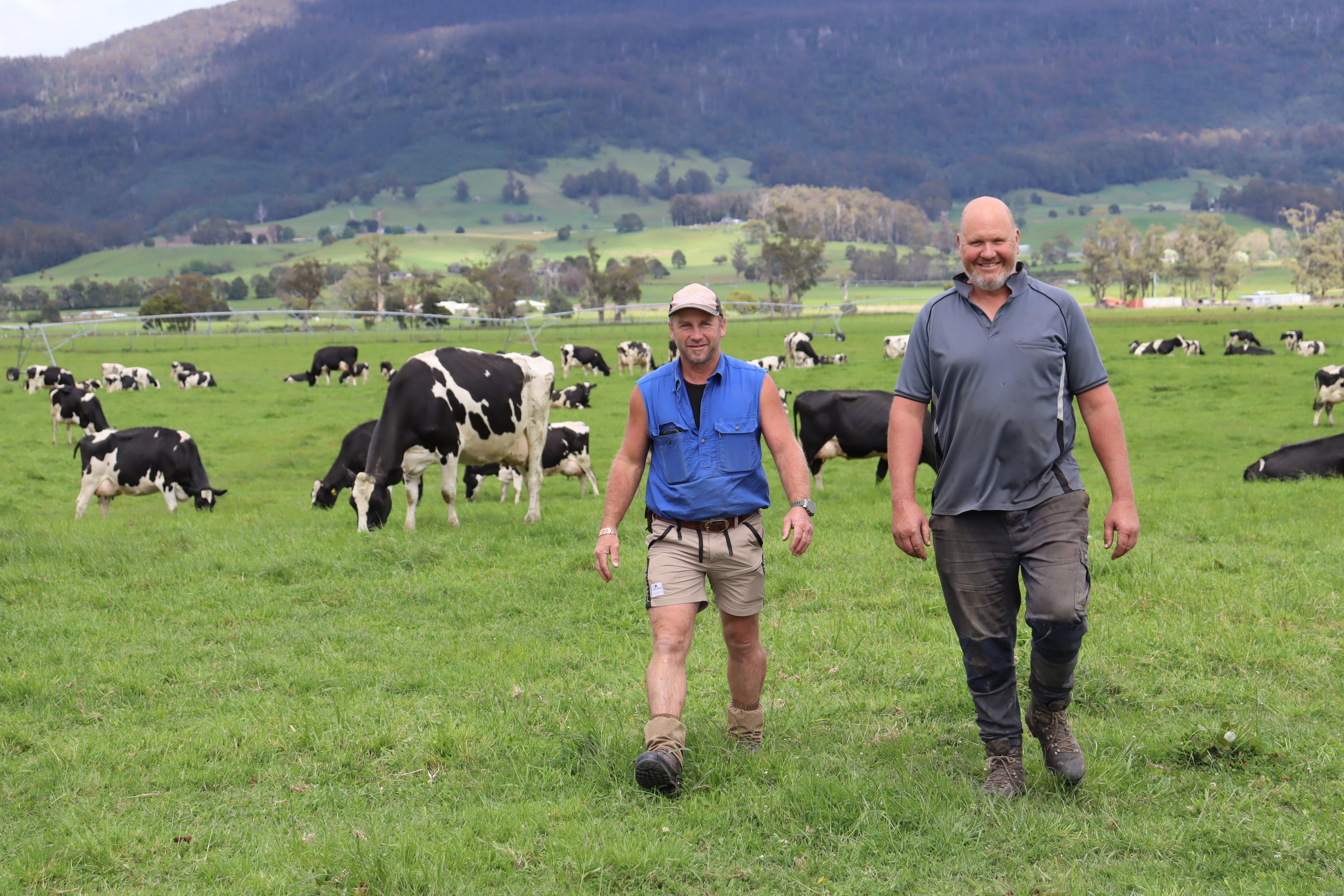
Dairy farmers and best mates Jamie Berne and Stephen Chilcott farm side-by-side at Meander with both making the top 100 quality milk producers in Australia at the Dairy Australia Milk Quality Awards
Tasmania has 11 dairy businesses listed in the country’s top 100 Australian Milk Quality Awards Gold Award winners list - and two of them sit side-by-side in the heart of Meander, near Deloraine.
Hazel Park and Fossil Park are among the highest quality milk producers in the country and they’re owned by two life-long best mates - Jamie Berne and Stephen Chilcott - both third generation dairy farmers who grew up on neighbouring properties, going to school, riding motorbikes, fishing, hunting and generally knocking about together as well as milking cows for a living.
Also winning gold for Tasmania was Dungall Trust, Elton Vale P/L, Gijsbers Agri P/L, Glen Huon Dairy, M.D. & J.M. Goss, A.M. & E.M. Grey, Mount Patrick Estate, Greenview (TAS) Pty Ltd, Nyoka Dairies, MB Bryan & Clomaxx Agri Pty Ltd and M.J. & V.L. Quilliam and A.G. & M.R. Kay.
Delivered annually by Dairy Australia since 2002, the awards acknowledge the farmers who achieve the highest-quality milk, measured by Bulk Milk Cell Count (BMCC) data supplied by processors each financial year.
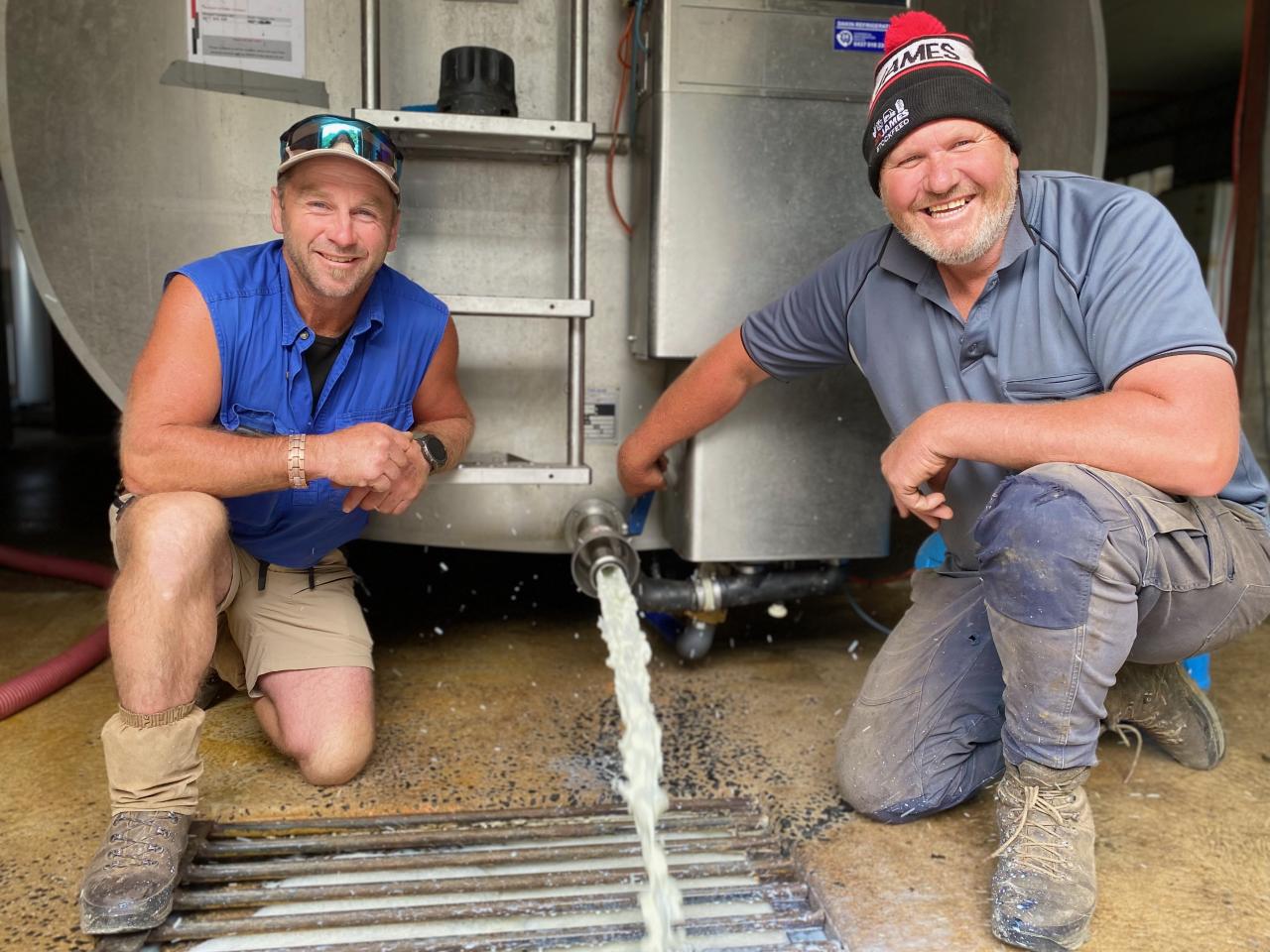
Jamie Berne runs two dairies, Fossil Park and Birchall Park, milking about 800 cows all up, 550 on the rotary at Fossil Park and 250 on robots at Birchall Park.
Since taking over the operation about 20 years ago he’s gradually built up the operation and farmed more intensively - a necessity to stay in front of rising costs and tightening prices.
Like Stephen he sells his milk to Saputo, with each cow producing between 8,500 and 9000 litres per year.
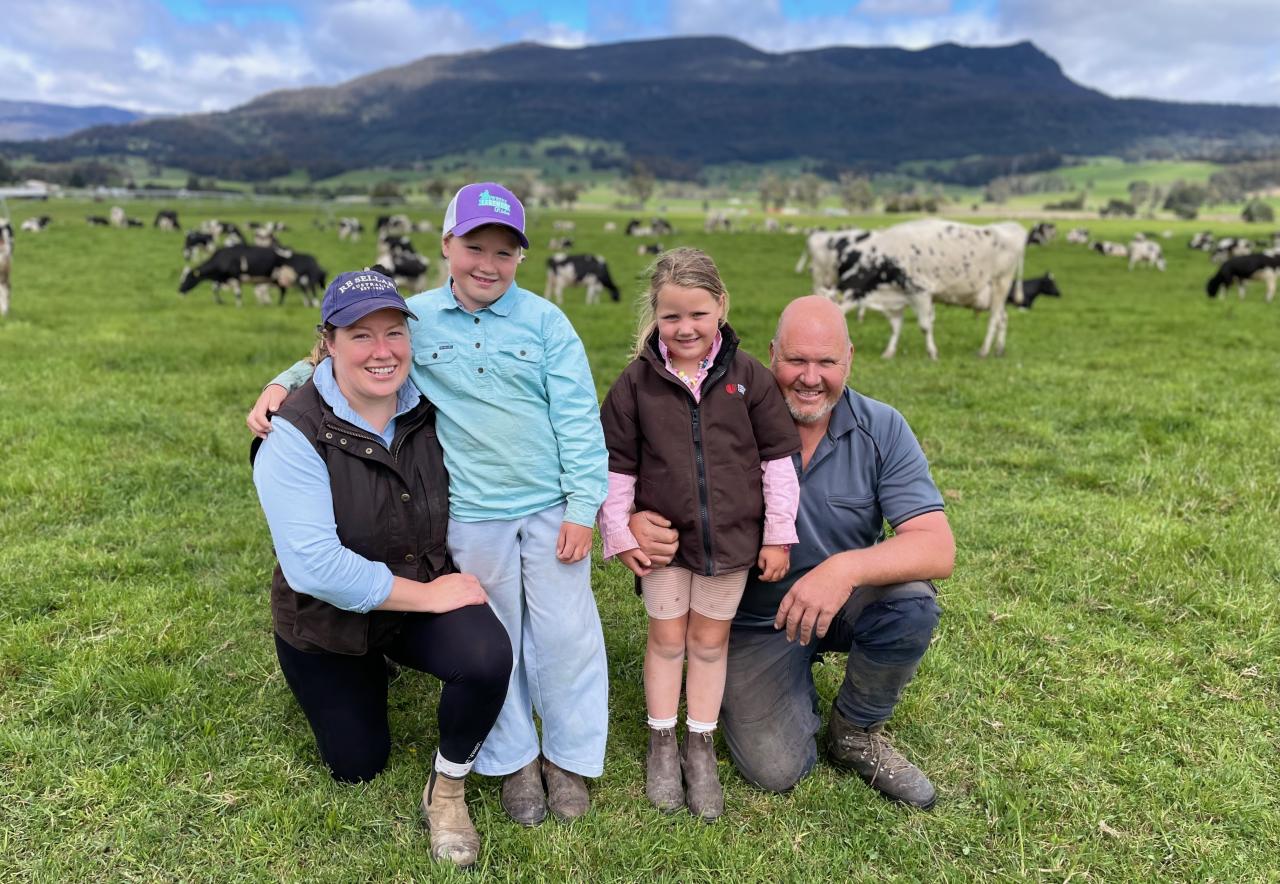
Stephen at Hazel Park milks 400 cows and runs a biodynamic operation, taking a natural approach that sets him apart from many traditional dairy farmers.
He relies on natural ecological cycles, regenerative soil management and strict animal welfare standards rather than synthetic chemicals to promote the healthiest possible cows - and that, he says, means better quality milk as well as high volumes.
His wife Esha helps out with the milking and he has a full-time employee in Andrew Johnson, who has worked at Hazel Park for nearly 30 years.
“His years of experience, dedication and commitment have been an invaluable part of our farming journey - his loyalty alone deserves recognition,” Stephen said.
“Dairy farming requires tremendous dedication and commitment, through every season and every challenge, and you need good people like Andrew to help you get through all of that.”
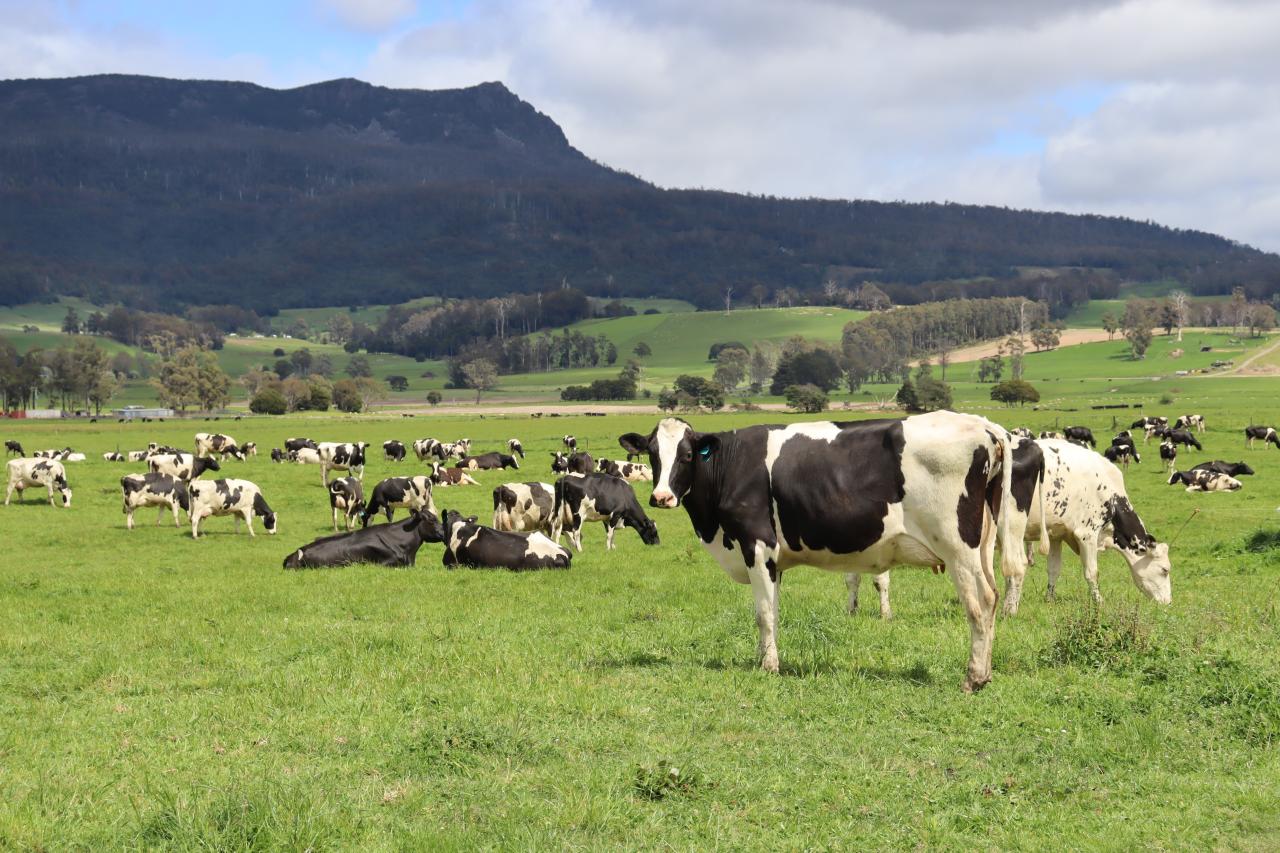
Hazel Park runs 400 cows on 370 acres, making it a tight platform that requires careful management.
“Both Jamie and I use the same nutritionist to achieve a protein mix and a grain mix that helps keep the Bulk Milk Cell Count (BMCC) low - which is what we are judged on for these awards."
In Australia, award-winning dairy farms consistently achieve a count of under 90,000 cells/mL.
Somatic cells are primarily white blood cells and their concentration measures the presence of udder inflammation or infections (like mastitis) across a herd.
“And if you’ve got stressed cows and you’re not feeding them right the cell count will rise,” Stephen said.
This year, 200 farms across the major dairy regions of Australia were recognised for their outstanding milk quality.
The 100 farms with the lowest BMCCs received a gold diamond award to display at their farm gate. Farms in the lowest five per cent also earned a silver diamond award.
Tasmania’s Silver Award winners were: Circular Head Farms P/L - Redpa Blue and R. & B. Langley, Fairview Dairies, Hayes Family Farms, W.G. & S.L. McLaren and J.P. & J.L. Wyllie, Mulder Enterprises, Shalimar Estate, Department for Education, Children & Young People - Sheffield School Sylvania, Windermere Hill and Knobs P/L.
Dairy Australia’s National Milk Quality and Biosecurity Lead, Dr Zoe Vogels, said the awards are a great recognition of the investments in infrastructure – such as new dairies or feed pads – and the everyday decisions farmers make to maintain and improve the health of their dairy herds and the quality of milk that is produced.
“Australian milk is some of the best in the world,” Dr Vogels said.
“A low Bulk Milk Cell Count is indicative of good mastitis control and since the awards were introduced 24 years ago, they have improved significantly.
The result is that Australian dairy farmers are ensuring better cow health and higher productivity and farm profitability."
Dr Vogels said the 2026 results were particularly strong considering some of the external challenges farmers face.
The Australian Milk Quality Awards are part of Dairy Australia’s Countdown program, which supports best-practice mastitis control and milking management through guidelines, training and technical support.


Add new comment