
Recent algal bloom naturally occurring and not harmful, NRE confirms
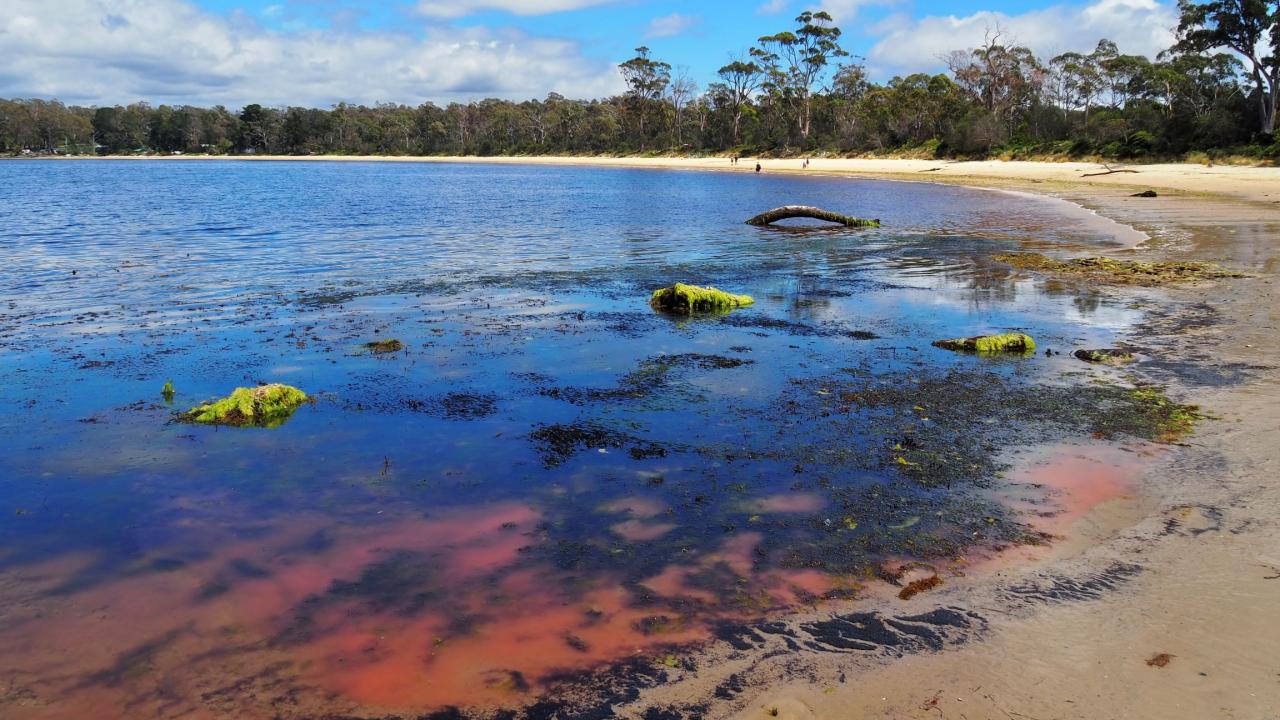
A recent algal bloom in the south of the state was a naturally occurring phenomenon, the Department of Natural Resources and Environment Tasmania (NRE Tas) has determined.
When the bloom first appeared and dead marine life began washing ashore, the Bob Brown Foundation (BBF) incorrectly blamed it on salmon farming.
“These algal blooms and dead sea creatures are a harbinger of things to come as the water gets warmer in Tasmania,” BBF marine campaigner Alistair Allan said.
“Urgent action is required from Premier Jeremy Rockliff to reduce the nutrient loading of Tasmania’s waterways, including de-stocking the polluting factory salmon farms.”
But an NRE Tas spokesperson said Noctiluca scintillans caused the algal bloom.
“Noctiluca scintillans, a dinoflagellate, may cause a change in colour to red or pink, along water surfaces in some coastal areas.
“At night, this species can create dramatic bioluminescent light, or sea sparkle displays, keenly observed by many.
“Noctiluca scintillans occurs naturally in Tasmania and around the world, and is a part of the marine ecosystem, providing a source of food for some marine species.”
NRE Tas said it was different to Karenia cristata, the cause of the harmful algal bloom in South Australia.
“There is no known link between Tasmanian aquaculture and an increase in Noctiluca scintillans events.
“It is not unusual for blooms to be present at this time of year, and the public may be treated to bioluminescent displays if they are on our beaches at night.
“As this is such a regular natural occurrence, NRE Tas does not routinely undertake testing, but has done so to provide public reassurance, given the attention being drawn to this particular site.
“NRE Tas monitors for harmful algal blooms and has not detected anything of concern.”




Add new comment